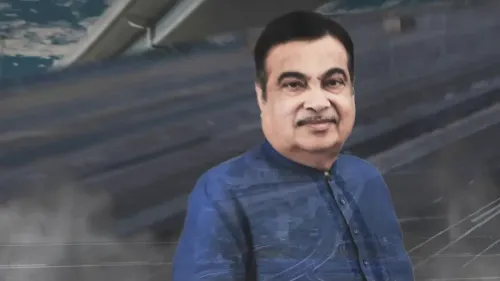
Gadkari marks World Tourism Day, calls for sustainable travel
Synopsis
On World Tourism Day 2026, Union Minister Nitin Gadkari urged responsible, sustainable and inclusive tourism, highlighting India's diverse landscapes and living cultures as assets that must be preserved for future generations while creating livelihoods today.
Key Takeaways
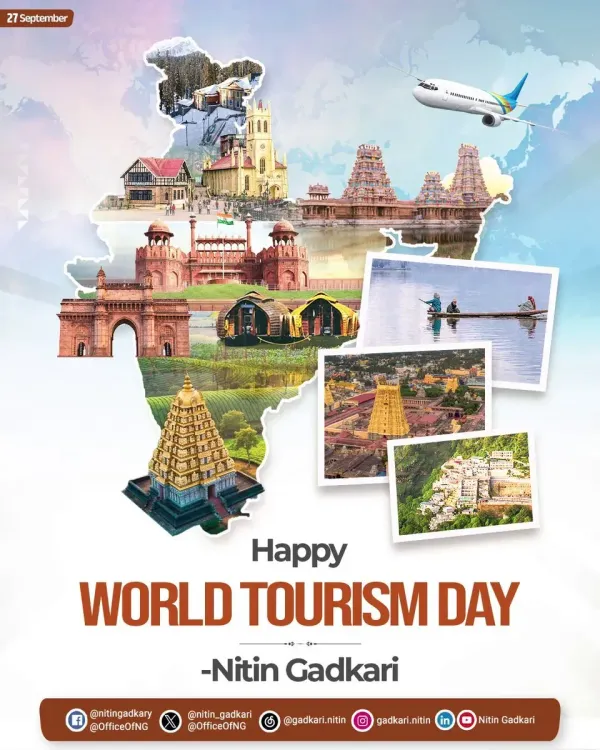
Union Minister Nitin Gadkari posted a message on 27 September 2026 marking World Tourism Day .
He called for tourism that is 'responsible, sustainable and inclusive' and preserves heritage for future generations.
Gadkari described India as offering 'a timeless journey of discovery' through its diversity of landscapes, traditions, history and living cultures.
World Tourism Day is an annual observance promoted by the UN World Tourism Organization to highlight tourism's social and economic role.
Gadkari's road-infrastructure portfolio directly intersects with tourism development, as highway connectivity opens up heritage and ecotourism destinations.
Every year on 27 September, the world pauses to reckon with what travel truly means — not just leisure, but livelihoods, living cultures, and the invisible bridges that connect strangers across borders. Union Road Transport and Highways Minister Nitin Gadkari marked World Tourism Day 2026 with a message urging Indians and the world to embrace tourism that is responsible, sustainable, and inclusive.
Posting on X, Gadkari wrote: 'Tourism connects people, cultures and communities, while creating livelihoods and fostering greater understanding across borders. Let us promote responsible, sustainable and inclusive tourism that preserves our heritage for generations to come.' He closed with a note that India, 'with its extraordinary diversity of landscapes, traditions, history and living cultures, offers a timeless journey of discovery.'
Why World Tourism Day carries economic weight for India
World Tourism Day is an annual observance promoted by the UN World Tourism Organization to highlight the sector's social, cultural, and economic role. For India, the stakes are substantial. The country's geographic and cultural spread — from the Himalayas to coastal Kerala, from the living traditions of Rajasthan to the ancient monuments of Hampi — makes tourism a natural pillar of soft power and domestic employment alike. Gadkari's message lands at an intersection that is central to his own portfolio: infrastructure and connectivity are the arteries through which tourism flows. Better highways, faster logistics, and improved rural road networks directly open up heritage towns, pilgrimage circuits, and ecotourism zones that might otherwise remain off the map for most travellers.Sustainability as the recurring refrain
The emphasis on 'responsible and sustainable' tourism in Gadkari's message echoes a broader official posture that Indian ministers have consistently struck on global observance days — positioning the country as a custodian of heritage rather than merely a consumer of it. The call to 'preserve heritage for generations to come' signals awareness that unchecked tourist footfall can erode the very assets that attract visitors in the first place. It is a tension India knows well. Sites such as Hampi, Varanasi's ghats, and the Western Ghats biodiversity corridor all sit at the crossroads of massive visitor interest and fragile cultural or ecological fabric. Sustainable tourism policy, in this light, is not just an aspiration — it is a necessity. India's tourism sector and the infrastructure that underpins it will need both political will and on-ground execution to turn this annual message into measurable gains for the communities that heritage tourism is meant to serve.Point of View
Invoking sustainable heritage tourism subtly frames road connectivity as a cultural good, not merely an engineering feat. The sustainability emphasis also reflects a growing official awareness that India's most prized tourism assets are finite and under pressure. Whether this message seeds any concrete follow-up — new heritage circuits, eco-tourism corridors, or community-based tourism schemes — will determine whether it is policy intent or seasonal rhetoric.
NationPress
27 Sept 2026
Frequently Asked Questions
When is World Tourism Day celebrated?
World Tourism Day is celebrated every year on 27 September , as designated by the UN World Tourism Organization, to highlight tourism's social, cultural, and economic significance.
What did Nitin Gadkari say on World Tourism Day 2026?
Gadkari called for 'responsible, sustainable and inclusive tourism' that creates livelihoods and preserves India's heritage, describing the country as offering 'a timeless journey of discovery' through its diversity of landscapes and living cultures.
What is the theme of sustainable tourism in India?
Sustainable tourism in India focuses on preserving cultural heritage and natural ecosystems while ensuring that local communities benefit economically — balancing visitor footfall with the long-term protection of sites like the Western Ghats , Hampi , and Varanasi's ghats .
How does Nitin Gadkari's ministry connect to tourism?
As Union Minister of Road Transport and Highways , Gadkari oversees the highway and rural road network that provides physical connectivity to heritage towns, pilgrimage circuits, and ecotourism zones across India, making infrastructure central to tourism growth.
Why is inclusive tourism important for India?
Inclusive tourism ensures that economic benefits from travel reach local and heritage communities — artisans, guides, homestay operators — rather than concentrating gains in large urban hospitality chains, directly supporting livelihoods at the grassroots level.