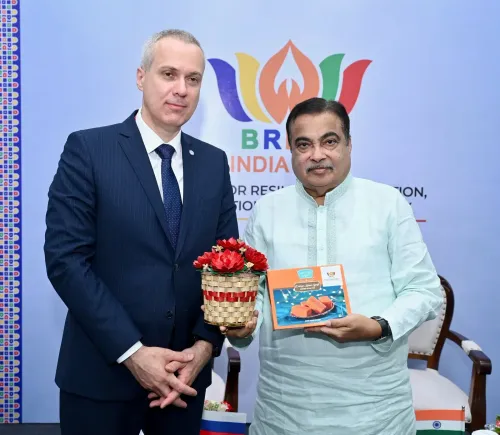
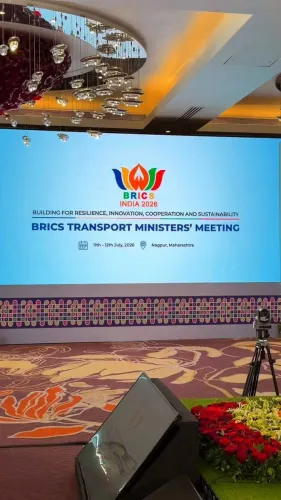
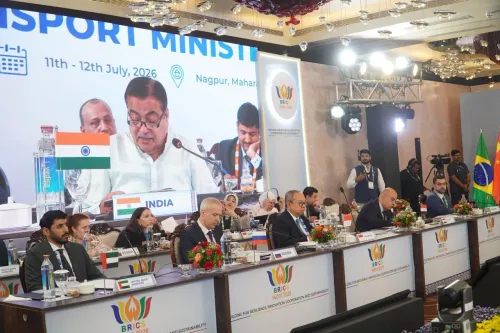
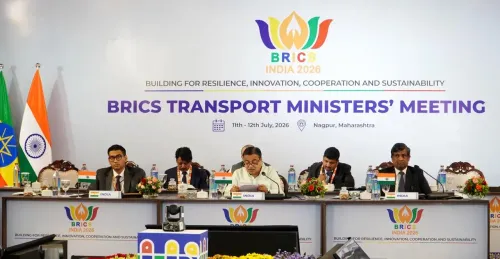
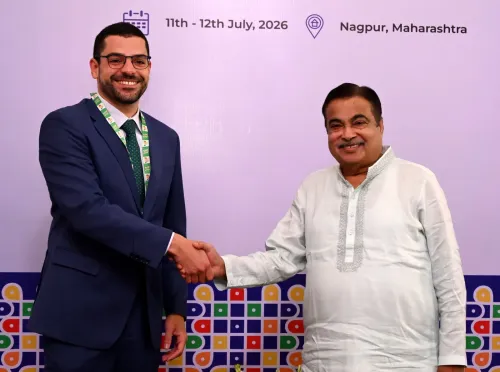
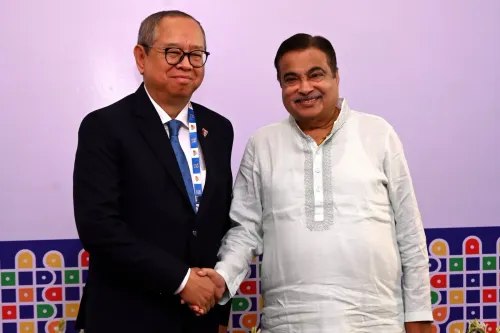
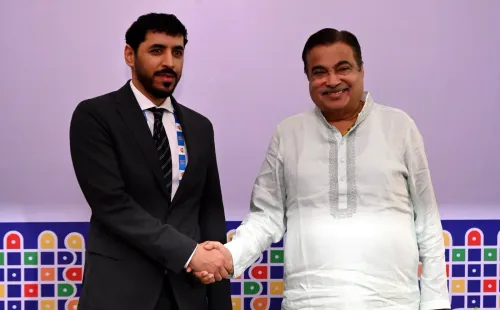
Gadkari at BRICS meet: India pushes sustainable, resilient transport agenda
Synopsis
At the BRICS Transport Ministers' Meeting in Nagpur, Nitin Gadkari positioned India not just as host but as a model — pointing to 10,000 km of Greenfield Expressways, near-complete rail electrification, and a Maritime Vision 2047 as proof points. The pitch: BRICS nations should jointly invest in green hydrogen, electric mobility, and digital transport rather than solve shared infrastructure challenges in isolation.
Key Takeaways
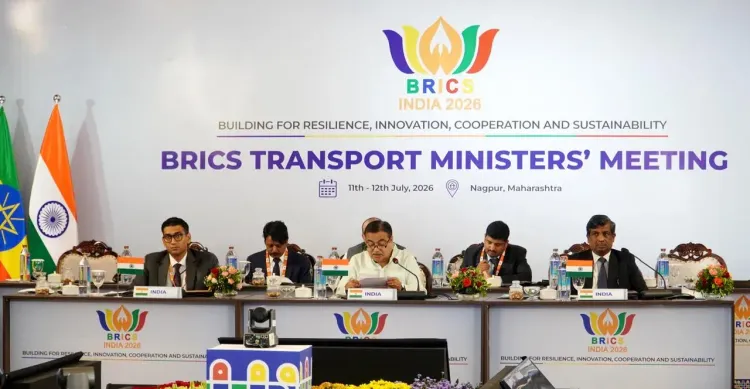
Nitin Gadkari addressed the third BRICS Transport Ministers' Meeting in Nagpur on 11 July under India's BRICS Chairship.
He called for joint BRICS collaboration on green hydrogen , electric mobility , alternative fuels , and digital transport systems .
India's BRICS Chairship theme is 'Building for Resilience, Innovation, Cooperation and Sustainability' , framed around Vasudhaiva Kutumbakam .
Gadkari cited India's world's second-largest road network and over 10,000 km of Greenfield Expressways as infrastructure benchmarks.
The Hybrid Annuity Model was highlighted as a replicable private-investment framework for BRICS economies.
Maritime priorities include the Maritime Amrit Kaal Vision 2047 and the Green Shipping initiative.
Union Minister for Road Transport and Highways Nitin Gadkari on Saturday, 11 July called on BRICS nations to deepen cooperation in building transport systems that are sustainable, resilient, inclusive and future-ready. Addressing the third BRICS Transport Ministers' Meeting held under India's BRICS Chairship in Nagpur, Gadkari argued that shared challenges — from infrastructure financing and urban congestion to road safety and last-mile connectivity — demand collective, not unilateral, solutions.
India's Offer to BRICS Partners
Gadkari reaffirmed India's readiness to expand engagement through knowledge sharing, capacity building, and technological collaboration. According to an official statement from the Ministry of Road Transport and Highways, the minister specifically flagged joint research opportunities in green hydrogen, electric mobility, alternative fuels, digital transport systems, and sustainable multimodal infrastructure as priority areas for collective action.
He framed the grouping's combined economic weight as a unique lever to shape global mobility, saying the collective strength of BRICS presents a rare opportunity to drive innovation and shared responsibility in transport.
India's BRICS Chairship Theme and Philosophy
The minister outlined that India's BRICS Chairship is anchored in the theme 'Building for Resilience, Innovation, Cooperation and Sustainability' — a people-centric framework inspired by the philosophy of Vasudhaiva Kutumbakam, or the world as one family. He described this as a 'Humanity First' approach to international cooperation, distinguishing India's presidency from a purely transactional infrastructure agenda.
India's Infrastructure Transformation: Key Milestones
Gadkari cited India's rapid sectoral transformation across road, rail, maritime, and aviation as evidence of the country's capacity to lead on this agenda. He pointed to India holding the world's second-largest road network and a significantly expanded access-controlled expressway grid. Specific projects highlighted included the Delhi-Dehradun Economic Corridor, the Sonamarg Tunnel, and over 10,000 kilometres of Greenfield Expressways as examples of combining infrastructure scale with environmental sustainability.
The Hybrid Annuity Model was presented as a proven framework for attracting private investment into public infrastructure — a model Gadkari suggested could offer lessons for other BRICS economies navigating similar financing gaps.
Railways and Maritime Sectors in Focus
On rail, the minister highlighted near-complete electrification of India's broad-gauge network, the expansion of Vande Bharat services, ongoing progress on the Mumbai-Ahmedabad High-Speed Rail Corridor, and the engineering landmark of the new Pamban Bridge.
In maritime, Gadkari drew attention to the Maritime Amrit Kaal Vision 2047, digital initiatives including e-Navik and e-Samudra, and the Green Shipping initiative as steps towards modernising India's ports and logistics ecosystem. This comes amid a broader government push to reduce logistics costs — currently estimated at around 13-14% of GDP — to bring India in line with global benchmarks.
What Comes Next
The BRICS Transport Ministers' Meeting under India's chairship is expected to produce a joint declaration outlining areas of cooperation. With BRICS economies collectively accounting for a significant share of global infrastructure investment and carbon emissions from transport, the outcomes of this meeting will be closely watched by multilateral development banks and climate finance bodies.
Point of View
Which now spans economies with sharply divergent emissions profiles and infrastructure financing models, can move beyond ministerial declarations to binding cooperation frameworks. Past BRICS summits have produced ambitious transport language with limited follow-through. India's chairship theme of 'Resilience, Innovation, Cooperation and Sustainability' is well-crafted, but the test will be whether the Nagpur meeting produces a joint declaration with measurable commitments — or another aspirational communiqué that sits on a shelf.
NationPress
10 Oct 2026
Frequently Asked Questions
What was the BRICS Transport Ministers' Meeting in Nagpur about?
The third BRICS Transport Ministers' Meeting, held in Nagpur on 11 July under India's BRICS Chairship, focused on deepening cooperation among member nations on sustainable, resilient, and inclusive transport systems. Key topics included infrastructure financing, green mobility, road safety, and last-mile connectivity.
What cooperation did Gadkari propose at the BRICS meeting?
Gadkari proposed joint BRICS collaboration in green hydrogen, electric mobility, alternative fuels, digital transport systems, and sustainable multimodal infrastructure. He also offered India's experience in knowledge sharing and capacity building as a resource for partner nations.
What is India's BRICS Chairship theme for transport?
India's BRICS Chairship is guided by the theme 'Building for Resilience, Innovation, Cooperation and Sustainability,' reflecting a people-centric 'Humanity First' approach inspired by the philosophy of Vasudhaiva Kutumbakam.
Which Indian infrastructure projects did Gadkari highlight at the BRICS meet?
Gadkari highlighted the Delhi-Dehradun Economic Corridor, the Sonamarg Tunnel, over 10,000 km of Greenfield Expressways, the Mumbai-Ahmedabad High-Speed Rail Corridor, the new Pamban Bridge, and the Maritime Amrit Kaal Vision 2047, among others.
What is the Hybrid Annuity Model that Gadkari mentioned?
The Hybrid Annuity Model is a public-private partnership framework used in India to mobilise private investment for road infrastructure projects. Gadkari presented it at the BRICS meeting as a successful model that other emerging economies could potentially adapt for their own infrastructure financing needs.