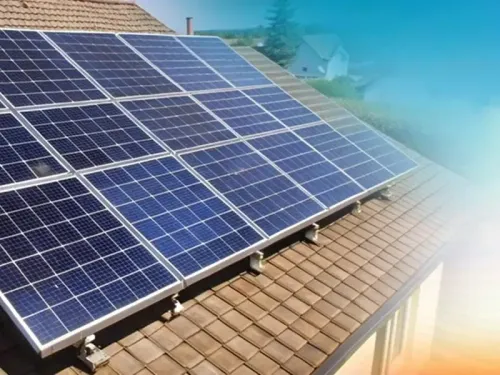
PM Surya Ghar Yojana cuts electricity bills to zero in Chhattisgarh's Gariaband

Synopsis
In Chhattisgarh's Gariaband district, rooftop solar installations under PM Surya Ghar: Muft Bijli Yojana have pushed household electricity bills to zero — with some residents now selling surplus power back to the grid. With subsidies of up to ₹1.08 lakh per household and a national target of one crore homes by March 2027, Atarmara village is an early proof-of-concept for India's most ambitious domestic solar push.
Key Takeaways
Residents of Atarmara village, Gariaband, Chhattisgarh have seen electricity bills drop to zero after installing rooftop solar panels under PM Surya Ghar: Muft Bijli Yojana .
A 3-kilowatt system generated 700–800 units over three months, eliminating bills that previously ranged from ₹900 to ₹1,100 per month.
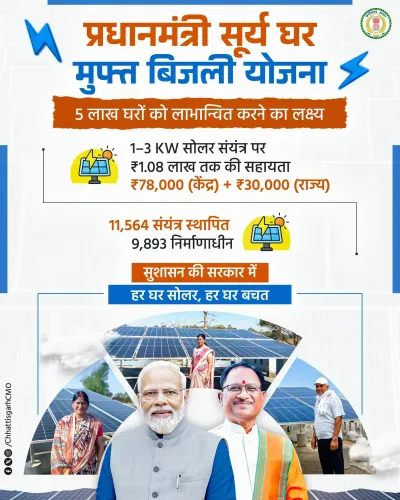
Beneficiaries received a total subsidy of ₹1.08 lakh — ₹78,000 from the Centre and ₹30,000 from the Chhattisgarh state government.
Some households are feeding 70–80 units of surplus electricity back to the grid each month.
The scheme targets solar power supply to more than one crore households across India by March 2027 .
Residents of Atarmara village in Gariaband district, Chhattisgarh, are reporting dramatic reductions in household electricity bills — with several claiming their power costs have dropped to zero — after enrolling under the PM Surya Ghar: Muft Bijli Yojana. The rooftop solar scheme, billed as the world's largest domestic solar initiative, is generating tangible relief for lower-income families across the region.
How the Scheme Is Working on the Ground
Villagers in Atarmara who installed rooftop solar panels under the scheme report that their monthly electricity bills have either halved or been eliminated entirely. Some households are producing surplus power and feeding units back into the grid, effectively monetising their solar installations.
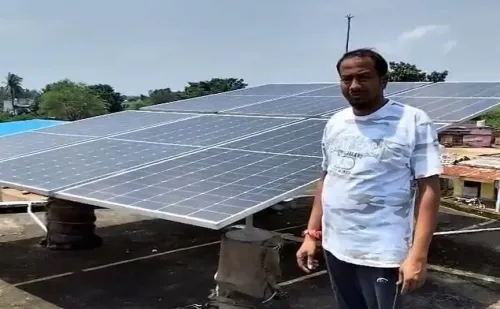
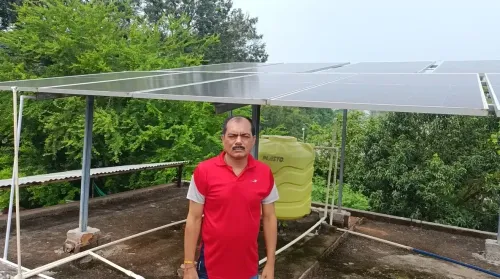
Surendra Kumar Sen, a local resident, had a 3-kilowatt solar panel system installed at his home. Over the past three months, the system generated between 700 and 800 units of electricity. His monthly bill, which previously ranged from ₹900 to ₹1,100, has been cut drastically as a result.
Subsidy Structure: Centre and State Share the Cost
Under the scheme, Surendra Kumar Sen received a total subsidy of ₹1.08 lakh during installation. Of this, ₹78,000 came from the Central government and ₹30,000 from the Chhattisgarh state government. The combined subsidy significantly reduces the upfront cost burden on beneficiaries, making the scheme accessible to households that would otherwise be unable to afford solar infrastructure.
Beneficiaries Describe the Impact
Another beneficiary from the village said the scheme had brought meaningful relief. 'PM Surya Ghar Yojana has brought benefits to many ordinary beneficiaries. I installed a 3-kilowatt solar panel system at my home three months ago. During this period, the system generated around 700 to 800 units of electricity. I have received considerable relief on my electricity bill; previously, the cost ranged from ₹900 to ₹1,100, now I am actually feeding about 70 to 80 units back to the grid,' the beneficiary said.
Others described the Central welfare scheme as highly beneficial for lower-income groups, noting it provides sustained relief from the burden of high power bills — a recurring strain for rural and semi-urban households in Chhattisgarh.
About PM Surya Ghar: Muft Bijli Yojana
The PM Surya Ghar: Muft Bijli Yojana is described as the world's largest domestic rooftop solar initiative. Its stated goal is to supply solar power to more than one crore households across India by March 2027. The scheme aims to transform India's residential energy landscape by combining Central and state subsidies with grid-connectivity provisions that allow surplus power to be sold back to distribution companies.
The developments in Gariaband offer an early on-ground signal of how the scheme is translating into lived savings — and whether the policy's ambitions can scale beyond pilot pockets to reach its one-crore household target.
Point of View
But a handful of villages in one district does not validate a one-crore-household target. The scheme's real stress test lies in states with weaker distribution infrastructure, lower rooftop viability, and slower subsidy disbursement pipelines. The grid feed-in model also depends on DISCOM solvency — many state utilities are already in deficit, raising questions about whether surplus power credits will be honoured reliably at scale. The policy is directionally sound; the execution risk is everything.
NationPress
20 Oct 2026
Frequently Asked Questions
What is PM Surya Ghar: Muft Bijli Yojana?
PM Surya Ghar: Muft Bijli Yojana is the Central government's rooftop solar scheme, described as the world's largest domestic solar initiative. It aims to supply solar power to more than one crore households across India by March 2027, with combined Central and state subsidies to reduce installation costs for beneficiaries.
How much subsidy do beneficiaries receive under the scheme?
Beneficiaries can receive a combined subsidy of up to ₹1.08 lakh for a 3-kilowatt system — ₹78,000 from the Central government and ₹30,000 from the state government, as seen in Chhattisgarh. The exact state component may vary by state.
How much can a 3-kilowatt solar system save on electricity bills?
Based on reported experience in Gariaband, a 3-kilowatt system can generate 700–800 units over three months, reducing monthly bills that previously ranged from ₹900 to ₹1,100 to near zero. Some households also feed 70–80 surplus units back to the grid each month.
Who is eligible for PM Surya Ghar Yojana?
The scheme is targeted at residential households, with a focus on providing relief to lower-income groups burdened by high electricity costs. Eligible households can apply to have rooftop solar panels installed with Central and state subsidies covering a significant portion of the cost.
What is the national target of PM Surya Ghar Yojana?
The scheme aims to provide rooftop solar power to more than one crore households across India by March 2027, making it the world's largest domestic rooftop solar initiative according to government claims.