Giriraj Singh shares post on Bastar's shift from violence to Olympics
Synopsis
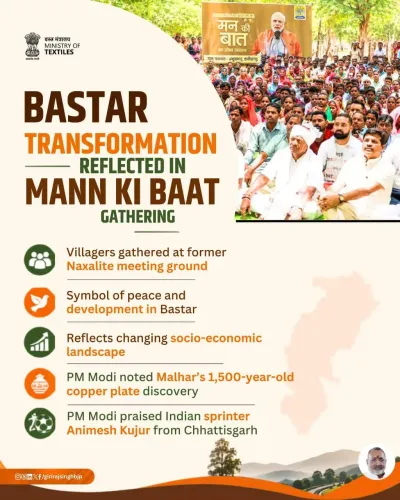
Union Textiles Minister Giriraj Singh amplified a post on June 23, 2026, crediting PM Modi's SAMADHAN doctrine and development push with driving Maoist surrenders in Bastar, Chhattisgarh, and enabling community sporting events in a once violence-ravaged region.
Key Takeaways
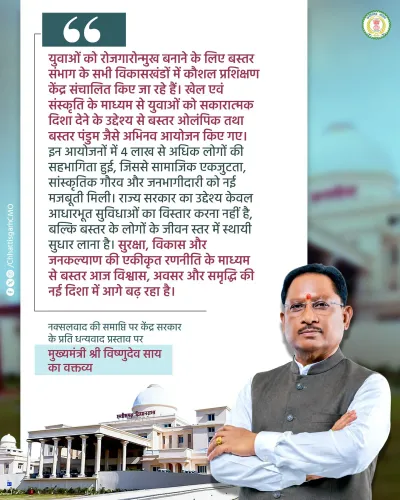
Union Textiles Minister Giriraj Singh shared content on June 23, 2026 , highlighting Bastar's shift from Maoist violence to community events like the Bastar Olympics .
The post references 17,000 violent incidents as the historical baseline against which current progress is measured.
The Modi government's SAMADHAN doctrine , unveiled in 2017 , combined security operations with development and rehabilitation in LWE-affected areas.
The Aspirational Districts Programme (2018) directed targeted investment in health, education, and infrastructure across Bastar districts.
Bastar Olympics is positioned as a youth engagement and deradicalisation initiative complementing security measures.
Key stakeholders — Bastar tribals, security forces, and surrendered Maoists — stand to benefit most from sustained peace in the region.
Union Textiles Minister Giriraj Singh on Tuesday, June 23, 2026, shared a post on X highlighting what he described as a dramatic transformation in Bastar, the insurgency-hit region in southern Chhattisgarh, crediting Prime Minister Narendra Modi with driving Maoist surrenders and enabling a shift from decades of violence to community-level sporting events.
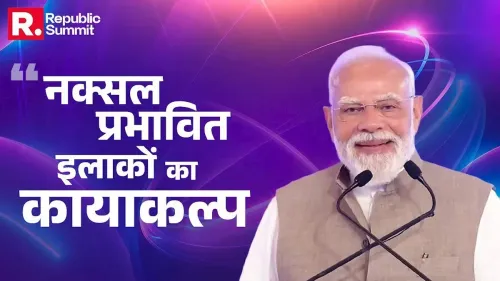
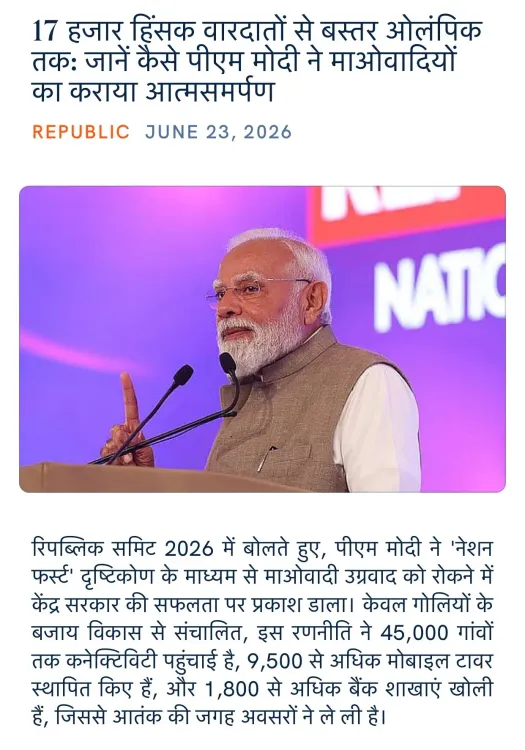
The post, shared via the NaMo App, linked to an article headlined '17 hazar hinsak vardaton se Bastar Olympics tak' ('From 17,000 violent incidents to Bastar Olympics'), framing the change as a policy achievement of the Modi government. Singh, a senior BJP leader and Lok Sabha MP from Begusarai, Bihar, has consistently amplified the central government's messaging on internal security and governance milestones.
Context
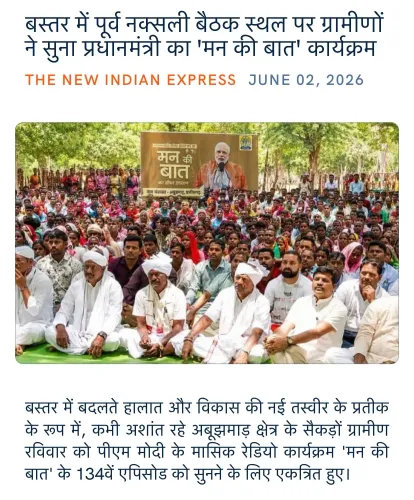
Bastar, a heavily forested division in southern Chhattisgarh, has for decades been one of the most conflict-affected zones in India's battle against Left Wing Extremism (LWE). Maoist groups, also known as Naxalites, carried out attacks on security forces, civilians, and infrastructure across the region. The Ministry of Home Affairs has previously documented peak LWE violence in the late 2000s and early 2010s, with official data showing a gradual decline in incidents through coordinated central and state operations in subsequent years.
The reference to 17,000 violent incidents in the post's headline appears to span the historical arc of the insurgency. The Bastar Olympics is cited as a recent initiative using sports and cultural activities to engage local youth and support deradicalisation efforts in the region.
Policy Backdrop
The Modi government unveiled the SAMADHAN doctrine in 2017, a multi-pronged framework combining security operations, development spending, and rehabilitation for LWE-affected areas. The strategy involves deployment of central paramilitary forces alongside accelerated infrastructure projects — roads, bridges, mobile connectivity — in districts that were previously inaccessible due to insurgent activity.
The Aspirational Districts Programme, launched in 2018, brought several LWE-affected districts in Chhattisgarh and neighbouring states under a focused governance improvement drive. Bastar districts featured prominently in this scheme, receiving targeted investment in health, education, and livelihoods. Officials have pointed to rising surrender numbers among Maoist cadres as evidence of the combined approach yielding results.
Stakeholders and Impact
The primary beneficiaries of any sustained peace in Bastar are its tribal communities, who bore the brunt of both insurgent violence and the disruption caused by prolonged conflict. Security forces — including the Central Reserve Police Force (CRPF) and state police — have sustained significant casualties over the years, making any reduction in hostilities a direct operational gain.
Surrendered Maoists form another key stakeholder group. Rehabilitation packages offered by the Chhattisgarh government and the Centre aim to reintegrate former cadres into mainstream society. Initiatives such as the Bastar Olympics are positioned as soft-power complements to these harder security measures, offering youth an alternative identity and community participation.
What's Next
Parliamentary scrutiny of LWE funding allocations and any new rehabilitation packages announced by the Home Ministry will be closely watched as indicators of whether the current policy trajectory is being sustained. The rollout and potential expansion of sports and cultural programmes across Bastar's districts will also serve as a measure of the government's confidence in the ground situation. Any uptick in violence or reversal of surrender trends would test the durability of the gains being cited by ruling party leaders.
Point of View
Collapsing a complex decade-long security and development story into a single before-and-after frame. What the messaging elides is the role of state governments, local administration, and security forces whose sustained ground-level work underpins any such transformation. The broader policy arc — from SAMADHAN to Aspirational Districts — does carry genuine substance, but political amplification by cabinet ministers inevitably colours how that substance is received.
NationPress
22 Sept 2026
Frequently Asked Questions
What is the Bastar Olympics?
The Bastar Olympics is a sports and cultural initiative in the Bastar region of Chhattisgarh aimed at engaging local youth and supporting deradicalisation efforts in areas formerly affected by Maoist insurgency.
How many violent incidents have occurred in Bastar due to Maoists?
A post shared by Union Textiles Minister Giriraj Singh referenced a figure of 17,000 violent incidents as the historical backdrop to the region's recent transformation; this figure spans the broader arc of the Left Wing Extremism conflict in the area.
What is the SAMADHAN doctrine?
The SAMADHAN doctrine, unveiled by the central government in 2017, is a multi-pronged strategy to tackle Left Wing Extremism through a combination of security operations, development spending, and rehabilitation programmes for surrendered Maoist cadres.
Why is Giriraj Singh talking about Bastar?
Union Textiles Minister and senior BJP leader Giriraj Singh shared a post on June 23, 2026, amplifying the Modi government's narrative of progress in Bastar, framing Maoist surrenders and events like the Bastar Olympics as outcomes of central government policy.
What is the Aspirational Districts Programme and how does it relate to Bastar?
The Aspirational Districts Programme, launched in 2018, targets underdeveloped districts — including several in Bastar — with focused investment in health, education, and infrastructure to improve governance and reduce the conditions that fuel extremism.