Giriraj Singh hails Modi's craft diplomacy on world stage
Synopsis
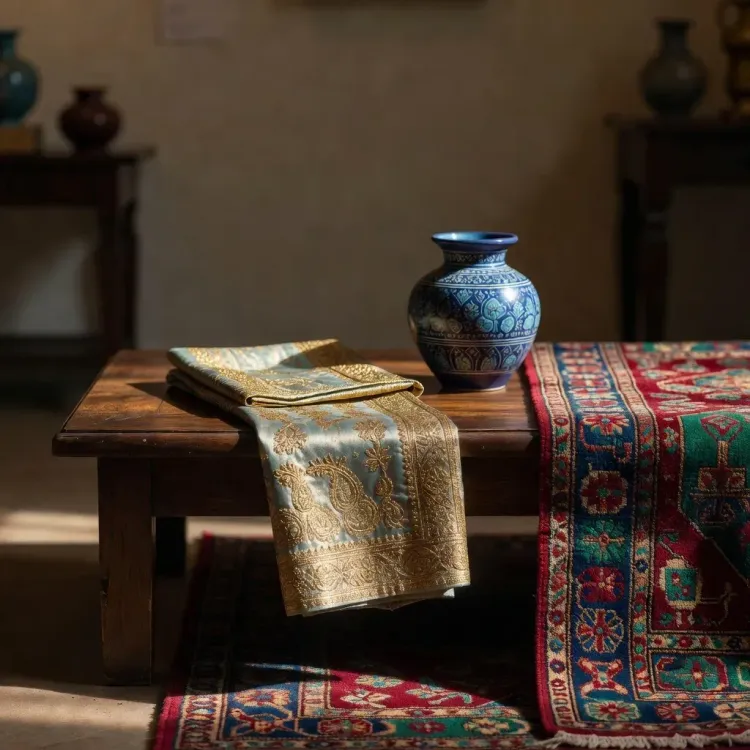
Union Textiles Minister Giriraj Singh praised PM Modi's diplomatic gifting of Pichwai paintings, Jaipur Blue Pottery, Banarasi silk, and Kashmiri carpets to global leaders, calling it a tribute to India's heritage and artisan skill.
Key Takeaways
Giriraj Singh on 19 November 2026 praised PM Modi for gifting traditional Indian crafts to world leaders as an act of cultural diplomacy.
The crafts highlighted include Rajasthan's Pichwai paintings , Jaipur Blue Pottery , Banarasi silk , and Kashmiri carpets .
Banarasi sarees received Geographical Indication protection in 2009 ; Kashmir Pashmina was GI-tagged in 2008 .
India's diplomatic gifting tradition spans successive governments but has gained heightened public visibility under PM Modi .
Handloom weavers and handicraft artisans in Rajasthan, Uttar Pradesh , and Jammu & Kashmir stand to benefit from the global exposure such gifting generates.
The key unresolved challenge is converting diplomatic visibility into sustained income gains for grassroots artisan clusters.
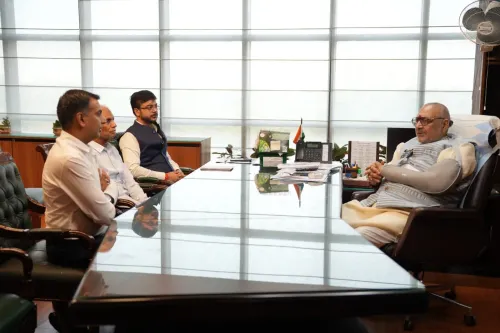
Every time Prime Minister Narendra Modi places a piece of Banarasi silk or a Kashmiri carpet in the hands of a world leader, he is doing something a trade fair never quite can — making a civilisation felt, not just seen. Union Textiles Minister Giriraj Singh marked that point sharply on Thursday, 19 November 2026, praising PM Modi's practice of gifting traditional Indian art and handicraft to global leaders as a commendable effort to win international recognition for India's rich cultural heritage.
Posting on X, Singh wrote — 'यह हमारी विरासत और कारीगरों के कौशल का सम्मान है' — 'This is a tribute to our heritage and the skill of our artisans.' He name-checked four of India's most storied craft traditions: Rajasthan's Pichwai paintings, Jaipur Blue Pottery, Banarasi silk, and Kashmiri carpets, calling out each as proof that Indian artisans are carving out a distinct identity on the global stage.
Four crafts, centuries of mastery behind each name
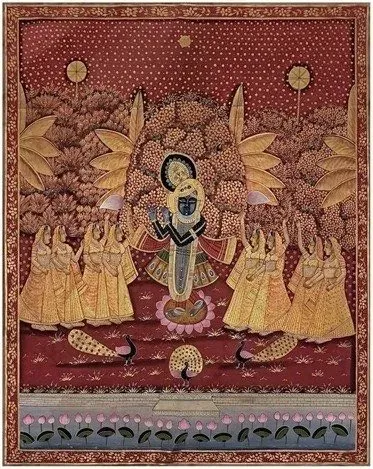
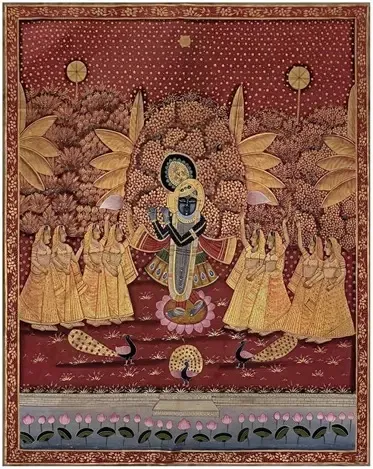
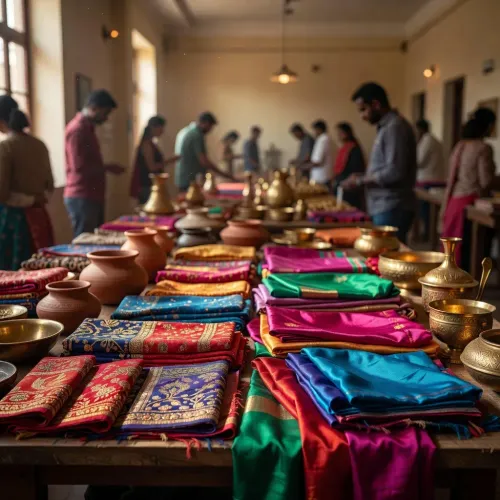
Pichwai paintings, devotional cloth works depicting Lord Krishna, originated in Nathdwara, Rajasthan, several centuries ago and remain alive in the hands of a handful of hereditary painter families. Jaipur Blue Pottery — technically not clay-based at all, but a Turko-Persian art form absorbed into Rajput court culture — has been a GI-tagged product since its registration in India's Geographical Indications registry. Both represent Rajasthan's outsized role in India's handicraft export map.
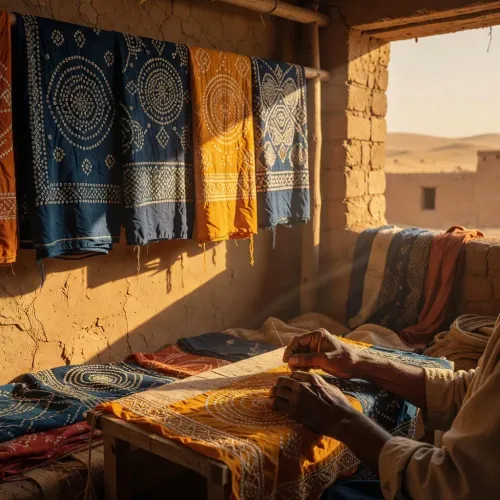
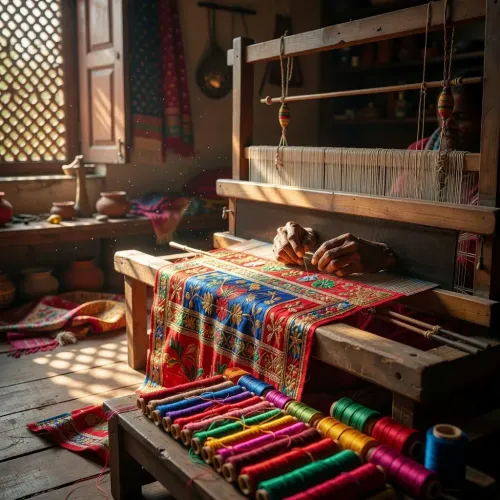
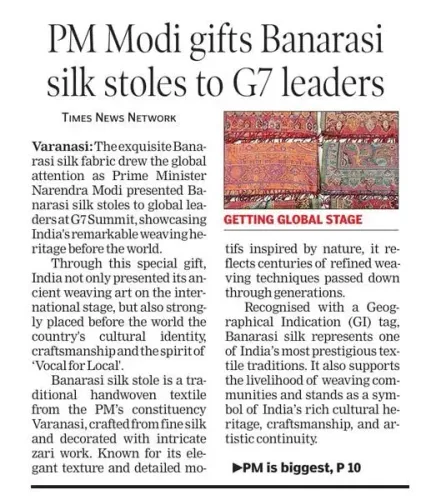
Banarasi sarees received formal Geographical Indication protection in 2009, shielding the weavers of Varanasi, Uttar Pradesh from cheap imitations. Kashmir Pashmina was similarly protected in 2008. The GI tags do more than protect IP — they anchor a price premium and a provenance story that makes these products ideal diplomatic currency. When a head of state unwraps a GI-tagged craft, the story of the artisan is already embedded in the gift.
Soft power with a supply-chain address
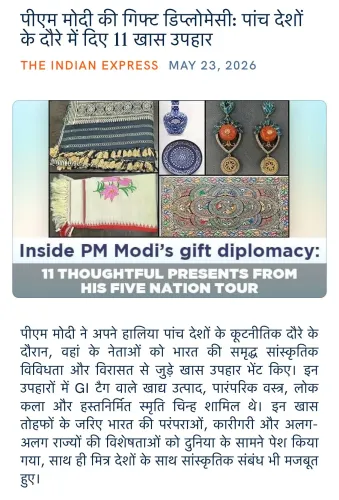
India's use of textiles and crafts as diplomatic gifts is not new — successive governments have leaned on this playbook at bilateral meetings and multilateral forums. What has changed under Modi is the deliberateness and visibility: the choice of craft is often calibrated to the visiting leader's country, and the gifting moment is narrated publicly, amplifying reach well beyond the protocol room.
For a minister who oversees the textiles sector, Singh's enthusiasm here runs deeper than ceremonial solidarity. Every high-profile gifting episode functions as earned media for export promotion — a live demonstration that these products carry the weight of history alongside a purchase order. Handloom weavers and handicraft clusters across Rajasthan, Uttar Pradesh, and Jammu & Kashmir are the quiet beneficiaries of a foreign-policy moment that most trade missions could not replicate.
The challenge, as craftspersons' associations have long argued, lies in translating diplomatic visibility into durable market access — getting the artisan's income to rise alongside the product's global profile. That linkage is exactly where the Ministry of Textiles' next move will be watched most closely.
Point of View
This kind of high-level visibility is most meaningful if it is paired with cluster-level export infrastructure; without that last mile, diplomatic gifting risks becoming a prestige exercise that the artisan watches from a distance. The pattern also points to a broader BJP strategy of weaving cultural heritage into governance identity — an approach that resonates strongly with both domestic voters and diaspora audiences.
NationPress
19 Nov 2026
Frequently Asked Questions
What crafts did PM Modi gift to world leaders according to Giriraj Singh?
According to Giriraj Singh's post, PM Modi has gifted Pichwai paintings and Jaipur Blue Pottery from Rajasthan, Banarasi silk from Varanasi, and Kashmiri carpets to global leaders.
What is a Pichwai painting?
A Pichwai is a devotional cloth painting from Nathdwara, Rajasthan, traditionally depicting Lord Krishna. It is one of India's most recognised temple art forms and is created by hereditary painter communities.
Is Banarasi silk a GI-tagged product?
Yes. Banarasi sarees received Geographical Indication protection in 2009, legally safeguarding the weavers of Varanasi, Uttar Pradesh from imitation products.
Why does India use traditional crafts as diplomatic gifts?
India uses crafts as diplomatic gifts to project cultural soft power, showcase its artisan heritage to global audiences, and create earned media that supports handicraft exports — a practice maintained across successive governments.
What is the role of Giriraj Singh in India's textiles sector?
Giriraj Singh is the Union Minister of Textiles, a senior BJP leader and Lok Sabha MP from Begusarai, Bihar. He oversees policy for India's handloom, handicraft, and broader textile industries.