Giriraj Singh Reviews India's Textile Export Schemes
Synopsis
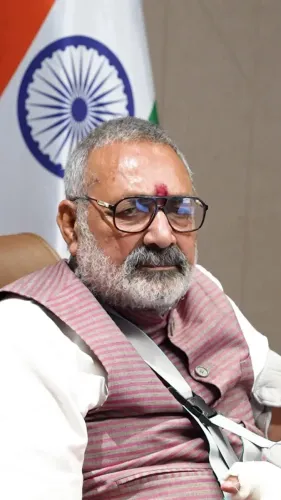
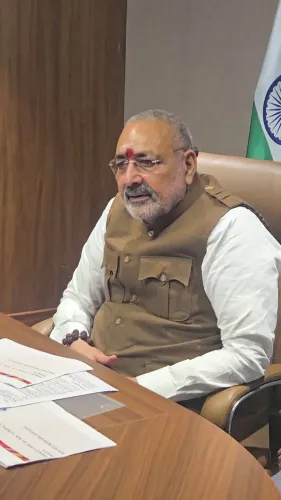
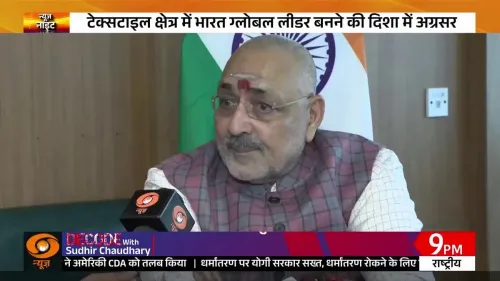
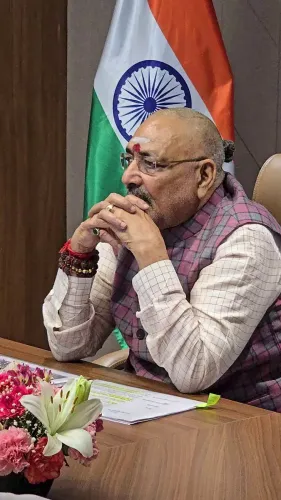
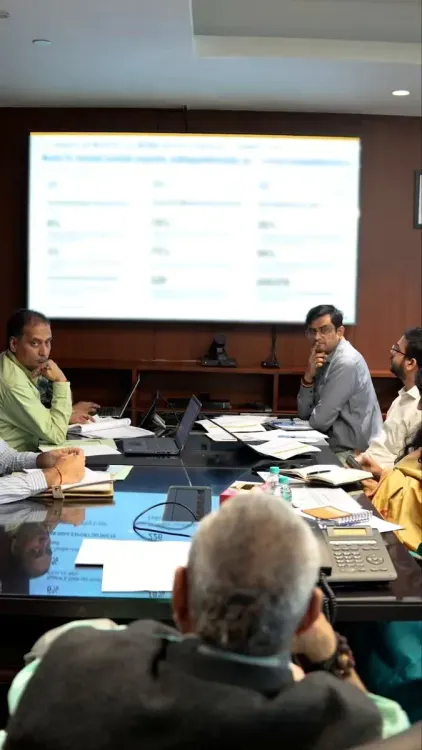
Union Textiles Minister Giriraj Singh on November 19, 2026 chaired a review meeting with senior ministry officials to assess the current state of India's textile and apparel exports and the impact of global market conditions on the domestic industry.
Key Takeaways
Union Textiles Minister Giriraj Singh chaired a review meeting with senior Ministry of Textiles officials on November 19, 2026 .
Discussions covered the current status of India's textile and apparel exports and their impact on the textile industry.
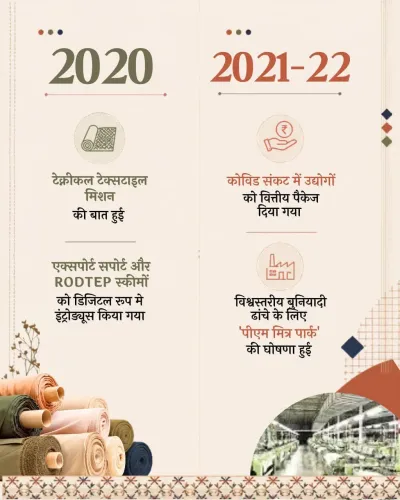
The RoSCTL scheme (since 2019 ) reimburses embedded taxes for textile exporters to keep Indian products price-competitive globally.
The PLI scheme for man-made fibre apparel and technical textiles (notified 2021 ) aims to attract investment into higher-value segments.
India competes with Bangladesh and Vietnam for global apparel orders, making periodic policy reviews critical for exporters and textile MSMEs .
Scheme modifications or fresh allocations could emerge ahead of the upcoming Union Budget cycle.
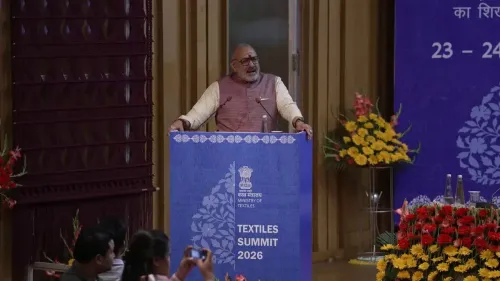
India's textile export strategy came under the microscope on Thursday, November 19, 2026, as Union Textiles Minister Giriraj Singh chaired a high-level review meeting with senior officials of the Ministry of Textiles — a signal that the government is actively tracking how global headwinds are landing on one of the country's most employment-intensive sectors.
Posting on X after the meeting, the minister confirmed that discussions covered the 'current status of textiles and apparel exports from India to the world and various subjects related to their impact on the textile industry' — a wide-angle sweep that points to both the opportunity and the pressure facing exporters right now.
Why this review matters: Bangladesh, Vietnam, and the battle for orders
India's textile sector does not operate in a vacuum. It competes directly with Bangladesh and Vietnam for global apparel orders, and any softness in demand from key markets in Europe and North America ripples quickly through mill towns and export clusters. Periodic ministerial reviews of this kind are the government's early-warning mechanism — a chance to identify bottlenecks before they become crises and to calibrate schemes before shipment numbers slip.
At the core of that toolkit sit two flagship interventions. The Rebate of State and Central Taxes and Levies (RoSCTL) scheme, operational since 2019, reimburses embedded taxes that exporters cannot otherwise recover — keeping Indian garments price-competitive on global racks. The Production Linked Incentive (PLI) scheme for man-made fibre apparel and technical textiles, notified in 2021, is designed to pull fresh investment into higher-value segments and reduce dependence on cotton alone.
MSMEs in the room — even when they are not
The sector's real weight is carried by its MSMEs — small spinning mills, weaving units, and garment factories that together account for the bulk of textile employment in states like Gujarat, Tamil Nadu, Maharashtra, and Uttar Pradesh. When export momentum stalls, it is these units that feel the squeeze first, through delayed payments and shrinking order books. A ministerial review that explicitly frames discussions around 'impact on the textile industry' is, in effect, keeping that MSME reality in view.
Textiles remain one of India's top merchandise export categories and a critical source of foreign exchange — making scheme calibration a macroeconomic task as much as a sectoral one. With the Union Budget cycle approaching, any decisions flowing from today's deliberations could translate into revised allocations or scheme modifications in the months ahead.
The looms are running. Whether the orders keep pace will depend, in no small part, on how sharply the ministry acts on what it heard in that room today.
Point of View
The ministry is laying groundwork for possible budgetary adjustments — a pattern consistent with how the government has used RoSCTL and PLI as levers to defend India's export market share in the past. For a sector that employs tens of millions and ranks among India's top foreign-exchange earners, the timing of such reviews — close to the Budget cycle — often determines whether exporters head into the new financial year with enhanced support or stagnant incentives.
NationPress
19 Nov 2026
Frequently Asked Questions
What did Giriraj Singh's textile review meeting cover?
The meeting on November 19, 2026 reviewed the current status of India's textile and apparel exports and discussed various subjects related to their impact on the textile industry, with senior Ministry of Textiles officials.
What is the RoSCTL scheme for textile exporters?
The Rebate of State and Central Taxes and Levies (RoSCTL) scheme, operational since 2019, refunds embedded taxes and levies that textile exporters cannot otherwise recover, helping Indian products remain price-competitive in global markets.
What is the PLI scheme for textiles in India?
The Production Linked Incentive (PLI) scheme for man-made fibre apparel and technical textiles was notified in 2021 to attract fresh investment into higher-value textile segments and boost India's exports beyond traditional cotton-based products.
Why does India review its textile export schemes periodically?
India reviews textile export schemes to respond to global market fluctuations, supply chain shifts, and competition from countries like Bangladesh and Vietnam, ensuring exporters and MSMEs remain supported and competitive.
How significant is the textile sector to India's economy?
Textiles are among India's top merchandise export categories and a major source of foreign exchange, while also being one of the country's largest employment generators, particularly for MSMEs across states like Gujarat, Tamil Nadu, Maharashtra and Uttar Pradesh.