Giriraj Singh disburses ₹102 cr SHG loans in Begusarai
Synopsis
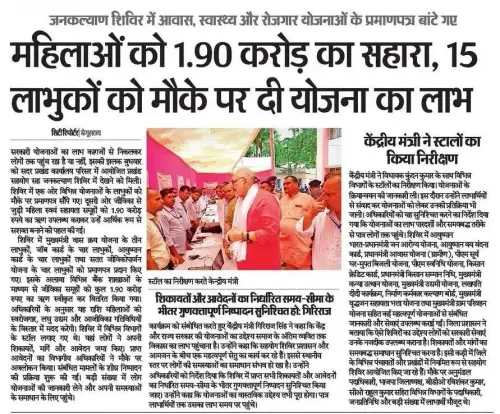
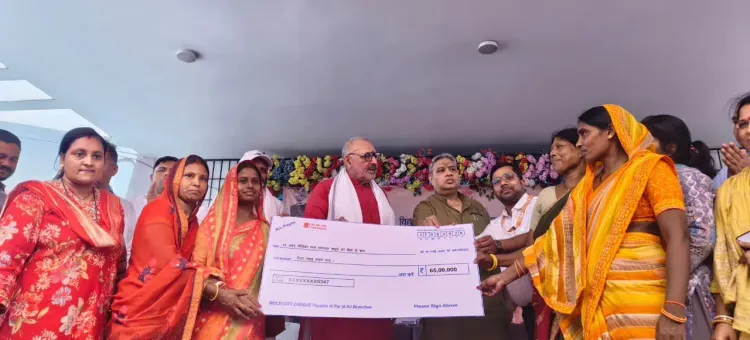
Union Textiles Minister Giriraj Singh attended a block-level event in Begusarai on 17 June 2026 where Bihar Gramin Bank disbursed ₹102 crore to 3,406 SHGs, Bank of Baroda transferred ₹65 lakh to 60 SHGs, and 60 beneficiaries received ₹23 lakh under the Satat Jeevikoparjan Yojana.
Key Takeaways
Bihar Gramin Bank transferred ₹102 crore in loans to 3,406 self-help groups at the Begusarai block-level event.
Bank of Baroda disbursed ₹65 lakh to 60 self-help groups at the same programme.
60 beneficiaries received an investment fund of ₹23 lakh under the Satat Jeevikoparjan Yojana .
Five beneficiaries were awarded 'Graduation Certificates' under a progressive increment policy recognising sustainable livelihood attainment.
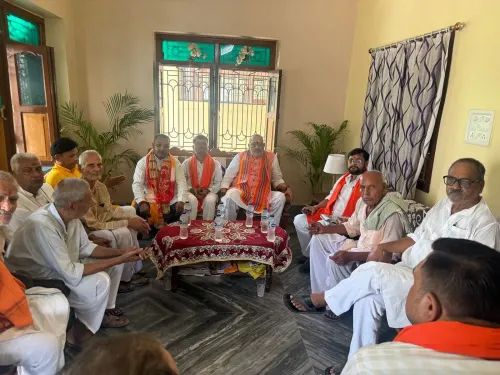
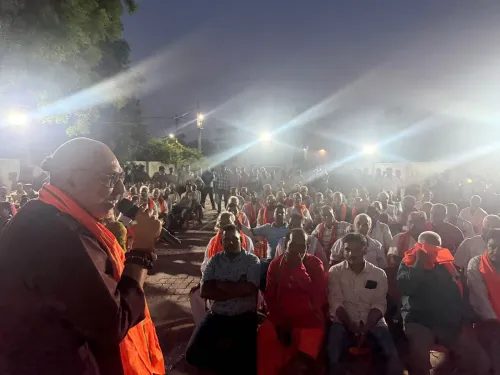
The event was held at a block office within the Begusarai assembly constituency , with Giriraj Singh personally present.
The disbursements align with India's DAY-NRLM framework, one of the world's largest SHG-bank linkage programmes.
Union Textiles Minister Giriraj Singh personally attended a block-level event in Begusarai on 17 June 2026, where Bihar Gramin Bank transferred loans worth ₹102 crore to 3,406 self-help groups and Bank of Baroda disbursed ₹65 lakh to 60 self-help groups, alongside investment support and graduation certificates for rural beneficiaries under state livelihood schemes.
Context
Posting on X in Hindi, Singh wrote that 'Bihar Gramin Bank dwara 3,406 swayam sahayata samuohon ko ₹102 crore' ('Bihar Gramin Bank transferred loan amounts of ₹102 crore to 3,406 self-help groups') and that Bank of Baroda separately transferred ₹65 lakh to 60 SHGs. The programme was held at a block office within the Begusarai assembly constituency, which falls under Singh's Lok Sabha seat.
Additionally, under the Satat Jeevikoparjan Yojana — a Bihar government livelihood scheme — 60 beneficiaries received investment funds worth ₹23 lakh. A further five beneficiaries were awarded 'Graduation Certificates' under a progressive increment policy, recognising their transition to sustainable livelihoods.
Policy Backdrop
The disbursement draws on India's Deendayal Antyodaya Yojana – National Rural Livelihoods Mission (DAY-NRLM), launched in 2011, which remains one of the world's largest SHG-bank linkage programmes. Under this framework, rural women are organised into thrift-and-credit groups that access institutional finance for micro-enterprise and income-generation activities.
Bihar's state-level Satat Jeevikoparjan Yojana complements central funding by providing targeted investment support and skill-linked graduation pathways to households in SHGs. The 'graduation' mechanism is designed to move the most vulnerable families from subsistence to stable, diversified livelihoods.
Stakeholders and Impact
The primary beneficiaries are women SHG members and rural households across blocks within Begusarai. The combined credit infusion of over ₹102 crore from Bihar Gramin Bank alone represents significant institutional capital flowing into grassroots women-led groups in a single event.
Singh described the initiative as 'an important step towards women's economic empowerment and strengthening rural livelihoods,' underscoring the dual focus on credit access and formal recognition of livelihood progress. Both Bihar Gramin Bank and Bank of Baroda are key institutional partners in delivering rural credit at the last mile in Bihar.
What's Next
Observers will watch for utilisation certificates and repayment performance data from this disbursement cycle, which will indicate whether the credit reaches productive end-use among SHG members. Broader scale-up of Bihar's rural livelihood programmes is likely to feature in upcoming state budget and legislative sessions.
Singh's presence at a block-level event in his own constituency signals continued political attention to rural welfare delivery in Begusarai ahead of future electoral cycles in Bihar.
Point of View
A state that carries significant political weight for the party. The scale of credit flow, over ₹102 crore through a single event, illustrates how SHG-bank linkage has matured into a high-volume, institutionalised delivery channel rather than a pilot initiative. The inclusion of 'graduation certificates' signals a policy shift toward outcome-based accountability in rural livelihood programmes, moving beyond mere credit disbursal. Taken together, the event positions both the central government's NRLM framework and Bihar's state scheme as complementary levers in the broader narrative of women-led rural economic growth.
NationPress
20 Sept 2026
Frequently Asked Questions
How much loan was disbursed to self-help groups in Begusarai on 17 June 2026?
Bihar Gramin Bank disbursed ₹102 crore to 3,406 self-help groups, while Bank of Baroda transferred ₹65 lakh to 60 self-help groups at the block-level event in Begusarai on 17 June 2026.
What is the Satat Jeevikoparjan Yojana?
The Satat Jeevikoparjan Yojana is a Bihar government livelihood scheme that provides investment support and skill-linked graduation pathways to rural households organised into self-help groups, helping them move toward sustainable incomes.
What is a graduation certificate under Bihar's SHG programme?
A graduation certificate is awarded to SHG beneficiaries who have achieved stable, diversified livelihoods under a progressive increment policy, formally recognising their transition out of subsistence-level dependence.
Why was Giriraj Singh at a block-level event in Begusarai?
Giriraj Singh is the Lok Sabha MP from Begusarai and attended the block office programme personally to hand over loan disbursements and certificates to rural beneficiaries, emphasising women's economic empowerment.
What is DAY-NRLM and how does it relate to SHG loans in Bihar?
The Deendayal Antyodaya Yojana – National Rural Livelihoods Mission (DAY-NRLM), launched in 2011, is India's flagship programme for organising rural women into self-help groups and linking them to institutional bank credit; Bihar's state schemes operate alongside this central framework.