Giriraj Singh backs Chaap 2026 to modernise Indian handicrafts
Synopsis
Union Textiles Minister Giriraj Singh praised Chaap 2026 on 24 October 2026, calling it a commendable initiative bridging India's handicraft heritage with modern design and innovation, and linking it to the Atmanirbhar Bharat self-reliance mission.
Key Takeaways
Giriraj Singh , Union Textiles Minister, publicly endorsed Chaap 2026 on 24 October 2026 .
Chaap 2026 is designed to connect India's traditional handicraft heritage with modern design and innovation.
The Minister linked the initiative to Atmanirbhar Bharat , the self-reliance programme announced in May 2020 .
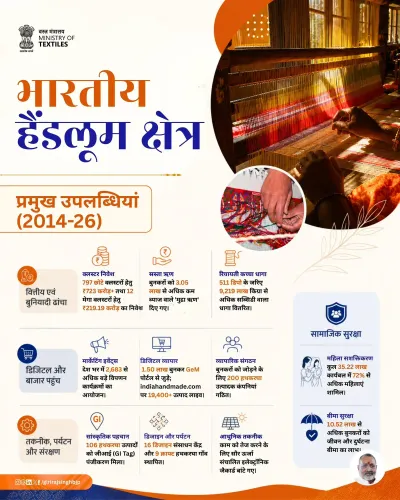
The Textiles Ministry oversees India's handloom and handicraft sectors, which employ millions of artisans.
Policy focus has consistently aimed to give traditional craft commercial viability through design integration and export access.
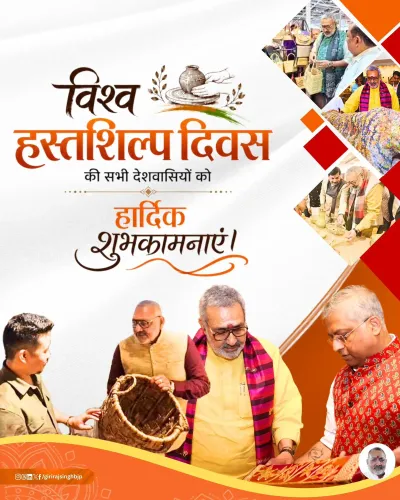
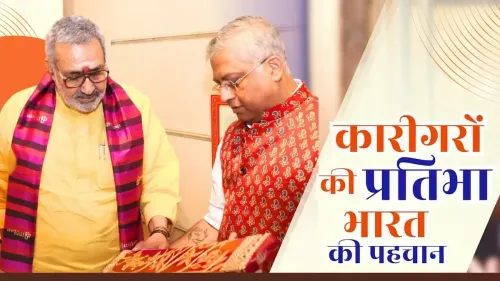
Where ancient craft meets contemporary design, a new conversation is beginning — and Union Textiles Minister Giriraj Singh wants India's artisan community at the centre of it. On Saturday, 24 October 2026, the senior BJP leader posted his endorsement of 'Chaap 2026', calling the initiative a commendable effort to link India's rich handicraft heritage with modern design and innovation.
In his post, the Minister wrote that events like Chaap 2026 play an important role in recognising the talent of artisans, encouraging traditional crafts, and strengthening the resolve of Atmanirbhar Bharat — the self-reliance programme launched in May 2020 to bolster domestic production and safeguard traditional sectors.
What Chaap 2026 sets out to do
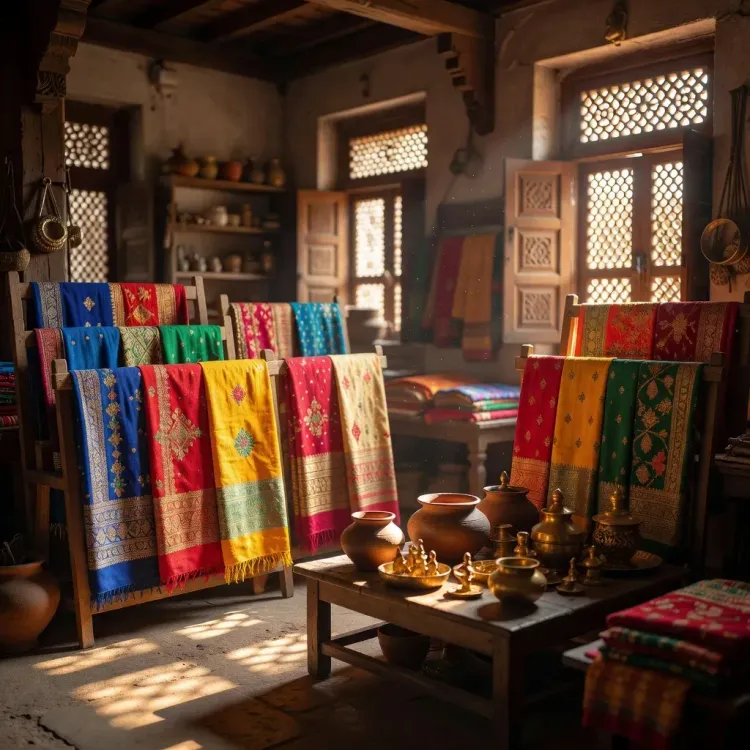
'Chaap 2026' is framed as a bridge between India's handicraft legacy and the demands of modern aesthetics and global markets. The initiative brings together the depth of traditional craft with the vocabulary of contemporary design — a combination the Textiles Ministry has long identified as the missing link between cultural preservation and commercial viability.
India's handicraft sector employs millions, making it one of the largest cottage-industry segments in the country. Yet artisans have historically struggled to translate generational skill into stable income, often because traditional products lack the design refresh or market access that mainstream buyers expect. Platforms that bridge this gap — connecting weavers, potters, and embroiderers with designers and buyers — have been a recurring policy priority.
Atmanirbhar Bharat's artisan angle
Minister Singh's explicit invocation of Atmanirbhar Bharat is deliberate. When Prime Minister Narendra Modi announced the programme in May 2020, artisans and handicraft micro-enterprises were specifically counted among the beneficiaries, with the broader goal of reducing dependence on imported goods by deepening the competitiveness of domestic, often handmade, products.
The Textiles Ministry, which oversees handlooms and handicrafts, has since worked to align craft promotion with export targets and design incubation. Chaap 2026 fits neatly into that arc — not as a standalone cultural celebration, but as a node in a larger economic strategy that treats traditional skill as an exportable asset.
The artisan's stake in events like these
For India's handicraft MSMEs, ministerial visibility matters. A public endorsement from the Textiles Minister signals institutional attention — and, potentially, policy follow-through in the form of procurement, export facilitation, or design-support funding. The crafts sector has seen a succession of such initiatives, and the ones that deliver tend to combine showcase events with concrete downstream support.
Whether Chaap 2026 translates ministerial praise into measurable outcomes for artisans — participation numbers, buyer linkages, export orders — will be the real test of its ambition.
Point of View
Which broadens its political appeal beyond traditional cultural audiences. The deliberate Atmanirbhar Bharat link elevates a craft exhibition into a node in the government's flagship economic narrative. For the Textiles Ministry, ministerial visibility for such events is also a soft signal to the bureaucracy about where discretionary support should flow. The real test, however, will be whether Chaap 2026 generates verifiable downstream gains — export orders, design linkages, or artisan income data — that can be cited in the next policy cycle.
NationPress
24 Oct 2026
Frequently Asked Questions
Why did Giriraj Singh comment on Chaap 2026?
As Union Minister of Textiles, Giriraj Singh oversees India's handloom and handicraft sectors, making Chaap 2026 directly relevant to his ministerial portfolio.
How does Chaap 2026 connect to Atmanirbhar Bharat?
Minister Singh explicitly linked Chaap 2026 to Atmanirbhar Bharat, the self-reliance programme launched in May 2020, which includes artisan and traditional craft promotion among its pillars.
What is the significance of promoting traditional crafts through modern design?
Integrating modern design with traditional crafts helps Indian artisans access mainstream and export markets, turning cultural heritage into a commercially viable and sustainable livelihood.
What is Giriraj Singh's role in India's textiles sector?
Giriraj Singh is the Union Minister of Textiles, responsible for policy across handlooms, handicrafts, and the broader textile industry, and is a senior BJP leader and Lok Sabha MP from Begusarai, Bihar.