Giriraj Singh: Bharat Tex 2026 to Make India Textile Leader
Synopsis
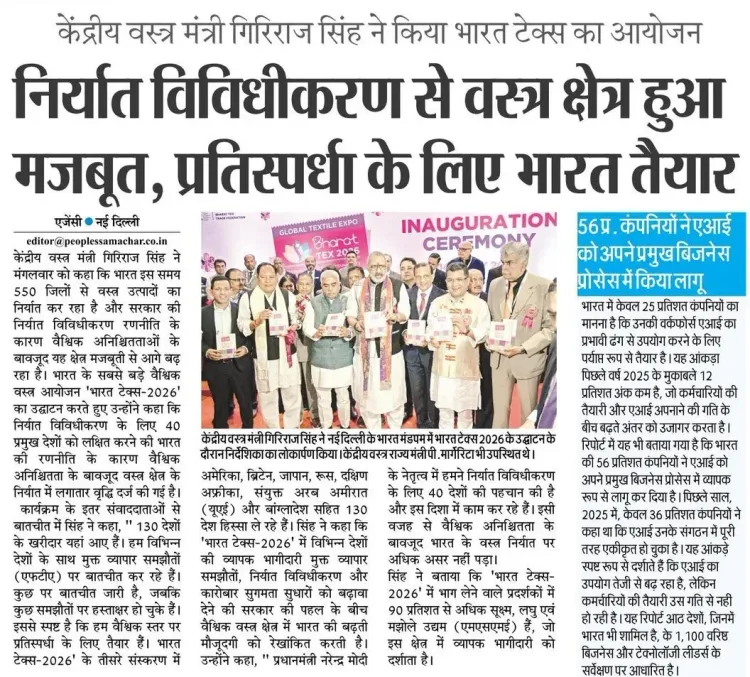
Union Textiles Minister Giriraj Singh used Bharat Tex 2026 to assert that India's textile industry is set to move beyond global supply-chain participation to a world leadership role, powered by innovation, quality manufacturing, and policy initiatives including Make in India and PLI for textiles.
Key Takeaways
Giriraj Singh posted on 15 July 2026 framing Bharat Tex 2026 as a platform for India's textile ambitions, not just a trade event.
The minister declared India's textile industry will play a global leadership role through innovation, quality, and modern manufacturing.
The post invokes #MakeInIndia and #ViksitBharat2047 , linking textile goals to the government's broader economic vision for 2047 .
India's textile policy stack includes Make in India (2014) , Atmanirbhar Bharat (2020) , and the PLI Scheme for Textiles (2021) .
Key beneficiaries include textile exporters, MSME manufacturers, and weavers and artisans across the value chain.
Progress on PLI disbursements and new export targets will be the next measurable test of these ambitions.
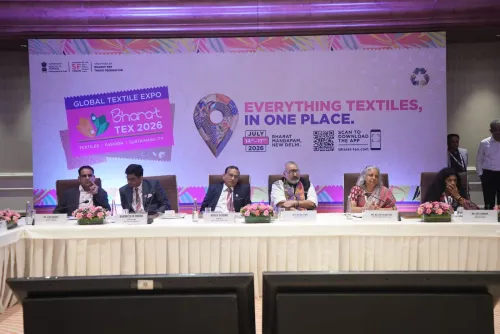
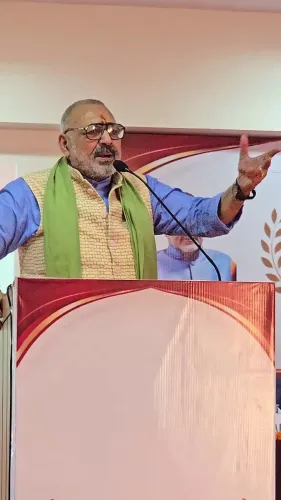
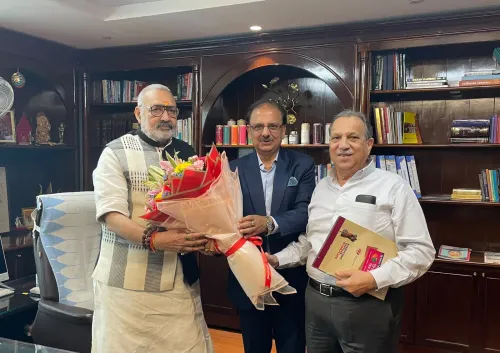
Union Textiles Minister Giriraj Singh on Wednesday, 15 July 2026, declared that Bharat Tex 2026 is emerging not merely as an industry event but as a powerful platform reflecting India's growing global textile ambitions and the confidence of a new India. Posting on X with images from the event, the minister reaffirmed the government's conviction that India's textile sector is poised to move beyond being a participant in global supply chains to becoming a world leader driven by innovation, quality, and modern manufacturing.
In his post, Singh wrote — 'भारत टेक्स 2026 केवल एक आयोजन नहीं, बल्कि भारत के वस्त्र उद्योग की बढ़ती वैश्विक क्षमता और नए भारत के आत्मविश्वास का सशक्त मंच बनकर उभर रहा है' — ('Bharat Tex 2026 is not merely an event, but is emerging as a powerful platform of India's growing global capability in the textile industry and the confidence of a new India'). He added that the platform reaffirmed the belief that India's textile industry will not only remain part of the global supply chain but will play a leadership role globally on the strength of innovation, quality, and modern manufacturing.
Context
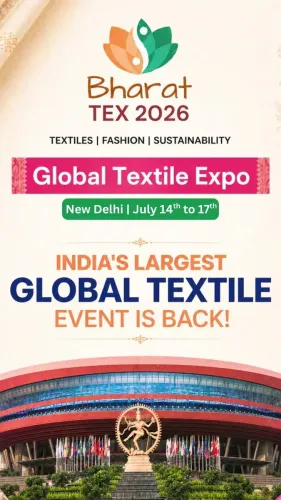
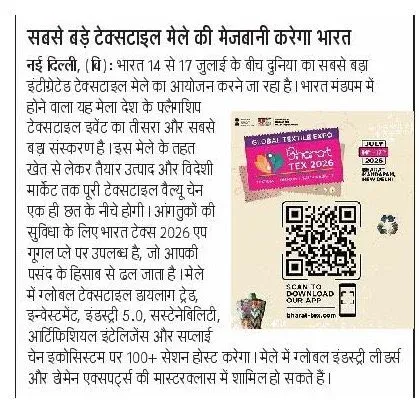
Bharat Tex is India's flagship international textile trade exhibition, designed to showcase the full spectrum of the country's textile value chain — from fibre and yarn to finished garments and technical textiles. Singh's remarks at the 2026 edition signal a deliberate effort by the government to position the event as a statement of industrial ambition, not just a trade fair. The hashtags #MakeInIndia and #ViksitBharat2047 in his post anchor the event firmly within the government's long-term economic narrative.
Policy Backdrop
India's textile policy architecture has been built in layers over the past decade. The Make in India initiative, launched in 2014, set the broader manufacturing agenda, while the Atmanirbhar Bharat programme announced in 2020 sharpened the focus on self-reliance in strategic sectors including textiles. The Production Linked Incentive (PLI) Scheme for Textiles, introduced in 2021, specifically targets man-made fibre and technical textiles manufacturing to push India up the value chain and boost exports. Together, these measures reflect a sustained policy effort to reduce dependence on imported inputs and raise the sector's contribution to GDP and employment.
The minister's invocation of #ViksitBharat2047 — the government's vision to make India a developed nation by the centenary of independence — places the textile sector's ambitions within this overarching national goal. Textiles remain one of India's largest employment-generating industries, making its global competitiveness a matter of both economic and social policy.
Stakeholders and Impact
The sector's stakeholders span a wide range: large textile exporters seeking access to global markets, MSME manufacturers looking for technology upgradation support, and weavers and artisans whose livelihoods depend on the health of the broader industry. A shift toward higher-value products — as envisioned in the minister's statement — would require significant investment in skill development, machinery modernisation, and supply chain integration. Bharat Tex 2026 serves as a convergence point for these diverse interests, bringing together domestic producers and international buyers under one roof.
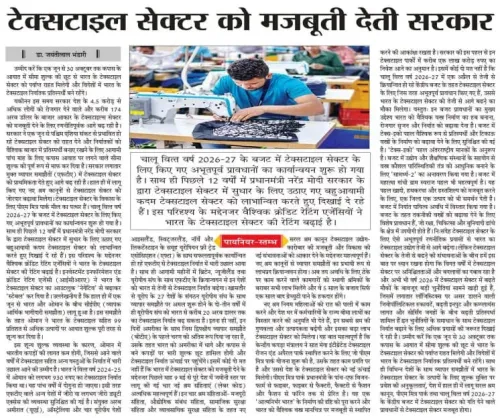
Successive policy cycles have sought to move India's textile exports away from raw fibre and basic garment assembly toward technical textiles, performance fabrics, and branded apparel — segments that command higher margins and are less susceptible to commodity price volatility.
What's Next
Attention will now turn to whether the ambitions articulated at Bharat Tex 2026 translate into measurable outcomes — specifically, progress on PLI scheme disbursements, new export targets, and any textile-specific announcements in the upcoming Union Budget or ongoing trade negotiations. If India is to claim a leadership role in global textiles, the policy signals from platforms like Bharat Tex will need to be backed by accelerated implementation and sustained investment in the sector's infrastructure and human capital.
Point of View
Aligning the textile ministry's agenda with the ruling party's 'Viksit Bharat' electoral and governance narrative. The repeated invocation of Make in India and Atmanirbhar Bharat signals continuity in the government's manufacturing-first doctrine, but the gap between aspirational rhetoric and on-ground PLI disbursement and export data will be the real test. For a sector that employs tens of millions — many of them women and rural workers — the stakes of this ambition are not merely economic but deeply political ahead of future electoral cycles.
NationPress
15 Jul 2026
Frequently Asked Questions
What is Bharat Tex 2026?
Bharat Tex 2026 is India's flagship international textile trade exhibition, showcasing the country's full textile value chain from fibre and yarn to finished garments and technical textiles. Union Textiles Minister Giriraj Singh has described it as a platform reflecting India's growing global textile capability.
What did Giriraj Singh say about India's textile industry?
Giriraj Singh stated on 15 July 2026 that India's textile industry will not merely remain part of the global supply chain but will play a global leadership role on the strength of innovation, quality, and modern manufacturing.
What is the PLI Scheme for Textiles?
The Production Linked Incentive (PLI) Scheme for Textiles was introduced in 2021 to boost man-made fibre and technical textiles manufacturing and exports in India, offering financial incentives to eligible manufacturers to upgrade production and increase value-added output.
What is Viksit Bharat 2047?
Viksit Bharat 2047 is the Indian government's vision to transform India into a fully developed nation by 2047, the centenary of independence. It is frequently cited in policy statements on economic self-reliance, manufacturing, and sectors like textiles.
How does Make in India relate to the textile sector?
Make in India, launched in 2014, is a national manufacturing initiative that includes textiles as a key sector. It aims to increase domestic production, attract investment, and reduce dependence on imported inputs, forming the foundation of India's broader textile policy architecture.