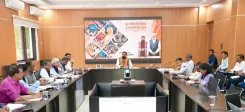
Giriraj Singh Chairs Textile Meet in Durgapur for Bengal Weavers
Synopsis
Union Textiles Minister Giriraj Singh chaired a coordination meeting in Durgapur on 6 November 2026 with CSB, CCI, jute, handloom, and handicraft officials to chart new opportunities for West Bengal's weavers, artisans, and sericulture farmers.
Key Takeaways
Giriraj Singh chaired a multi-agency textile coordination meeting in Durgapur, West Bengal on 6 November 2026 .
Attendees included officials from the Central Silk Board (CSB) , Cotton Corporation of India (CCI) , jute, handloom, and handicraft bodies, and state and regional textiles officers.
Key agenda items: new recognition and better market opportunities for West Bengal 's weavers and artisans, jute product diversification, and expansion of silk production.
The meeting builds on existing national schemes — Silk Samagra (2017) , the Jute Diversification Programme, and the National Handloom Development Programme (2015) .
India's goal of reducing raw-silk import dependence makes West Bengal a priority sericulture growth frontier for the Ministry of Textiles.
Concrete state-level action plans and budget follow-through will be the key metrics to watch from this consultation.
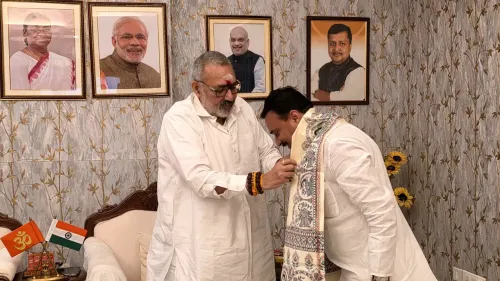
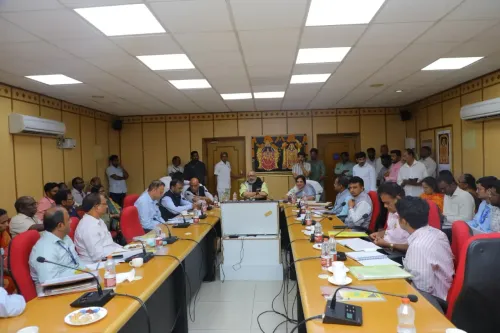
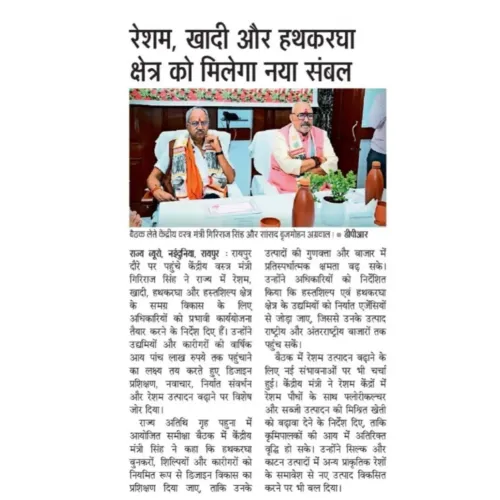
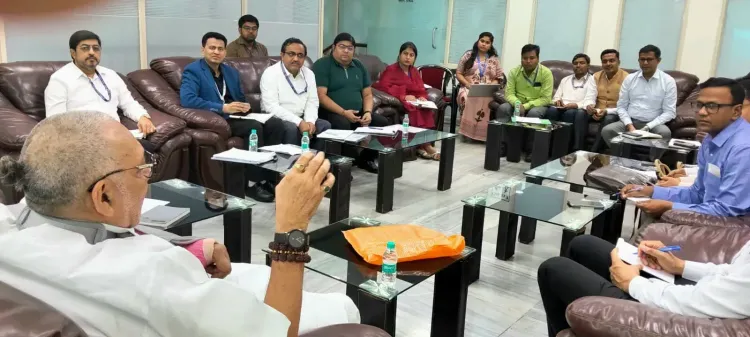
In a city better known for steel and industry, Union Textiles Minister Giriraj Singh turned the spotlight on looms, jute, and silk on Friday, 6 November 2026 — chairing a wide-ranging coordination meeting in Durgapur, West Bengal with officials from the Central Silk Board (CSB), the Cotton Corporation of India (CCI), the National Jute Board, handloom and handicraft bodies, and state and regional textiles officers.
The minister posted on X that discussions centred on giving 'new recognition and better opportunities' to West Bengal's weavers and artisans, boosting the jute industry through product diversification, and exploring scope to expand sericulture output. 'Our effort is to open new paths of prosperity for those connected to the textiles sector by promoting traditional art, local skills, and silk production,' he wrote.
Why Durgapur — and Why Now
West Bengal sits at the heart of India's natural-fibre economy. The state is home to some of the country's densest handloom clusters, accounts for the overwhelming share of domestic jute processing, and has long-established silk-weaving traditions in districts like Murshidabad and Birbhum. Bringing together central bodies — the CSB, which steers sericulture research and farmer support nationwide, and the CCI, which backstops cotton procurement and price stability — alongside state officials reflects a deliberate push to close the gap between national scheme design and ground-level delivery.
The Ministry of Textiles has run the Silk Samagra scheme since 2017, channelling funds into seed, rearing, and reeling support to lift domestic silk output and farmer incomes. Jute diversification has been a formal policy priority since expansions to the Jute Diversification Programme in the 2010s, aiming to push jute beyond traditional sacking and packaging into value-added products for urban and export markets. The National Handloom Development Programme, running in phases since 2015, has targeted weaver welfare through credit, design, and market-linkage support.
The Diversification Imperative for Bengal's Jute Belt
Jute remains a lifeline for hundreds of thousands of workers in West Bengal's mill towns and farming districts — but the industry has long faced a structural squeeze between mandatory jute-packaging rules propping up demand on one side, and stagnant product portfolios limiting growth on the other. Diversification into floor coverings, fashion accessories, geo-textiles, and home décor is widely seen as the route to making the sector competitive without depending entirely on government mandates.
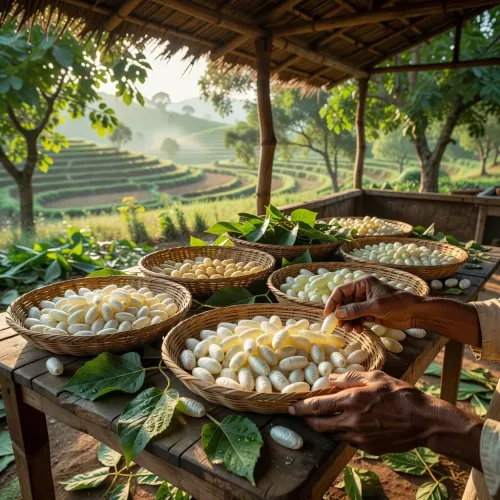
Silk expansion carries a parallel logic: India is the world's second-largest silk producer but still imports significant volumes of raw silk, particularly from China. Closing that gap — by scaling up mulberry cultivation and improving cocoon-to-yarn efficiency — would both reduce import dependence and generate rural employment in eastern India. The Durgapur meeting's attention to sericulture suggests the ministry is treating West Bengal as a growth frontier for this agenda.
Centre-State Coordination at the Core
Meetings of this structure — central statutory bodies, PSUs, and state officials in the same room — are the operational machinery through which national textile schemes get translated into district-level action. The presence of regional textiles officers alongside CSB and CCI leadership signals an attempt to sharpen implementation pipelines, identify bottlenecks in scheme uptake, and spot gaps in artisan and weaver registration that limit benefit reach.
What follows a consultation like this in terms of concrete state-level action plans or additional budget allocations for West Bengal's textile clusters — whether in the next Union Budget or a mid-year scheme review — will be the real measure of the meeting's impact.
For the weavers of Murshidabad and the jute workers of Hooghly, the minister's visit to Durgapur is a signal; the follow-through will be the story.
Point of View
Deepening its textiles footprint in West Bengal also carries political subtext: the state's vast artisan and weaver communities are electorally significant constituencies that the party has sought to cultivate. The emphasis on jute diversification and silk expansion signals a dual ambition — rural employment generation and reducing China-linked import dependence — both of which resonate as national economic priorities. Whether the consultation translates into earmarked allocations for West Bengal clusters in the next budget cycle will determine whether this visit is a policy inflection or a ceremonial checkpoint.
NationPress
6 Nov 2026
Frequently Asked Questions
Why did Giriraj Singh visit Durgapur in November 2026?
Union Textiles Minister Giriraj Singh chaired a coordination meeting in Durgapur on 6 November 2026 with officials from the Central Silk Board, Cotton Corporation of India, and jute, handloom, and handicraft bodies to discuss boosting opportunities for West Bengal's weavers, artisans, and sericulture farmers.
What is the Central Silk Board and what does it do?
The Central Silk Board (CSB) is a statutory body under India's Ministry of Textiles responsible for research, development, and promotion of sericulture — covering silkworm rearing, cocoon production, and silk yarn output — across the country.
What is jute product diversification and why does it matter for West Bengal?
Jute diversification means expanding jute-based manufacturing beyond traditional sacking and packaging into value-added products like floor coverings, fashion accessories, geo-textiles, and home décor. For West Bengal, which dominates India's jute processing, diversification is key to making the sector competitive and generating more skilled employment.
What is the Silk Samagra scheme?
Silk Samagra is a Ministry of Textiles scheme running since 2017 that provides support for seed, rearing, and reeling to boost domestic silk production and increase incomes for sericulture farmers across India.
How does India plan to reduce its dependence on imported raw silk?
India — the world's second-largest silk producer — aims to reduce raw silk imports, primarily from China, by scaling up mulberry cultivation, improving cocoon-to-yarn efficiency, and expanding sericulture in high-potential states like West Bengal, supported through schemes such as Silk Samagra.