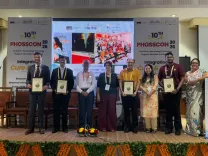
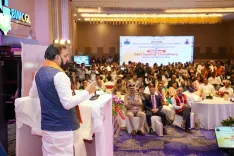
Giriraj Singh invokes Vasudhaiva Kutumbakam, calls youth India's cultural torch-bearers
Synopsis
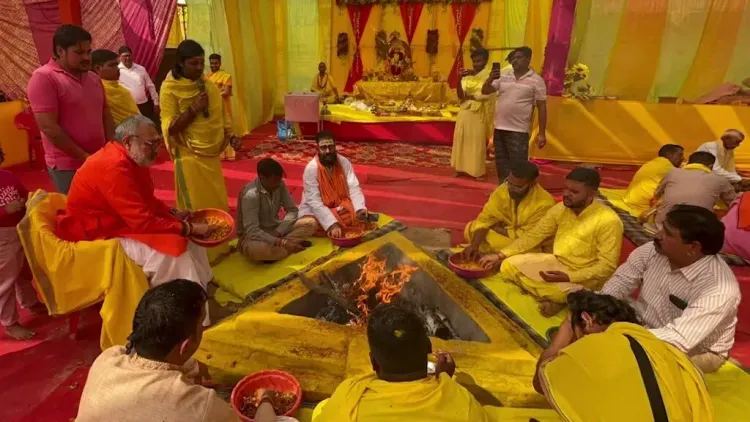
Union Textiles Minister Giriraj Singh invoked the Sanskrit maxims Vasudhaiva Kutumbakam and Sarve Bhavantu Sukhinah to frame Sanatana Dharma as humanity's moral guide, urging Indian youth to carry forward Vedic knowledge and cultural values.
Key Takeaways
Giriraj Singh posted on 24 October 2026 invoking two Vedic maxims — Vasudhaiva Kutumbakam and Sarve Bhavantu Sukhinah — to describe Sanatana Dharma's global relevance.
He argued Sanatana Dharma delivers a 'global message of peace, harmony and compassion to all of humanity.' The post explicitly addressed Indian youth , calling their faith, Vedic knowledge, and sanskar the foundation of cultural preservation.
The statement is separate from Singh's official Textiles Ministry responsibilities, fitting a broader BJP pattern of cultural outreach on social media.
Vasudhaiva Kutumbakam originates in the Maha Upanishad and has been a recurring motif in India's multilateral diplomacy.
A message of peace, harmony, and civilisational pride landed on social media on Saturday, 24 October 2026, when Union Textiles Minister Giriraj Singh drew on two of Hinduism's most enduring Sanskrit maxims to argue that Sanatana Dharma remains humanity's most relevant moral compass — and that India's young generation is its most vital custodian.
In a post written in Hindi, Giriraj Singh invoked Vasudhaiva Kutumbakam ('the world is one family') and Sarve Bhavantu Sukhinah ('may all beings be happy') as the twin philosophical pillars through which Sanatana Dharma delivers a 'global message of peace, harmony and compassion to all of humanity.' He added that the tradition also instils an 'inherent strength and self-respect for the protection of culture, truth and justice.'
Why the youth plank matters to the BJP's cultural messaging
The sharpest edge of the post is its explicit address to younger Indians. Singh argued that 'faith in Sanatana among the youth, knowledge of the Vedas, and good values (sanskar) are the foundation for preserving our culture and carrying forward its glorious tradition.' The framing is deliberate: it positions cultural transmission — not just electoral politics — as a generational responsibility.
Senior BJP leaders have consistently used social media to amplify traditional Hindu philosophical ideas, particularly concepts like Vasudhaiva Kutumbakam, which has also been spotlighted at India's recent multilateral diplomacy moments. Linking ancient philosophy to contemporary youth identity is a recurring thread in the party's cultural outreach, separate from any specific ministerial portfolio.
Sanatana Dharma: the philosophical core
Sanatana Dharma — loosely translated as 'the eternal way' or 'eternal law' — is the term many Hindus use to describe the broader philosophical and spiritual tradition underlying Hinduism. The phrase Vasudhaiva Kutumbakam originates in the Maha Upanishad and has become a widely recognised shorthand for India's 'civilisational' approach to global solidarity. Sarve Bhavantu Sukhinah is a Vedic prayer from the Brihadaranyaka Upanishad, chanted as a benediction for universal well-being.
Singh, a Lok Sabha MP from Begusarai, Bihar, made no reference to his textiles portfolio in the post — underscoring how BJP ministers routinely use their personal social media platforms to engage on culture and identity well beyond their official briefs.
Point of View
Particularly among younger voters. By grounding the message in universalist Sanskrit maxims — rather than overtly sectarian language — the post attempts to frame cultural pride as inclusive global philosophy, blunting potential criticism. The youth-centric framing signals that the party views generational cultural transmission, not just governance delivery, as a long-term political investment. That Singh steps outside his textiles brief to make this post highlights how BJP leaders see cultural messaging as a parallel, always-on responsibility.
NationPress
24 Oct 2026
Frequently Asked Questions
What did Giriraj Singh say about Sanatana Dharma?
Giriraj Singh posted that Sanatana Dharma delivers a global message of peace, harmony and compassion through the principles of Vasudhaiva Kutumbakam ('the world is one family') and Sarve Bhavantu Sukhinah ('may all beings be happy'), and also instils strength and self-respect for protecting culture, truth and justice.
What does Vasudhaiva Kutumbakam mean?
Vasudhaiva Kutumbakam is a Sanskrit phrase from the Maha Upanishad meaning 'the world is one family.' It has become a widely used expression of India's approach to global solidarity and has featured prominently in India's multilateral diplomacy.
What is Sanatana Dharma?
Sanatana Dharma, meaning 'the eternal way' or 'eternal law,' is the term many Hindus use for the broader philosophical and spiritual tradition underlying Hinduism, emphasising eternal values, cosmic order, and universal well-being.
Why is Giriraj Singh talking about culture when he is the Textiles Minister?
BJP ministers routinely use their personal social media accounts to engage on cultural and philosophical topics beyond their official portfolios. Singh's post on Sanatana Dharma is consistent with a broader BJP pattern of promoting Hindu cultural identity alongside governance work.
What role does Giriraj Singh hold in the Indian government?
Giriraj Singh is the Union Minister of Textiles and a senior BJP leader. He is also a Lok Sabha Member of Parliament representing Begusarai constituency in Bihar.