Giriraj Singh Eyes Global Gift Market for Indian Exports
Synopsis
Union Textiles Minister Giriraj Singh has called for promoting diversity, quality, and innovation in Indian products to tap the fast-expanding global gift market, signalling a strategic push to create new export opportunities for the country's textile and handicraft industries.
Key Takeaways
Union Textiles Minister Giriraj Singh on 14 October 2026 highlighted the rapid expansion of the global gift market as an opportunity for Indian industry.
He specifically identified diversity, quality, and innovation as the key levers Indian products must develop to meet global demand.
The PLI Scheme for Textiles (approved 2021 ) provides an existing policy framework aimed at boosting manufacturing and exports.
The Export Promotion Council for Handicrafts has been pushing Indian artisan products into international channels since the 2010s.
Key beneficiaries of any follow-up policy action would be textile exporters, MSME manufacturers, and handicraft artisans .
Industry will watch for new design or quality-linked incentives, international gift fair participation, and updated export targets for value-added products.
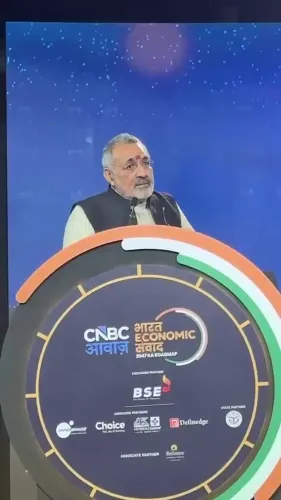
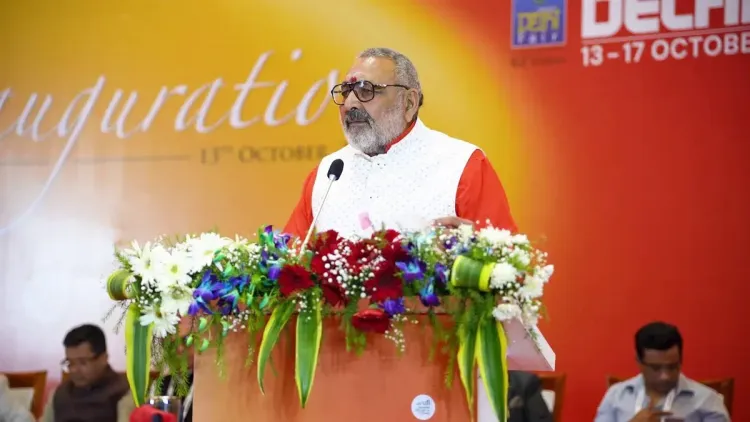
The global gift market is expanding fast — and Union Textiles Minister Giriraj Singh wants Indian industry to claim its share. On Wednesday, 14 October 2026, the minister posted on X, urging a push on diversity, quality, and innovation in Indian products to match the rising global demand for gifts.
In his post, Singh wrote: 'वैश्विक गिफ्ट मार्केट तेजी से विस्तार कर रहा है' — 'The global gift market is expanding rapidly. By promoting diversity, quality and innovation in Indian products in line with this market's demand, we can create new opportunities for our industries.'
Where Indian Crafts and Textiles Already Stand
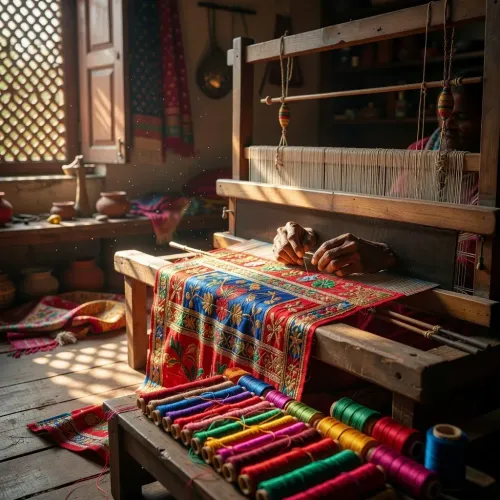
India's textile and handicraft sector is no stranger to global shelves. The Export Promotion Council for Handicrafts, active since the 2010s, has long worked to push Indian artisan products into international retail channels. The sector spans millions of MSME manufacturers, handicraft artisans, and textile exporters — a supply chain uniquely positioned to serve gift markets that prize handmade, culturally distinct, and design-led goods.
The challenge has always been the same: moving beyond low-margin commodities toward higher-value, finished, and design-forward products. Singh's framing zeroes in on exactly that gap — vividhata, gunvatta aur navachar (diversity, quality, and innovation) as the three levers India needs to pull.
PLI Scheme and the Push Toward Value Addition
The policy architecture is already in place. The Production Linked Incentive (PLI) Scheme for Textiles, approved in 2021, was designed precisely to catalyse manufacturing, boost exports, and generate employment by incentivising scale and quality. Successive frameworks under the Ministry of Textiles have consistently aimed to diversify export markets and lift India's positioning from basic commodities to finished, design-enriched products.
Singh's post fits that arc squarely. A minister invoking the gift market signals that the ministry's gaze is now trained on a specific, high-growth consumer segment — one driven by occasions, aesthetics, and cultural storytelling, all areas where Indian craft traditions have a structural edge.
What Industry Will Be Watching
The signal from the minister is clear; the specifics are still to come. Trade bodies and exporters will now watch for follow-up moves: new design-linked or quality-linked incentives, Indian participation in major international gift fairs, or revised export targets for value-added textile and handicraft lines. For artisans and MSME owners from states with strong craft traditions, the promise of 'new opportunities' will only feel real when policy detail follows political intent.
India has the artisans, the traditions, and the manufacturing base. The global gift market has the appetite. The question is whether the ecosystem — design support, quality certification, marketing infrastructure — can bridge the two at speed.
Point of View
Consistent with the government's multi-year drive to move Indian products up the value chain. By invoking diversity, quality, and innovation rather than volume or price, the minister signals a qualitative shift in ambition. The statement also implicitly acknowledges a longstanding structural gap: India's craft supply chain is vast, but design and quality certification support remains uneven. Whether this becomes a policy announcement or remains an aspirational signal will define its actual impact.
NationPress
14 Oct 2026
Frequently Asked Questions
What did Giriraj Singh say about the global gift market?
On 14 October 2026, Union Textiles Minister Giriraj Singh stated that the global gift market is expanding rapidly and called for promoting diversity, quality, and innovation in Indian products to create new export opportunities for Indian industries.
How can India benefit from the growing global gift market?
India has a large base of MSME manufacturers and handicraft artisans capable of producing diverse, design-led products. By improving quality standards and fostering innovation, these sectors can target higher-value segments of the global gift retail market.
What is the PLI Scheme for Textiles?
The Production Linked Incentive (PLI) Scheme for Textiles was approved in 2021 to boost domestic manufacturing, increase exports, and generate employment by providing financial incentives tied to incremental production and quality benchmarks.
What role does the Export Promotion Council for Handicrafts play?
The Export Promotion Council for Handicrafts has since the 2010s worked to facilitate the export of Indian artisan and handicraft products into global markets, helping artisans and small manufacturers access international buyers and trade fairs.
What policy steps might follow Giriraj Singh's statement on the gift market?
Industry observers will watch for new design-linked or quality-linked incentives, Indian participation in major international gift fairs, and revised export targets for value-added textile and handicraft products from the Ministry of Textiles.