Giriraj Singh flags global FMCG giants' growing bet on India
Synopsis
Union Textiles Minister Giriraj Singh flagged on 3 August 2026 that global FMCG giants are increasing their confidence in India, driven by rising consumer demand and a documented shift toward premium products — a trend rooted in decades of GDP growth and middle-class expansion.
Key Takeaways
Giriraj Singh , Union Textiles Minister, highlighted growing global FMCG confidence in India on 3 August 2026 .
Rising demand and consumer preference for premium products are the two cited drivers of this trend.
India's sustained GDP growth over two decades has expanded the middle class and lifted disposable incomes. 'Premiumisation' — consumers trading up to higher-value branded goods — is now a structural feature of Indian consumption.
Global FMCG firms are moving beyond volume plays toward value-focused strategies, including local manufacturing and R&D.
The trend has upstream implications for textiles, packaging, and allied manufacturing sectors under Singh's ministerial purview.
India's consumer market is sending a signal the world's biggest brands can no longer ignore. On Monday, 3 August 2026, Union Textiles Minister Giriraj Singh highlighted a striking trend on X: global FMCG majors are doubling down on India, drawn by rising demand and a consumer base that is increasingly reaching for premium products.
Singh shared the development via the NaMo App, noting in Hindi that 'बढ़ती मांग और प्रीमियम उत्पादों की बढ़ती पसंद के चलते दुनिया की बड़ी FMCG कंपनियों का भारत पर भरोसा बढ़ा' — ('Rising demand and a growing preference for premium products have increased the confidence of the world's major FMCG companies in India').
Why global FMCG firms are turning to India now
The confidence of multinational consumer goods companies in India is not a sudden pivot — it is the compounding result of decades of structural change. Since the landmark 1991 economic liberalisation, India progressively opened its consumer goods sector to foreign players, laying the groundwork for what is now one of the world's most contested FMCG battlegrounds.
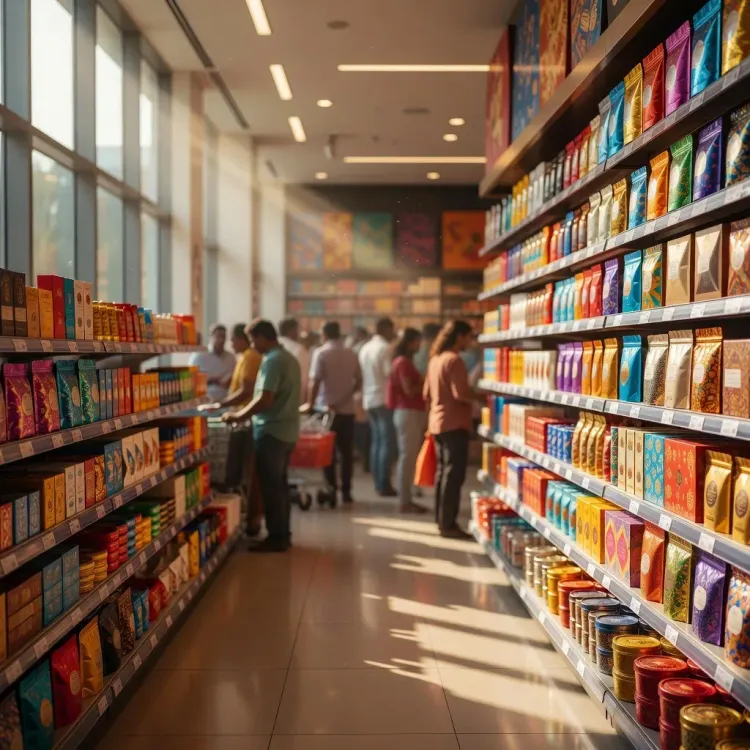
Sustained GDP growth over the last two decades has steadily expanded India's middle class and lifted disposable incomes. The knock-on effect is visible in shopping baskets: consumers are trading up, choosing branded, higher-margin products over unbranded or economy alternatives. This 'premiumisation' trend has become a defining feature of urban — and increasingly, semi-urban — Indian consumption.
What premiumisation means for India's market
Premiumisation is more than a marketing term. It represents a structural shift in how Indian consumers allocate spending — from price-first decisions to quality-first ones. Categories like personal care, packaged foods, home care, and beverages have all seen this upward migration. For global FMCG companies, it means the India opportunity is not just about volume anymore. It is about value.
That shift changes the investment calculus entirely. Companies that once viewed India primarily as a high-volume, low-margin market are now building premium product lines, localising innovation, and deepening supply chains on Indian soil. The result is a deeper, more durable commitment — not just distribution, but manufacturing and R&D presence.
For a minister whose portfolio spans textiles and allied manufacturing, the broader narrative of global confidence in Indian industry is directly relevant. A buoyant consumer market pulls investment upstream — into packaging, fibres, technical textiles, and the supply chains that feed the shelves.
The world's biggest consumer goods companies are not betting on a blip. They are betting on a decade. India's job now is to make sure the infrastructure, policy environment, and manufacturing base are ready to meet them.
Point of View
But a Textiles Minister flagging FMCG investment also signals an awareness that buoyant consumer markets create downstream demand for Indian-made inputs, from technical textiles to packaging. The post, shared via the NaMo App, is as much an internal political signal — of economic momentum under the current dispensation — as it is a market observation. Watch whether the Textiles Ministry follows with specific policy moves to capture this FMCG supply-chain opportunity for domestic manufacturers.
NationPress
3 Aug 2026
Frequently Asked Questions
Why are global FMCG companies increasing investment in India?
Global FMCG companies are increasing their India commitment because of rising consumer demand and a growing preference for premium products, backed by sustained GDP growth and an expanding middle class over the past two decades.
What is premiumisation in the Indian consumer market?
Premiumisation refers to the documented shift in Indian consumer behaviour where buyers increasingly choose higher-quality, higher-margin branded products over economy or unbranded alternatives — a trend now visible across personal care, food, beverages, and home care.
What did Giriraj Singh say about FMCG companies and India?
On 3 August 2026, Union Textiles Minister Giriraj Singh posted on X that rising demand and growing consumer preference for premium products have increased the confidence of the world's major FMCG companies in India.
How does India's 1991 liberalisation connect to today's FMCG growth?
India's 1991 economic liberalisation opened the consumer goods sector to foreign investment, allowing global FMCG firms to enter and build India operations — a foundation that, combined with subsequent income growth, has made India one of the world's most important consumer markets today.
What does FMCG growth mean for India's manufacturing sector?
A growing FMCG market creates upstream demand for Indian-made inputs including packaging materials, fibres, and technical textiles, which is directly relevant to the Textiles Ministry's mandate to expand domestic manufacturing capacity.