Giriraj Singh Flags India-Australia Uranium Export Pact
Synopsis
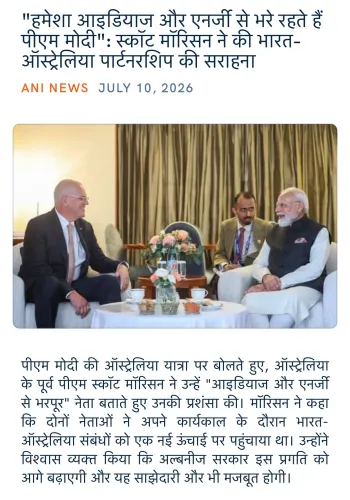
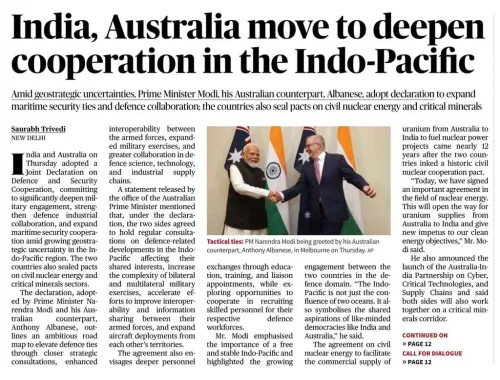
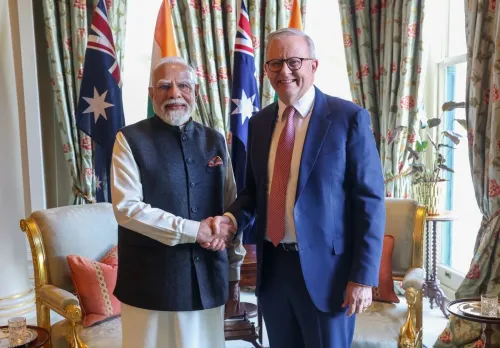
Union Textiles Minister Giriraj Singh on 10 July 2026 highlighted an India-Australia uranium export agreement, pointing to strengthened nuclear energy ties and maritime cooperation. The development builds on the 2014 Civil Nuclear Cooperation Agreement and reflects India's push to diversify uranium supply and deepen Indo-Pacific strategic partnerships.
Key Takeaways
Union Textiles Minister Giriraj Singh shared a report on 10 July 2026 flagging an India-Australia uranium export agreement.
The bilateral Civil Nuclear Cooperation Agreement , signed in 2014 , first enabled Australian uranium exports to India, with the first shipment arriving in 2015 .
Australia is among the world's largest uranium producers and a key supplier to India's civilian nuclear programme.
The partnership also spans Indo-Pacific maritime security and critical minerals trade , reflecting a multi-sector strategic alignment.
India is expanding nuclear power capacity as part of its energy security and clean energy transition goals.
Future focus will be on uranium shipment volumes, new bilateral working groups, and progress on critical minerals agreements .
Union Textiles Minister Giriraj Singh on Friday, 10 July 2026, shared a report highlighting a uranium export agreement between India and Australia, pointing to deepening bilateral cooperation across nuclear energy, maritime security, and critical minerals sectors.
Context
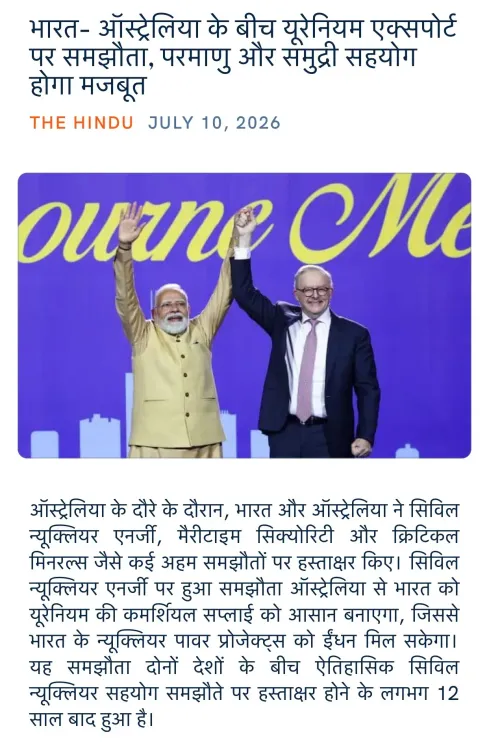
Giriraj Singh shared the development via the NaMo App, noting in Hindi: 'भारत-ऑस्ट्रेलिया के बीच यूरेनियम एक्सपोर्ट पर समझौता, परमाणु और समुद्री सहयोग होगा मजबूत' — translated as 'India-Australia agreement on uranium export; nuclear and maritime cooperation to be strengthened.' The post underscores the government's emphasis on energy security and Indo-Pacific strategic alignment as twin priorities.
The minister's decision to amplify the development signals the ruling dispensation's intent to frame the India-Australia partnership not merely as a trade relationship but as a pillar of broader regional security architecture.
Policy Backdrop
The foundation for uranium trade between the two countries was laid with the India-Australia Civil Nuclear Cooperation Agreement, signed in 2014, which opened the pathway for Australian uranium exports to India following India's waiver from the Nuclear Suppliers Group (NSG). The first shipment of Australian uranium reached India in 2015 under the terms of that agreement.
Australia is one of the world's largest uranium producers and has been a significant supplier to India's civilian nuclear programme. India, for its part, has been expanding its nuclear power capacity as part of long-term energy security goals, seeking to diversify fuel supply sources beyond traditional partners.
Beyond nuclear energy, the two nations have deepened alignment on Indo-Pacific maritime security and critical minerals trade — sectors where both governments see overlapping strategic interests amid a shifting regional order.
Stakeholders and Impact
India's nuclear energy sector stands to benefit from assured uranium supply, supporting the country's ambition to scale up clean energy capacity and reduce dependence on fossil fuels. Domestic nuclear operators and fuel processing facilities are among the primary institutional stakeholders.
Maritime security agencies in both countries are also watching the broader bilateral framework, as enhanced cooperation on domain awareness in the Indo-Pacific has been a consistent theme in recent India-Australia engagements. Critical minerals — essential for defence and clean energy supply chains — form another layer of the partnership that policymakers on both sides have been keen to formalise.
For Australia, the relationship offers a stable, growing export market for uranium and an opportunity to anchor its role as a reliable strategic partner in South Asia and the wider Indo-Pacific.
What's Next
Attention will now turn to the volume of uranium shipments under any updated terms, and whether new bilateral working groups on nuclear fuel cycles or maritime domain awareness are established. Progress on critical minerals agreements — covering resources vital to battery technology and defence manufacturing — is also expected to feature in future high-level engagements between New Delhi and Canberra.
As India accelerates its civil nuclear programme and deepens its Indo-Pacific security partnerships, the India-Australia relationship is likely to grow in strategic weight well beyond its current trade and energy dimensions.
Point of View
Not energy or foreign affairs — reflects a broader BJP communication strategy of mobilising the entire senior leadership to signal India's growing global stature. The India-Australia nuclear and maritime partnership has been a slow-burn success story since 2014, and framing it as a fresh milestone serves the government's energy security and Indo-Pacific narratives simultaneously. At a time when India is racing to scale up nuclear capacity and reduce fossil fuel dependence, assured uranium supply from a stable democratic partner carries both economic and geopolitical weight. The post also subtly reinforces the NaMo App as a government communication channel, weaving party and state messaging together.
NationPress
10 Jul 2026
Frequently Asked Questions
What is the India-Australia uranium export agreement?
India and Australia have a Civil Nuclear Cooperation Agreement, originally signed in 2014, that permits Australia to export uranium to India for civilian nuclear use. The latest development reported in July 2026 points to a further strengthening of this arrangement alongside maritime and critical minerals cooperation.
When did Australia first export uranium to India?
The first shipment of Australian uranium reached India in 2015 , following the signing of the bilateral Civil Nuclear Cooperation Agreement in 2014 .
Why did Giriraj Singh share news about uranium and nuclear energy?
As a senior BJP leader and Union Minister, Giriraj Singh frequently amplifies significant government policy developments across sectors, even outside his textiles portfolio, as part of the ruling party's broader communication outreach.
How does the India-Australia partnership benefit India's nuclear programme?
Australian uranium supplies help India diversify its nuclear fuel sources, supporting the country's ambition to expand civilian nuclear power capacity and reduce dependence on fossil fuels as part of its long-term energy security strategy.
What is the significance of Indo-Pacific cooperation in the India-Australia deal?
Beyond uranium, India and Australia share strategic interests in maritime domain awareness and critical minerals trade in the Indo-Pacific, making their bilateral relationship a multi-sector partnership aimed at regional stability and supply chain resilience.