Giriraj Singh flags India's auto, rail output surge in FY 2025

Synopsis
Union Textiles Minister Giriraj Singh cited FY 2025 production figures — over 31 million vehicles and 1,681 locomotives — to argue that India's manufacturing sector is reaching new scale, driven by Make in India and Atmanirbhar Bharat policies.
Key Takeaways
31 million-plus vehicles were produced in India in FY 2025 , according to figures cited by Union Textiles Minister Giriraj Singh .
1,681 locomotives were manufactured in a single year, reflecting indigenous rail equipment capacity growth.
Singh explicitly linked output to export ambitions, referencing ports and sea lanes alongside domestic roads and rail tracks.
The figures align with over a decade of industrial policy: Make in India (2014) and Atmanirbhar Bharat (2020) both prioritised transport equipment manufacturing.
Official verification of FY 2025 data from the Ministry of Commerce and Ministry of Railways remains the key next step before the figures are fully confirmed.
More than 31 million vehicles rolled off Indian assembly lines in FY 2025 — and 1,681 locomotives were built in a single year. Union Textiles Minister Giriraj Singh put those numbers front and centre on Wednesday, 30 September 2026, framing them as proof that India's manufacturing engine is firing at a new scale.
In his post, Singh wrote: 'भारत का मैन्युफैक्चरिंग सेक्टर आज अपनी नई क्षमता और विस्तार की तस्वीर पेश कर रहा है' — 'India's manufacturing sector is today presenting a picture of its new capability and expansion.' From roads to rail tracks, from ports to sea lanes, he argued, vehicles made in India are now driving not just the country's pace but the world's.
31 million vehicles and 1,681 locomotives: what the numbers say
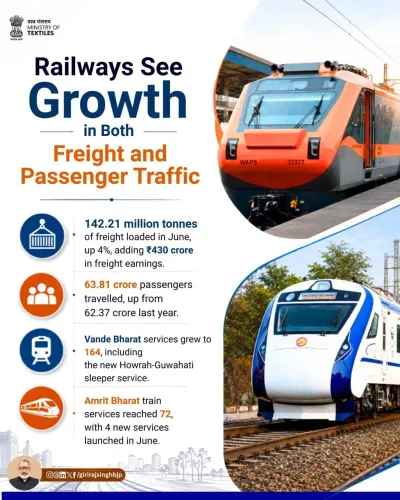
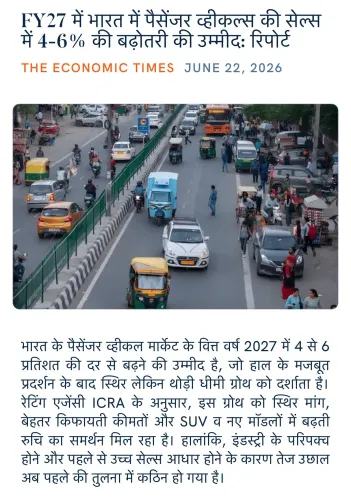
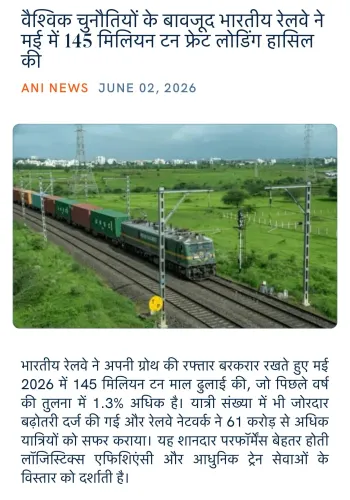
The 3.1 crore-plus vehicle production figure for FY 2025 would place India firmly among the world's top automobile manufacturing nations. The locomotive count — 1,681 units in one year — points to a sharp ramp-up in indigenous rail equipment output, a domain where Indian Railways has been pushing hard for self-sufficiency. Taken together, the two data points span the full breadth of India's transport manufacturing ecosystem: personal mobility, freight, and mass transit.
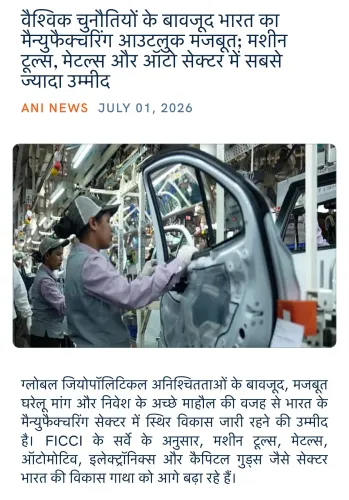
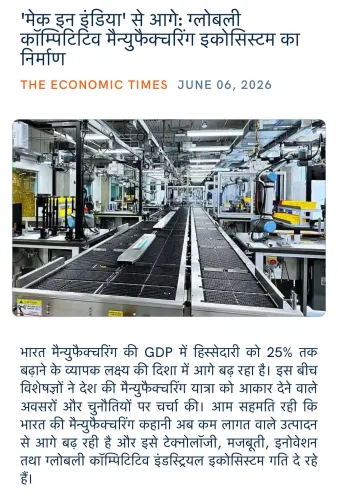
The scale matters because transport equipment is one of the most employment-intensive segments of any industrial economy. High output numbers translate directly into factory-floor jobs, component supplier ecosystems, and logistics networks — the connective tissue of a manufacturing-led growth story.
Make in India and Atmanirbhar Bharat: the policy spine behind the claim
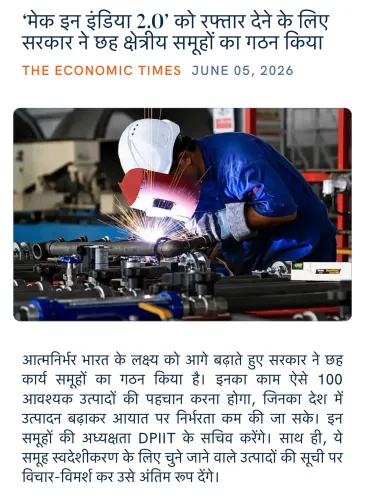
Neither figure appeared in a vacuum. The Make in India initiative, launched in September 2014, set the original ambition of transforming India into a global manufacturing hub and raising the sector's share of GDP. When the Atmanirbhar Bharat campaign followed in 2020, it sharpened the focus on self-reliance — particularly in capital-intensive sectors like automobiles and railway equipment. Production Linked Incentive schemes for both auto and rail components added financial horsepower to those policy commitments.
Singh's post, arriving in the final hours of September 2026, reads as a stocktaking moment — a government minister using hard production data to argue that a decade-plus of industrial policy is yielding measurable results. The framing is explicitly global: Indian-made vehicles, he says, are accelerating not just domestic infrastructure but world trade routes.
Exports in the frame — and what to watch next
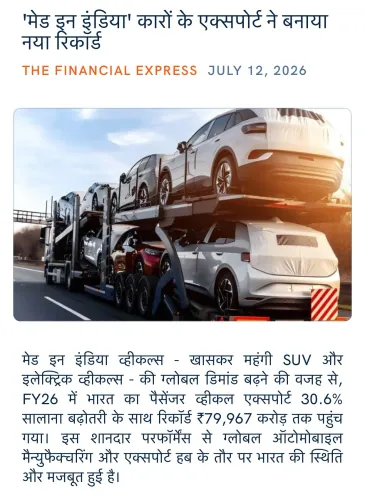
The reference to 'ports and sea lanes' is not incidental. India's automobile exports have been on a sustained upward trajectory, with domestic manufacturers increasingly supplying markets in Africa, Latin America, and Southeast Asia. A vehicle production base crossing 31 million units creates the volume needed to sustain export ambitions without squeezing the home market.
Official confirmation of the FY 2025 figures from the Ministry of Commerce or the Ministry of Railways will be the next data point to watch — along with any updates to PLI scheme targets for the auto and rail sectors. If the numbers hold up, they will likely become a centrepiece of the government's manufacturing narrative heading into the next budget cycle.
India set out a decade ago to become the world's factory floor for transport equipment. The scoreboard, if these figures are borne out, is beginning to reflect that bet.
Point of View
The messaging signals a shift from ambition to scoreboard. The choice of transport equipment is strategic: it is capital-intensive, employment-rich, and visible both domestically and in export markets, making it the most persuasive sector for a 'Make in India is working' argument. With a budget cycle approaching, expect these numbers to anchor the government's industrial narrative if officially confirmed.
NationPress
30 Sept 2026
Frequently Asked Questions
How many vehicles were produced in India in FY 2025?
Union Textiles Minister Giriraj Singh cited a figure of more than 3.1 crore (31 million) vehicles produced in India during FY 2025 , though official confirmation from the Ministry of Commerce is awaited.
How many locomotives did India manufacture in FY 2025?
Giriraj Singh stated that 1,681 locomotives were produced in India in a single year, reflecting the country's expanding indigenous rail equipment manufacturing capacity.
What is Make in India and how does it relate to automobile production?
Make in India is a national initiative launched in September 2014 to boost domestic manufacturing and attract investment. The automobile sector has been a key pillar, with Production Linked Incentive schemes added to accelerate output and exports.
What is Atmanirbhar Bharat's role in railway manufacturing?
Atmanirbhar Bharat , announced in 2020 , promotes self-reliance in capital-intensive sectors. For railways, this has translated into a push for indigenous locomotive production and reduced dependence on imported rolling stock.
Why did Giriraj Singh post about manufacturing data?
As a senior BJP leader and Union Minister, Singh used the figures to argue that India's sustained industrial policies are delivering measurable results — positioning transport equipment output as evidence of a broader manufacturing-led economic expansion.