Textiles Minister Giriraj Singh hails Bastar Tasar at trade fair
Synopsis
Union Textiles Minister Giriraj Singh said Bastar artisans are making their identity at an international trade fair with Tasar silk sarees and handicrafts, tying tribal craft to jobs and self-reliance in Chhattisgarh.
Key Takeaways
Union Textiles Minister Giriraj Singh on 27 November 2026 said Bastar artisans are making their identity at an international trade fair.
He highlighted Tasar silk sarees and handicrafts as a new picture of changing Bastar.
The post linked the display to new employment opportunities and self-reliance.
Bastar in Chhattisgarh is known for tribal communities and Tasar silk crafts.
The message aligns with Atmanirbhar Bharat (2020) and Textiles Ministry export-fair promotion of handlooms.
The specific fair and any employment numbers were not named in the post.
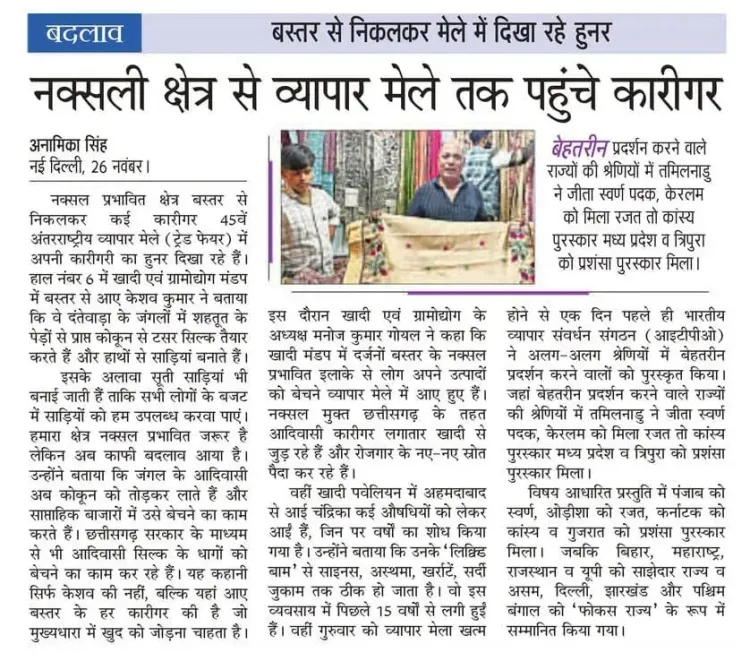
Union Textiles Minister Giriraj Singh on Friday, 27 November 2026, said artisans from Bastar in Chhattisgarh are carving an identity at an international trade fair. Tasar silk sarees and handicrafts, he wrote, are presenting a new picture of a changing tribal district, tied to jobs and self-reliance.
In the Hindi post, Singh said the skill of Bastar's karigars is today making its identity in the international trade fair. Beautiful sarees and handicrafts made from Tasar silk are presenting their rich art and a new picture of changing Bastar, he wrote, adding that with new employment opportunities and self-reliance, Bastar is now moving forward on a new path of change.
He used the phrase badalte Bastar ki nai tasveer (a new picture of changing Bastar) to frame traditional Tasar work as a live development story, not only a museum craft.
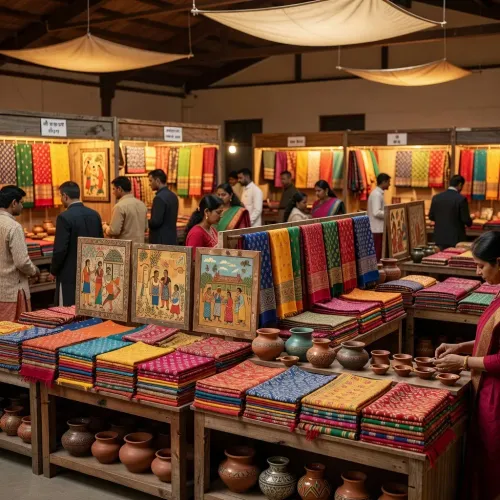
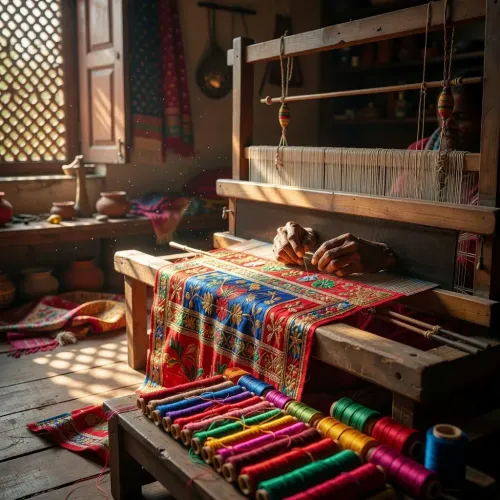
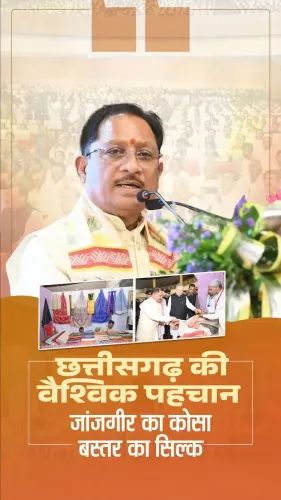
Tasar silk from Bastar on a trade-fair stall
Bastar district is known for tribal communities and for crafts that include Tasar, also called Tussar, silk. Singh did not name the fair. The claim still sits inside a years-long effort by the Ministry of Textiles to put Indian handlooms and handicrafts in front of overseas buyers.
Tasar is a wild silk linked to forest belts. Sarees and small handicrafts from the region have long moved through domestic markets. A stall at an international fair is the government's argument that a local loom can meet an export order.
Atmanirbhar Bharat meets Bastar's weavers
The line tracks Atmanirbhar Bharat, announced in 2020, which has treated traditional textiles as a route to self-reliance. For years the Textiles Ministry has backed artisan participation in international fairs as export promotion, not only as heritage display.
Bastar's weavers and craftspeople are the workers in that story. The minister's claim is that new work and atmanirbharta (self-reliance) are already putting the district on a new path.
From a fair stall to a repeat order
The post gives no employment figure and no named scheme. What it does is place Bastar's Tasar on a national textiles map: tribal skill, a buyers' floor, and the language of jobs. The next test is whether a Ministry note on regional craft schemes or export targets gives that claim a ledger.
For Bastar's artisans, the question is simple. Does a saree on a fair stall become a repeat order that reaches the weaver?
Point of View
Using Tasar silk as the visible proof. That continues a post-2020 pattern in which handlooms are treated as jobs policy, not only culture. The political value is clear in a tribal district: crafts become a development metric. The evidentiary gap is equally clear, because the fair is unnamed and no jobs number is offered, so the next ministerial note on clusters or export targets will decide whether this is a campaign line or a market shift.
NationPress
27 Nov 2026
Frequently Asked Questions
What did Giriraj Singh say about Bastar artisans?
Union Textiles Minister Giriraj Singh said Bastar artisans' skills are making their identity at an international trade fair through Tasar silk sarees and handicrafts. He linked the display to new employment opportunities and self-reliance, describing a new picture of changing Bastar.
Who is Giriraj Singh?
Giriraj Singh is the Union Minister of Textiles and a senior BJP leader. He is the Lok Sabha MP from Begusarai in Bihar.
What is Tasar silk associated with Bastar?
Tasar, also called Tussar, is a wild silk linked to forest belts and used in Bastar for sarees and handicrafts. The district in Chhattisgarh is known for tribal communities and these traditional crafts.
How does the Textiles Ministry promote Indian handicrafts abroad?
The Ministry of Textiles has for years supported participation of Indian handlooms and handicrafts in international trade fairs for export promotion. That effort is often tied to the Atmanirbhar Bharat self-reliance agenda announced in 2020.
What is Atmanirbhar Bharat in the textiles sector?
Atmanirbhar Bharat is a self-reliance initiative announced in 2020 that has included traditional crafts and textiles. Ministers frequently present handloom and handicraft exports as a way to generate local jobs.