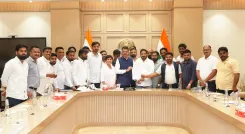
Giriraj Singh hails Cabinet nod for Green Energy Corridor Phase-III
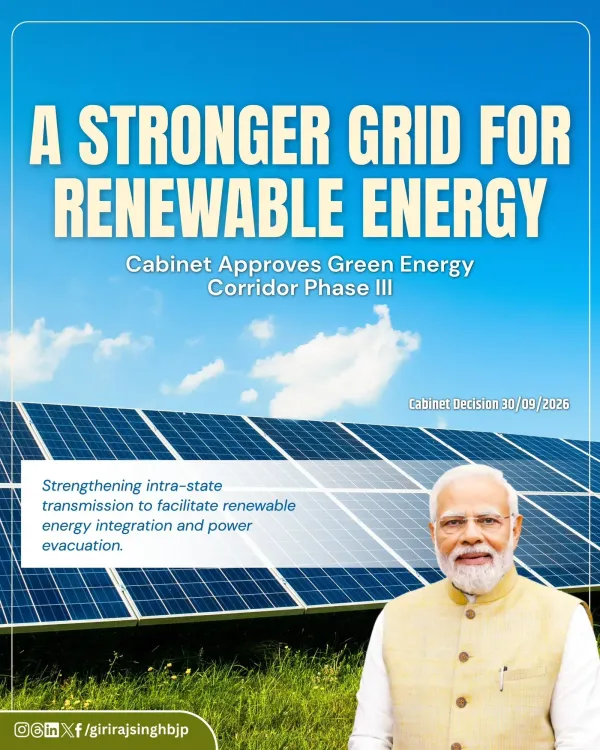
Synopsis
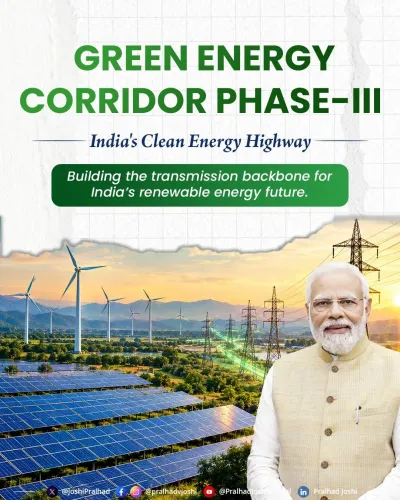
The Union Cabinet has approved Phase-III of the Green Energy Corridor, integrating battery storage with intra-state transmission upgrades to support India's 900 GW non-fossil energy target by 2035, as announced by Minister Giriraj Singh.
Key Takeaways
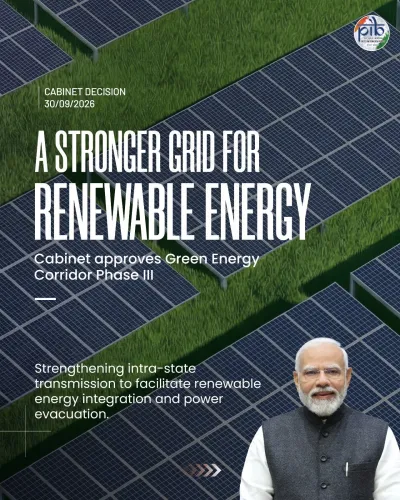
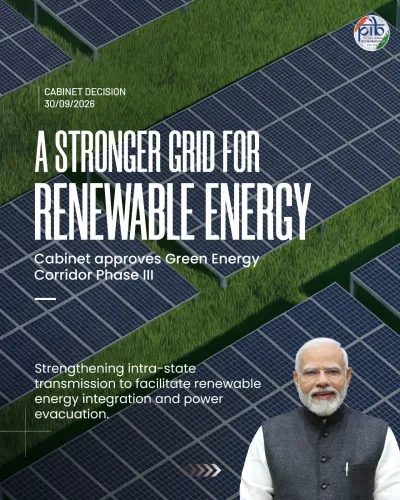
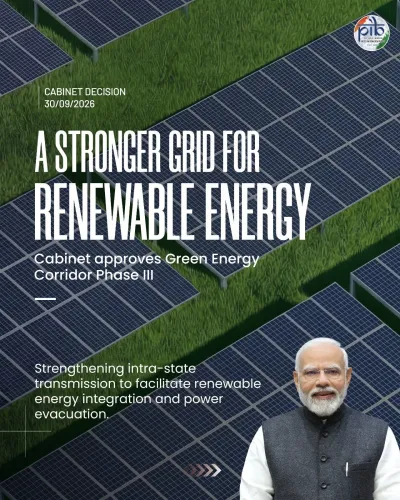
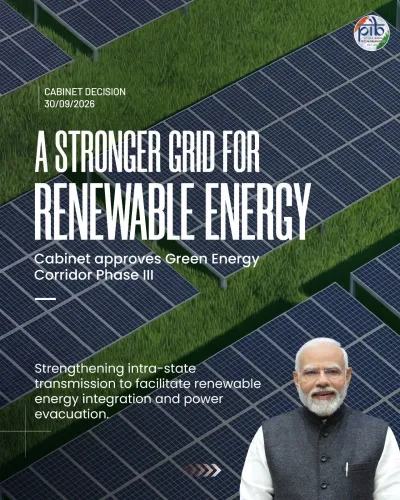
Union Cabinet approved Green Energy Corridor Phase-III on 30 September 2026 .
Phase-III focuses on strengthening intra-state transmission systems , shifting focus from earlier interstate corridors.
Battery Energy Storage Systems (BESS) are a core new component, enabling time-shifting of renewable power.
The initiative targets 900 GW of non-fossil fuel capacity by 2035 , nearly double the earlier 500 GW by 2030 pledge.
Green Energy Corridor Phase-I was approved in 2015 to evacuate power from renewable-rich states via interstate lines.
Funding details, state participation and implementation timelines are pending from the Cabinet note.
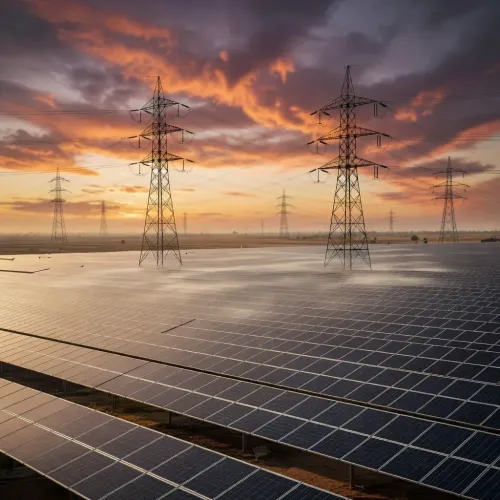
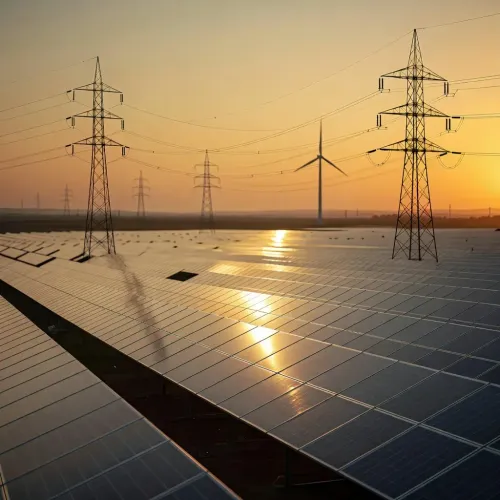
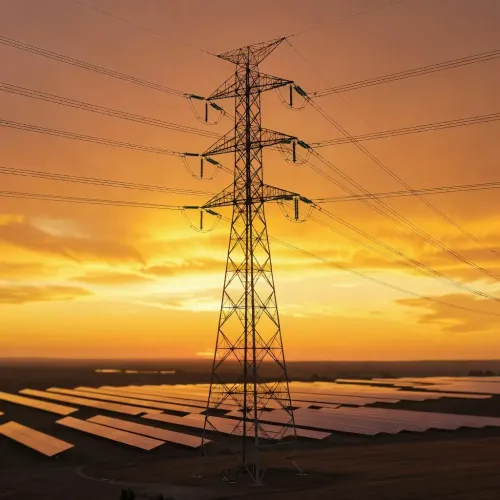
India's grid is about to get a serious upgrade. Union Textiles Minister Giriraj Singh on Wednesday, 30 September 2026, welcomed the Union Cabinet's approval of Phase-III of the Green Energy Corridor, a major push to strengthen intra-state transmission networks and integrate grid-scale battery storage — all aimed at hitting a target of 900 GW of non-fossil fuel capacity by 2035.
Posting in Hindi, Singh wrote: 'स्वच्छ ऊर्जा की दिशा में भारत की रफ्तार को और मजबूती मिलेगी' — 'India's momentum toward clean energy will be strengthened further.' He noted that the Cabinet has approved the third phase of the Green Energy Corridor, which will reinforce intra-state transmission systems alongside Battery Energy Storage Systems (BESS), describing it as a critical step toward the 900 GW non-fossil energy capacity goal.
From interstate wires to intra-state integration
The Green Energy Corridor has been a cornerstone of India's grid modernisation story. Phase-I, approved in 2015, focused on dedicated high-voltage interstate transmission lines to evacuate power from renewable-rich states — think wind belts in Tamil Nadu and Gujarat, solar parks in Rajasthan — toward major load centres. Phase-III marks a clear evolution: the focus now shifts inward, to strengthening the last-mile intra-state networks where renewable power often gets stranded before it ever reaches consumers.
That shift matters. Curtailment — when perfectly good renewable electricity is simply switched off because the grid cannot absorb it — has been one of the stubborn inefficiencies plaguing India's energy transition. Beefing up intra-state lines directly attacks that problem.
Why battery storage changes the equation
The inclusion of Battery Energy Storage Systems alongside transmission upgrades is the headline feature of Phase-III. Grid-scale batteries can capture surplus solar or wind power generated at midday or during gusty nights, then release it precisely when demand peaks in the evening. That 'time-shifting' of renewable power is the missing piece that turns an intermittent resource into a dispatchable one — reliable enough to lean on the way a coal plant once was.
The move also reflects a broader pivot in Indian energy policy: from counting megawatts of installed capacity to ensuring those megawatts are actually usable. Generation targets are only as valuable as the grid's ability to deliver the electrons.
The 900 GW milestone and where India stands
India's clean energy ambition has been recalibrated upward since the country pledged 500 GW of non-fossil fuel capacity by 2030 at COP26 in Glasgow in 2021. The 900 GW by 2035 target cited by Singh represents a significant step-change — nearly double the earlier benchmark, set over a five-year longer horizon. Successive phases of the Green Energy Corridor form the transmission backbone on which that ambition will either stand or stumble. State transmission utilities and renewable energy developers are the two constituencies whose operations will be most directly transformed by Phase-III rollout.
Details on funding split, state-by-state participation, and precise implementation timelines are expected to emerge from the Cabinet note — and those specifics will determine how quickly the upgraded corridors actually reach the field.
India's clean energy grid is no longer just about adding panels and turbines. It is about making every watt count — and Phase-III is the infrastructure bet that says the country is serious about doing exactly that.
Point of View
The government is tackling curtailment and grid reliability, the two chronic vulnerabilities that have undermined the credibility of renewable targets. The jump from a 500 GW by 2030 pledge to a 900 GW by 2035 horizon suggests ambition is being recalibrated alongside infrastructure reality. The true test will lie in how quickly state transmission utilities — historically the slowest link in this chain — can execute on the ground.
NationPress
30 Sept 2026
Frequently Asked Questions
What is the Green Energy Corridor Phase-III?
Green Energy Corridor Phase-III is a Union Cabinet-approved initiative to upgrade intra-state electricity transmission networks and install Battery Energy Storage Systems, supporting India's 900 GW non-fossil energy target by 2035.
What is India's renewable energy target by 2035?
India has set a target of 900 GW of non-fossil fuel energy capacity by 2035, as referenced in the Cabinet's Phase-III approval announcement.
How is Phase-III different from earlier phases of the Green Energy Corridor?
Phase-I, approved in 2015, built interstate high-voltage transmission lines to move power from renewable-rich states. Phase-III focuses on intra-state networks and adds Battery Energy Storage Systems to improve grid reliability.
What is a Battery Energy Storage System and why does it matter for renewable energy?
A Battery Energy Storage System is a grid-scale battery that stores surplus renewable power and releases it during peak demand periods, solving the intermittency problem of solar and wind generation.
Who benefits most from the Green Energy Corridor Phase-III?
State transmission utilities and renewable energy developers are the primary stakeholders, as stronger intra-state grids and storage capacity will reduce power curtailment and improve project viability.