Giriraj Singh Hails Garvi Gurjari Record Sales of ₹43.07 Cr
Synopsis
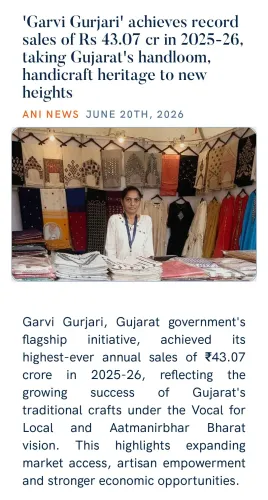
Union Textiles Minister Giriraj Singh announced that Garvi Gurjari, Gujarat's handloom and handicraft retail initiative, recorded sales of over ₹43.07 crore in 2025-26 — a new high for the state's GI-tagged textile heritage and a signal of growing artisan-economy momentum.
Key Takeaways
Garvi Gurjari crossed ₹43.07 crore in sales during 2025-26 , a record for the Gujarat handloom and handicraft initiative.
Union Textiles Minister Giriraj Singh highlighted the milestone on 20 June 2026 via the NaMo App.
The initiative markets GI-tagged products including Patan Patola , Bandhani and Kutch embroidery .
The National Handloom Development Programme and India Handloom Brand (both launched 2015 ) provide the central policy framework supporting such state-level sales drives.
Primary beneficiaries are handloom weavers and handicraft artisans in districts such as Patan , Kutch and Surat .
The model may be replicated in other states during 2026-27 handloom expos under Ministry of Textiles oversight.
Union Textiles Minister Giriraj Singh on Saturday, 20 June 2026 highlighted a record sales milestone for Garvi Gurjari, Gujarat's flagship handloom and handicraft retail initiative, announcing that revenues have crossed ₹43.07 crore in 2025-26 — a figure the minister described as a new high for the state's traditional textile heritage.
Context
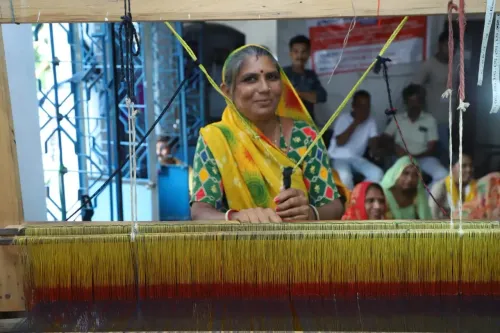
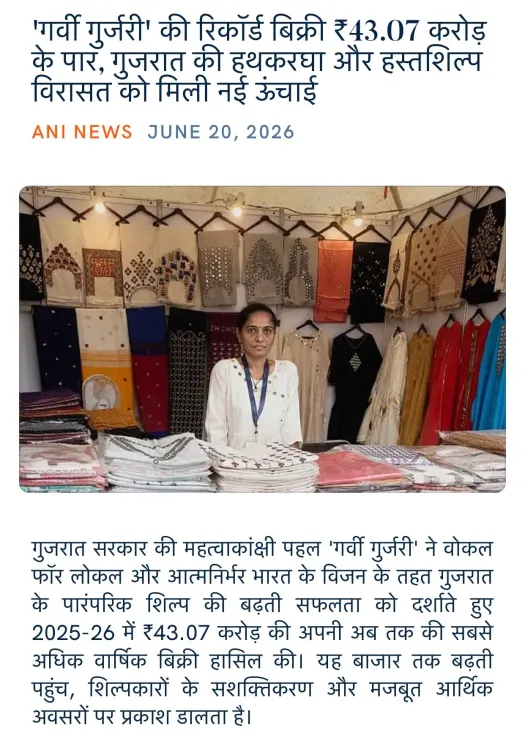
Sharing the development via the NaMo App, Singh posted in Hindi: 'Garvi Gurjari' ki record bikri ₹43.07 crore ke paar, Gujarat ki hathkargha aur hastashilp virasat ko mili nayi unchai — translating to: 'Garvi Gurjari's record sales cross ₹43.07 crore, Gujarat's handloom and handicraft heritage reaches a new height.' The post was accompanied by an image underscoring the achievement.
Garvi Gurjari is a state-promoted brand and retail network in Gujarat that markets traditional products including Patan Patola silk, Bandhani tie-dye textiles and Kutch embroidery — many of which carry Geographical Indication tags. The initiative serves as a direct sales and marketing channel linking rural artisans and weavers with urban consumers and tourists.
Policy Backdrop
The milestone sits within a broader central government push to formalise and scale handloom marketing. The India Handloom Brand, launched in 2015, was designed to certify high-quality handloom products and channel them through government-supported outlets and exhibitions. Simultaneously, the Handloom Marketing Assistance component under the National Handloom Development Programme has, since 2015, funded buyer-seller meets and expos that connect artisans directly with retail demand.
The Ministry of Textiles, which Giriraj Singh heads, oversees cluster development, scheme disbursement and marketing support for handloom weavers and handicraft artisans across India. Gujarat's GI-tagged textile traditions have been a recurring showcase in ministry-level communications on artisan empowerment.
Stakeholders and Impact
The primary beneficiaries of the Garvi Gurjari sales surge are Gujarat's handloom weavers, handicraft artisans and textile micro, small and medium enterprises who supply products through the network. Record turnover translates into higher order volumes and improved income for craftspersons in districts such as Patan, Kutch and Surat.
Policy analysts note that branded state-level exhibition-and-sales models — similar to those operating in Uttar Pradesh, Rajasthan and Tamil Nadu — are increasingly being used to bridge the gap between artisan clusters and urban retail without displacing the handloom sector's traditional character. The emphasis on direct sales platforms and GI registration keeps the focus on heritage value rather than mass-production incentives.
What's Next
With 2025-26 closing on a record note, attention will turn to whether the Ministry of Textiles replicates the Garvi Gurjari model in other states during upcoming 2026-27 handloom expos. Fresh budget allocations under the National Handloom Development Programme and expanded GI registration drives could determine how widely the template scales. Singh's public amplification of the milestone signals continued political priority for artisan-economy narratives ahead of the next policy cycle.
Point of View
While modest by industrial standards, carries outsized symbolic weight in a policy narrative that frames handloom and handicraft promotion as both cultural preservation and rural income generation. Positioning Gujarat's record as a template for other states also serves a dual purpose: reinforcing the state's model-state image while building a case for expanded National Handloom Development Programme allocations in the next budget cycle. The timing — well ahead of any major election — suggests this is primarily a policy-communication move rather than an electoral signal.
NationPress
21 Jun 2026
Frequently Asked Questions
What is Garvi Gurjari and why is it in the news?
Garvi Gurjari is Gujarat's state-promoted handloom and handicraft retail brand that markets traditional products such as Patola silk, Bandhani and Kutch embroidery. It is in the news because Union Textiles Minister Giriraj Singh announced it crossed a record ₹43.07 crore in sales during 2025-26.
How much did Garvi Gurjari earn in 2025-26?
Garvi Gurjari recorded sales of over ₹43.07 crore in 2025-26, which the Ministry of Textiles has described as a new high for the initiative.
What is the National Handloom Development Programme?
The National Handloom Development Programme is a central government scheme under the Ministry of Textiles that funds cluster development, marketing assistance, buyer-seller meets and expos to support handloom weavers and artisans across India.
Which traditional textiles from Gujarat have GI tags?
Gujarat's GI-tagged textiles include Patan Patola silk, Kutch embroidery and Bandhani tie-dye fabric, all of which are marketed through platforms such as Garvi Gurjari.
Will the Garvi Gurjari model be extended to other states?
The Ministry of Textiles has not formally announced replication in other states, but policy watchers are monitoring 2026-27 handloom expo calendars and National Handloom Development Programme budget allocations for signals of a wider rollout.