Giriraj Singh Hails Record Defence Export Surplus Under Modi
Synopsis
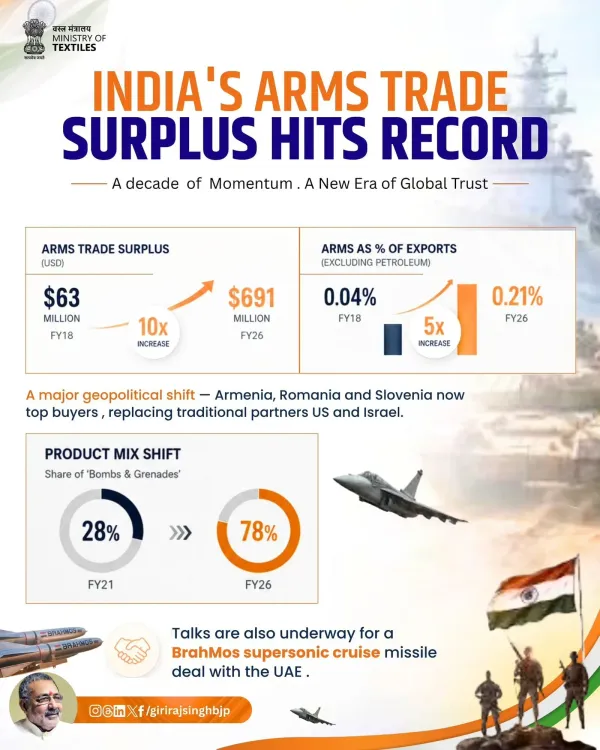
Union Textiles Minister Giriraj Singh on 6 July 2026 hailed a record defence export surplus under PM Modi's Aatmanirbhar Bharat push, saying global trust in Indian defence products is rising and the milestone advances the Viksit Bharat 2047 vision.
Key Takeaways
Giriraj Singh posted on 6 July 2026 citing a record trade surplus in India's defence exports.
He attributed the achievement to PM Narendra Modi's Aatmanirbhar Bharat initiative and continuous indigenous manufacturing efforts.
The Make in India programme (launched September 2014 ) and Aatmanirbhar Bharat (announced May 2020 ) form the policy backbone behind the export push.
The Ministry of Defence had set a target of $5 billion in defence exports as part of the self-reliance framework.
Singh linked the surplus to the Viksit Bharat 2047 goal of making India a developed economy through, among other means, defence indigenisation.
Future milestones to watch include DefExpo and Aero India editions for fresh export deals and parliamentary review of official defence production data.
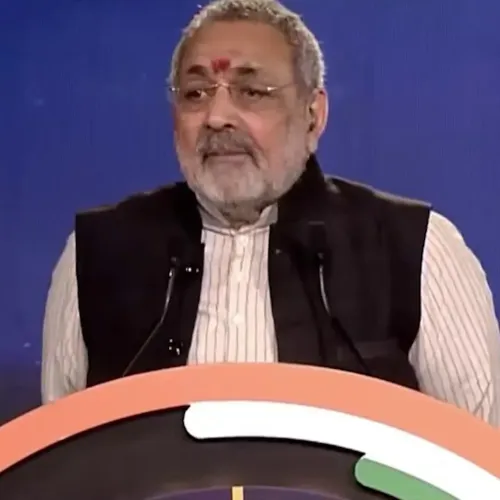
Union Textiles Minister Giriraj Singh on Monday, 6 July 2026 credited Prime Minister Narendra Modi's Aatmanirbhar Bharat vision for what he described as a record trade surplus in India's defence sector, saying the country had achieved its largest-ever lead in defence equipment exports and that global confidence in Indian defence products was growing steadily.
Posting on X, Singh wrote: 'माननीय प्रधानमंत्री श्री नरेन्द्र मोदी जी के नेतृत्व में आत्मनिर्भर भारत की दिशा में हुए निरंतर प्रयासों का ही परिणाम है' — 'This is the result of the continuous efforts made toward a self-reliant India under the leadership of honourable Prime Minister Shri Narendra Modi ji.' He added that the achievement was strengthening indigenous defence manufacturing and advancing the Viksit Bharat 2047 resolve.
Context
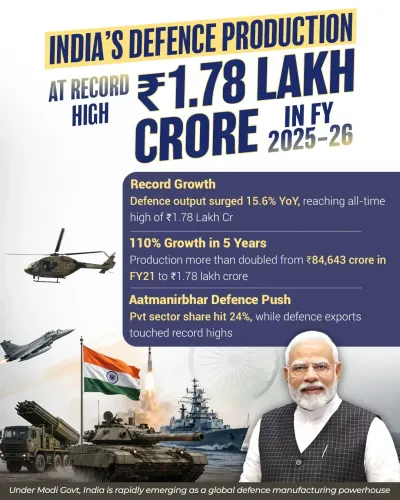
Singh's post comes amid a sustained push by the central government to reposition India from one of the world's largest arms importers to a significant exporter. The minister framed the record surplus as evidence that international buyers are increasingly placing trust in Indian-made defence systems. The hashtags #DefenceExports, #ViksitBharat2047, #AatmanirbharBharat, and #MakeInIndia signal that the announcement is being presented as a milestone within the government's broader self-reliance narrative.
Policy Backdrop
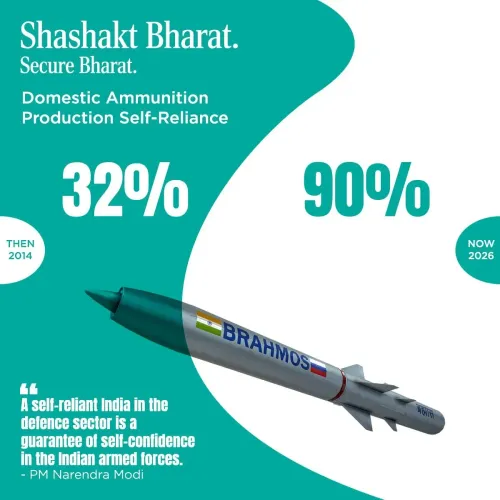
The trajectory toward export-led defence manufacturing began with the Make in India initiative launched in September 2014, which designated defence as a priority sector. The Aatmanirbhar Bharat campaign, announced in May 2020, deepened this push by establishing dedicated defence production corridors and rolling out successive Positive Indigenisation Lists that barred the import of identified items to force domestic substitution.
The Ministry of Defence also set an export promotion target of $5 billion in defence exports as part of the self-reliance framework, with the Defence Research and Development Organisation (DRDO) playing a central role in building export-ready indigenous platforms. These policy levers together form the scaffolding Singh's post invokes.
Stakeholders and Impact
Domestic defence manufacturers — both public-sector undertakings and private-sector firms that have entered the space under liberalised licensing — stand to benefit most directly from a sustained export upturn. A growing trade surplus in defence also eases pressure on India's current account by converting what was historically an import-heavy sector into a net foreign-exchange earner.
For global buyers, India's expanding export footprint reflects a broader shift in international supply-chain strategy, as many nations seek alternatives to traditional arms suppliers amid geopolitical realignments. Indian platforms, often priced competitively and backed by government-to-government frameworks, have found traction in Africa, Southeast Asia, and parts of West Asia.
What's Next
Attention will now turn to forthcoming editions of major defence exhibitions — including DefExpo and Aero India — where fresh export agreements and technology-transfer deals are typically announced. Parliamentary scrutiny of the annual defence production and export review during the budget session is also expected to test the granular figures behind the surplus claim.
If the record surplus is formally confirmed through official defence ministry data, it would mark a structural inflection point in India's decades-long effort to achieve strategic autonomy in defence — and lend further momentum to the Viksit Bharat 2047 roadmap that the government has staked its long-term economic credibility on.
Point of View
The messaging reinforces the party's 2014-onward governance arc and positions Modi's self-reliance doctrine as a proven economic strategy. The choice of a Textiles Minister — rather than the Defence Minister — to amplify the message suggests a coordinated, party-wide communication effort rather than a departmental announcement. If the surplus figures are independently verified, the development would mark a genuine structural shift in India's strategic-economic posture; if they remain unquantified, the post functions primarily as political signalling ahead of the next electoral or budgetary cycle.
NationPress
6 Jul 2026
Frequently Asked Questions
What is India's record defence export surplus that Giriraj Singh mentioned?
Union Textiles Minister Giriraj Singh stated on 6 July 2026 that India had achieved its largest-ever lead in defence equipment exports, describing it as a record trade surplus in the defence sector. Specific figures were not cited in his post and have not yet been confirmed through official Ministry of Defence data.
What is Aatmanirbhar Bharat and how does it relate to defence exports?
Aatmanirbhar Bharat, meaning 'Self-Reliant India,' was launched in May 2020 and includes dedicated defence production corridors, Positive Indigenisation Lists banning imports of identified items, and an export promotion target of $5 billion in defence exports to reduce import dependence and boost domestic manufacturing.
What is India's defence export target under Make in India?
Under the Make in India and Aatmanirbhar Bharat frameworks, India set a defence export promotion target of approximately $5 billion, aiming to transform the country from a major arms importer into a significant global exporter of indigenous defence systems.
What is Viksit Bharat 2047 and its connection to defence?
Viksit Bharat 2047 is the Indian government's long-term vision to make India a fully developed economy by the centenary of independence. Defence indigenisation — producing and exporting military equipment domestically rather than importing it — is a core pillar of this roadmap.
Which countries buy Indian defence exports?
Indian defence exports have found buyers primarily in Africa, Southeast Asia, and parts of West Asia, with government-to-government frameworks and competitive pricing helping Indian platforms gain traction as international buyers diversify away from traditional arms suppliers.