Giriraj Singh highlights Idugullapalli handloom heritage
Synopsis
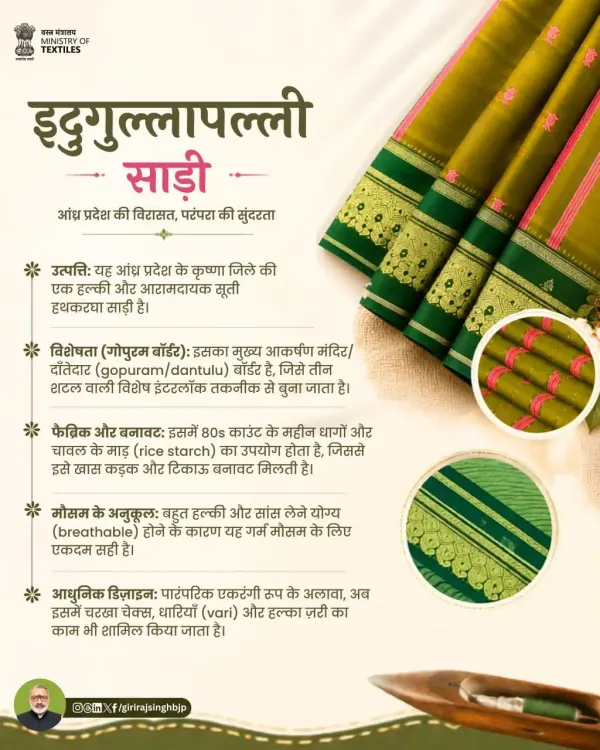
Union Textiles Minister Giriraj Singh on 21 July 2026 highlighted Idugullapalli in Andhra Pradesh as a prime example of India's handloom heritage, praising its light fabric, Gopuram border motifs, and fine handcraft as expressions of weaver skill and cultural legacy.
Key Takeaways
Giriraj Singh , Union Textiles Minister, spotlighted Idugullapalli in Andhra Pradesh on 21 July 2026 for its traditional handloom weaving.
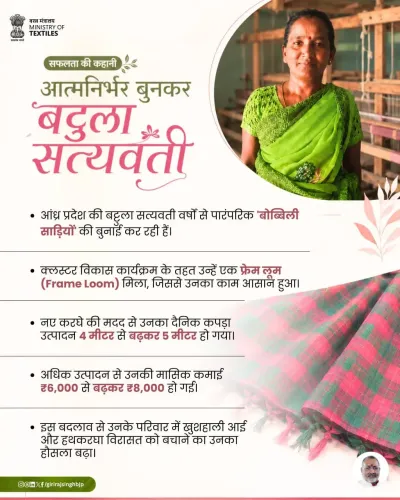
The Idugullapalli weave is distinguished by its light texture , Gopuram border motifs inspired by South Indian temple architecture, and fine handcraft.
The post is part of the Ministry of Textiles' broader practice of promoting regional handloom clusters via social media under the Vocal for Local campaign.
The National Handloom Development Programme (2015) has provided financial assistance and market linkages to weavers in states including Andhra Pradesh.
Ministerial visibility for such clusters can drive buyer interest, scheme outreach, and potential GI tagging for traditional weaves.
Union Textiles Minister Giriraj Singh on Tuesday, 21 July 2026, spotlighted Idugullapalli, a village in Andhra Pradesh, as a shining example of India's traditional handloom legacy, praising its distinctive weaving style in a post on X that drew attention to the skill and cultural heritage of Indian weavers.
Context
In his post, the Minister wrote: 'Idugullapalli Andhra Pradesh ki samridh bunai parampara ka sundar udaharan hai' ('Idugullapalli is a beautiful example of Andhra Pradesh's rich weaving tradition'). He highlighted three defining features of the craft — its light texture, traditional Gopuram border motifs, and fine handcraft — as the elements that give the weave its distinct identity.
Singh went further to frame such traditional weaves not merely as garments but as 'a living identity of our weavers' skill, culture, and years of heritage,' underscoring the human and historical value embedded in every piece of handloom fabric.
Policy Backdrop
The post aligns with the Ministry of Textiles' ongoing practice of using social media to spotlight regional handloom clusters, linking cultural preservation with economic promotion under the broader Vocal for Local campaign — a pillar of the Atmanirbhar Bharat initiative launched to promote indigenous products across sectors, including textiles.
The National Handloom Development Programme (2015) has been a key policy instrument providing financial assistance and market linkages to weavers across states, including Andhra Pradesh. Idugullapalli's weaving tradition, characterised by its Gopuram border — a motif inspired by the towering gateways of South Indian temples — represents the kind of regionally rooted craft that such programmes aim to sustain and scale.
The Ministry has increasingly used GI (Geographical Indication) tagging and handloom expos as tools to give traditional weaves a competitive edge in domestic and export markets, fitting a self-reliance narrative that elevates artisan communities as custodians of national culture.
Stakeholders and Impact
At the centre of this spotlight are handloom weavers and textile artisans of Andhra Pradesh, whose livelihoods depend on the visibility and marketability of their craft. Ministerial attention on platforms like X can translate into increased buyer interest, tourism footfall, and government scheme outreach for clusters that often remain under-recognised outside their home regions.
For consumers and the fashion industry, such posts reinforce demand for authentic, handcrafted Indian textiles at a time when the Vocal for Local movement has created a measurable cultural shift toward indigenous products. The Gopuram border design, rooted in South Indian architectural tradition, also carries export appeal as a distinctly Indian aesthetic.
What's Next
The Ministry's focus on Andhra Pradesh's weaving clusters could signal closer attention to the state ahead of the next round of handloom expos or GI registration drives for its traditional weaves. Continued ministerial advocacy on social media is expected to build pressure for stronger institutional support — from credit access to design upgradation — for weavers in clusters like Idugullapalli, as the government seeks to position India's handloom sector as both a cultural asset and an economic engine.
Point of View
The Ministry positions its handloom push within a nationalism-meets-craft narrative that resonates across political and consumer audiences. This fits a consistent arc in which the BJP-led government has sought to monetise India's artisan traditions through the Vocal for Local lens, turning cultural pride into market demand. The real test will be whether such visibility translates into concrete support — GI registration, export linkages, or credit access — for the weavers themselves.
NationPress
22 Jul 2026
Frequently Asked Questions
What is Idugullapalli handloom weaving?
Idugullapalli is a village in Andhra Pradesh known for a traditional handloom weave characterised by its light fabric, Gopuram border motifs inspired by South Indian temple gateways, and fine handcraft that reflects the region's cultural heritage.
Why did Giriraj Singh post about Idugullapalli?
As Union Textiles Minister, Giriraj Singh highlighted Idugullapalli to promote awareness of Andhra Pradesh's handloom tradition, consistent with the Ministry's practice of spotlighting regional weaving clusters as part of the Vocal for Local and Atmanirbhar Bharat campaigns.
What is the Vocal for Local campaign in textiles?
Vocal for Local is a campaign under Atmanirbhar Bharat that encourages Indians to buy and promote indigenous products, including traditional handloom textiles, to support domestic artisans and reduce dependence on imports.
What government schemes support handloom weavers in Andhra Pradesh?
The National Handloom Development Programme, launched in 2015, provides financial assistance and market linkages to handloom weavers across India, including those in Andhra Pradesh, to help sustain traditional weaving clusters.
What is a Gopuram border in handloom fabric?
A Gopuram border is a decorative motif on handloom fabric inspired by the ornate towering gateways of South Indian temples, and it is one of the signature design elements of the Idugullapalli weave from Andhra Pradesh.