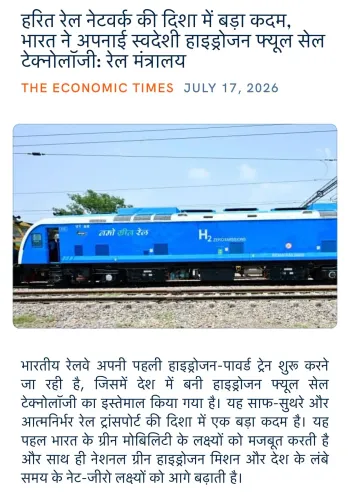
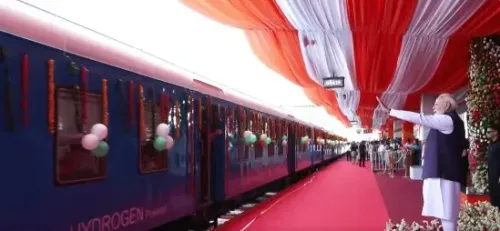
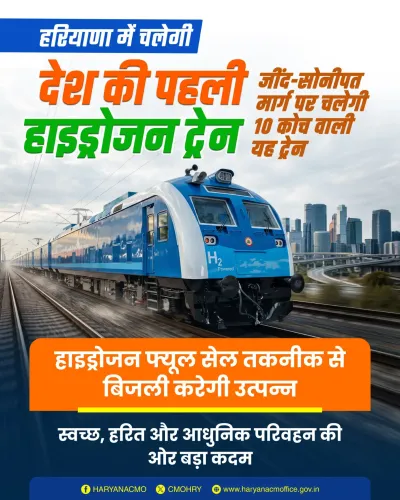
Giriraj Singh Highlights India's First Hydrogen Train Features
Synopsis
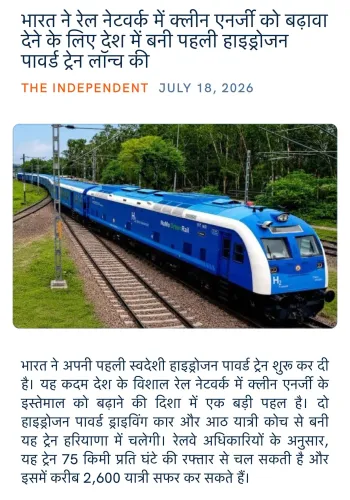
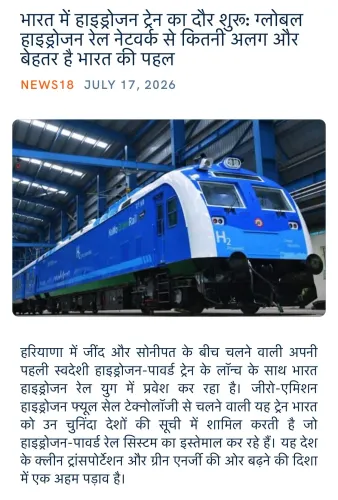
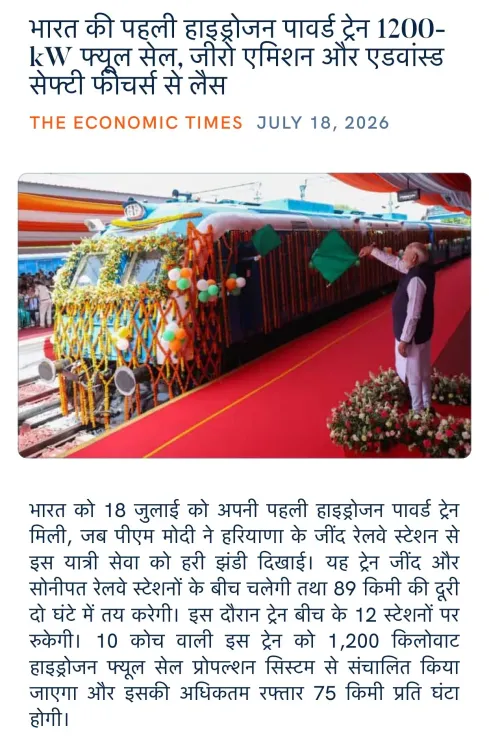
Union Textiles Minister Giriraj Singh on 18 July 2026 highlighted India's first hydrogen-powered train, equipped with a 1,200-kW fuel cell, zero emissions, and advanced safety features, amplifying a landmark moment in Indian Railways' push toward clean-energy traction.
Key Takeaways
Union Textiles Minister Giriraj Singh shared details of India's first hydrogen-powered train on 18 July 2026 via the NaMo App.
The train is equipped with a 1,200-kW fuel cell , enabling zero-emission operation across its route.
Indian Railways launched the Hydrogen for Heritage programme in 2023 to deploy such trains on non-electrified and heritage routes.
The initiative is backed by the National Green Hydrogen Mission , approved by the central government in 2023 .
Hydrogen trains are seen as viable alternatives to diesel traction where overhead electrification is too costly to install.
Route selection, rollout timelines, and budget allocations for additional rakes remain the key milestones to watch.
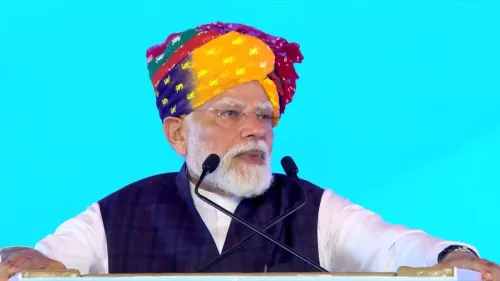
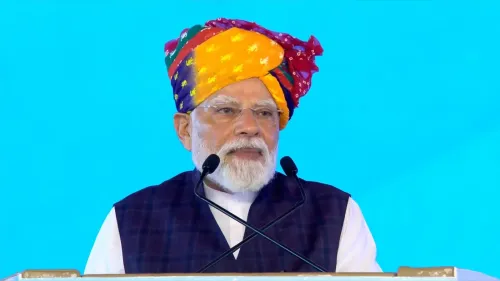
Union Textiles Minister Giriraj Singh on Saturday, 18 July 2026, shared details of India's first hydrogen-powered train on social media, drawing public attention to the milestone in the country's railway decarbonisation push. The post, shared via the NaMo App, highlighted the train's 1,200-kW fuel cell, zero-emission operation, and advanced safety features.
Context
The post, written in Hindi, describes the train as being equipped with a '1200-kW फ्यूल सेल, जीरो एमिशन और एडवांस्ड सेफ्टी फीचर्स' — a 1,200-kW fuel cell, zero emissions, and advanced safety features. While Giriraj Singh holds the Textiles portfolio, senior ruling-party leaders routinely amplify flagship infrastructure milestones across ministries, reflecting the Bharatiya Janata Party's broader communication strategy around national development.
Indian Railways, which operates one of the world's largest rail networks, has been pursuing a multi-pronged decarbonisation agenda aligned with India's net-zero 2070 target announced at COP26. A hydrogen-powered train represents a significant step in that direction, particularly for routes where overhead electrification remains cost-prohibitive.
Policy Backdrop
Indian Railways announced the Hydrogen for Heritage programme in 2023, aimed at deploying hydrogen fuel-cell trains on select — particularly heritage and non-electrified — routes across the country. The initiative draws support from the National Green Hydrogen Mission, a central government programme approved in 2023 to scale up green hydrogen production and its application across transport and industry.
Globally, hydrogen trains have been piloted in Germany, Japan, and China over the past decade, with varying degrees of commercial rollout. India's entry into this space positions the country alongside early movers in clean rail technology, though the scale of domestic deployment will depend on fuel-cell manufacturing capacity and hydrogen production costs.
Stakeholders and Impact
The primary beneficiaries of hydrogen train deployment are railway commuters on non-electrified routes, who currently rely on diesel-powered services with higher emissions and operating noise. For green technology developers and domestic manufacturers, the programme signals potential procurement opportunities as Indian Railways scales up its clean-energy fleet.
A 1,200-kW fuel cell powertrain is a substantial capacity for rail traction, indicating the train is designed for meaningful passenger or freight loads rather than a limited demonstration run. Zero-emission operation would eliminate direct carbon dioxide and particulate output along the routes served, contributing to both air quality and climate goals.
What's Next
Attention will now turn to the rollout timeline, the specific routes selected for initial deployment, and budget allocations for additional hydrogen rakes — details expected to emerge through upcoming Railway Budget announcements or parliamentary committee disclosures. The pace at which Indian Railways can commission further hydrogen rakes will determine whether this remains a landmark prototype or becomes the foundation of a broader clean-traction fleet.
As India accelerates its green infrastructure agenda ahead of its 2070 net-zero commitment, the hydrogen train programme will serve as a key indicator of whether the country can translate policy ambition into scalable, operational technology on its vast rail network.
Point of View
Linking the National Green Hydrogen Mission to a tangible, visible asset. However, the gap between a prototype showcase and a scaled deployment remains the critical test — past clean-energy rail pilots in India have faced delays in commercialisation. The political salience of this announcement will ultimately be determined by how quickly additional hydrogen rakes reach passengers on the ground.
NationPress
18 Jul 2026
Frequently Asked Questions
What is India's first hydrogen-powered train?
India's first hydrogen-powered train is a fuel-cell-based locomotive equipped with a 1,200-kW fuel cell system, designed for zero-emission operation with advanced safety features on Indian Railways routes.
What is the Hydrogen for Heritage programme?
The Hydrogen for Heritage programme was announced by Indian Railways in 2023 to deploy hydrogen fuel-cell trains on select non-electrified and heritage routes where overhead electrification is not cost-effective.
What is the National Green Hydrogen Mission?
The National Green Hydrogen Mission is a central government scheme approved in 2023 to scale up green hydrogen production and its use in sectors including transport and industry, supporting India's net-zero 2070 goal.
Why is a Textiles Minister posting about a railway project?
Senior ruling-party leaders routinely share updates on flagship infrastructure projects across ministries as part of a coordinated government communication effort, even when the subject falls outside their own portfolio.
How does India's hydrogen train compare to global projects?
Similar hydrogen train pilots have been conducted in Germany , Japan , and China over the past decade. India's entry positions it alongside these early movers, though large-scale commercial deployment will depend on domestic fuel-cell manufacturing and hydrogen production costs.