Giriraj Singh: India to get NIFT-based sizing for Indian bodies
Synopsis
Union Textiles Minister Giriraj Singh announced India is developing a NIFT-backed clothing size framework aligned with Indian body types, aiming to end cross-brand size inconsistency and make the sector more consumer-friendly under PM Modi's modernisation push.
Key Takeaways
Union Textiles Minister Giriraj Singh announced work is underway on a standardised clothing size framework for India, based on NIFT research.
The framework is designed around Indian body types , addressing the long-standing mismatch caused by Western-derived sizing systems.
The goal is to make it easier for consumers to find well-fitting clothes and reduce confusion caused by inconsistent sizing across brands .
The initiative is positioned under PM Modi 's broader push to make the textiles sector more modern and consumer-friendly.
The Make in India campaign (launched 2014 ) identified textiles as a priority sector; this sizing standard extends that policy lineage.
Voluntary adoption by major brands and integration into retail labelling standards will be the key next steps to watch.
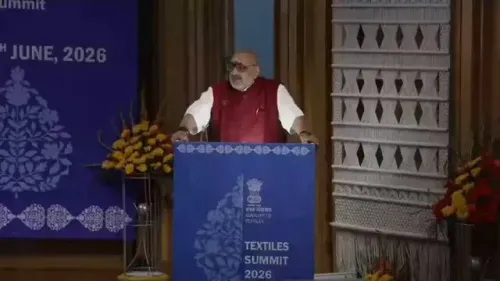
India's chaotic apparel sizing — where a 'medium' in one brand is a 'large' in another — may finally be heading for a fix. Union Textiles Minister Giriraj Singh announced on Thursday, July 30, 2026 that work is underway to establish a standardised clothing size framework calibrated specifically to Indian body types, built on research by the National Institute of Fashion Technology (NIFT).
Posting in Hindi, the Minister said the framework being developed on the basis of NIFT's study 'will make it easier to choose well-fitting clothes and reduce the confusion caused by size differences across brands' — a frustration familiar to virtually every Indian shopper.Why Indian bodies need Indian sizes
The core problem is structural. Global apparel sizing systems — largely derived from Western body-measurement data — have long been applied to Indian retail with minimal adaptation. The result is persistent misfit: consumers routinely size up or down, return rates climb, and smaller retailers without flexible return policies lose sales. A NIFT-derived national sizing chart anchored in actual Indian anthropometric data would address this at the source.
NIFT, an autonomous body under the Ministry of Textiles, is the country's premier institution for fashion research and training. Its involvement lends the framework technical credibility — though the exact methodology and release timeline of the study have not yet been made public.
Where this fits in the textiles modernisation push
Minister Singh framed the initiative squarely within the broader agenda of Prime Minister Narendra Modi's government: making the textiles sector 'more modern, consumer-friendly, and organised.' That phrase — upbhokta-anukool aur vyavasthit (consumer-friendly and organised) — captures the twin goals driving current policy.
The Make in India campaign, launched in 2014, identified textiles and apparel as a priority manufacturing sector. Since then, successive policy moves have pushed toward quality standardisation and global competitiveness. A domestic sizing standard fits that arc: it supports organised retail, reduces waste from returns, and gives Indian manufacturers a defined benchmark to produce against — strengthening both the domestic market and export credibility.
The hashtags #ViksitBharat2047 and #MakeInIndia in the Minister's post signal that this is being positioned not as a narrow technical exercise but as part of India's long-horizon ambition to build world-class consumer infrastructure by its centenary of independence.
What adoption will actually look like
The immediate test will be whether major brands — domestic and international — voluntarily adopt the new chart, and whether it eventually gets integrated into retail labelling standards. Standardisation bodies and industry associations will be central to that process. For consumers, the payoff is simple: a size label that actually means something consistent, regardless of which brand made the garment.
India's apparel market is one of the largest in the world. Getting the sizing right is not a small detail — it is the foundation on which consumer trust in organised retail is built.
Point of View
The Ministry is simultaneously signalling competence to industry and relatability to voters. The real test, however, is implementation: voluntary adoption frameworks in India have historically struggled without regulatory nudges, and the gap between a sizing study and a label standard on a shop floor can be wide. If the framework reaches mandatory or near-mandatory adoption, it could meaningfully reduce return rates and waste across one of the world's largest apparel markets.
NationPress
30 Jul 2026
Frequently Asked Questions
What is India's new clothing size standardisation initiative?
India is developing a standardised clothing size framework based on a study by the National Institute of Fashion Technology (NIFT), calibrated to Indian body types. The initiative aims to make it easier for consumers to find well-fitting clothes and reduce confusion caused by inconsistent sizing across brands.
What role does NIFT play in India's apparel sizing reform?
NIFT (National Institute of Fashion Technology), an autonomous body under the Ministry of Textiles, is conducting the foundational research on Indian body measurements. Its study will form the basis of the new national sizing framework.
Why does India need its own clothing size standard?
Most apparel sizing systems used in Indian retail are derived from Western body-measurement data and do not accurately reflect Indian body types. This leads to persistent misfit, high return rates, and consumer frustration across brands.
How does this relate to Make in India and Viksit Bharat 2047?
The sizing initiative is framed as part of the government's broader effort to make the textiles sector more modern and organised under Make in India (launched 2014) and the Viksit Bharat 2047 vision for a developed India by its centenary of independence.
When will the new Indian clothing size chart be available?
The exact timeline for finalisation and release of the NIFT-based sizing framework has not been officially announced. The next steps involve voluntary adoption by major brands and potential integration into retail labelling standards.