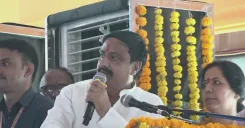
Giriraj Singh Lauds Tripura Women at National SARAS Mela
Synopsis
Union Textiles Minister Giriraj Singh on 18 October 2026 lauded Tripura's women entrepreneurs for participating in the National SARAS Mela in Vijayawada, calling their display of handloom and handicraft products a commendable step toward linking local talent with national markets and strengthening rural women's economic self-reliance.
Key Takeaways
Giriraj Singh praised Tripura 's women entrepreneurs for showcasing handloom and handicraft products at the National SARAS Mela in Vijayawada on 18 October 2026 .
The National SARAS Mela is an annual fair under DAY-NRLM (launched 2011 ) that links SHG products with national buyers.
Tripura has established handloom and handicraft clusters where rural women artisans are the primary producers.
The event brings together the Ministry of Rural Development's SARAS platform and the Textiles Ministry's National Handloom Development Programme .
The initiative aligns with the central government's Atmanirbhar Bharat and Vocal for Local frameworks for rural craft market linkages.
Follow-up action through e-commerce integration or export promotion could determine whether the mela's momentum creates lasting income gains for artisans.
When artisans from one of India's most culturally rich northeastern states carry their handlooms and handicrafts to a national stage hundreds of kilometres away, something larger than a trade fair is happening. Union Textiles Minister Giriraj Singh on Sunday, 18 October 2026, publicly commended Tripura's women entrepreneurs for showcasing their traditional craft at the National SARAS Mela being held in Vijayawada, Andhra Pradesh — calling it a praiseworthy step toward connecting local talent with national markets.
Posting in Hindi, the Minister wrote: 'त्रिपुरा की महिला उद्यमियों द्वारा विजयवाड़ा में आयोजित National SARAS Mela में हथकरघा और हस्तशिल्प उत्पादों का प्रदर्शन, स्थानीय हुनर को राष्ट्रीय बाजार से जोड़ने की दिशा में सराहनीय पहल है।' — 'The display of handloom and handicraft products by Tripura's women entrepreneurs at the National SARAS Mela organised in Vijayawada is a commendable initiative toward linking local talent with the national market.' He added that such platforms not only give fresh recognition to India's rich cultural heritage but also strengthen the economic empowerment and self-reliance of rural women.
What the SARAS Mela is — and why it matters
The National SARAS Mela is an annual fair organised under the Deendayal Antyodaya Yojana – National Rural Livelihoods Mission (DAY-NRLM), launched in 2011 by the Ministry of Rural Development. Its core purpose is simple but powerful: give Self-Help Group (SHG) products a national marketplace that individual rural producers could never access on their own. Weavers, potters, embroiderers, and artisans from across states bring their work to one venue — and buyers arrive from all over the country.
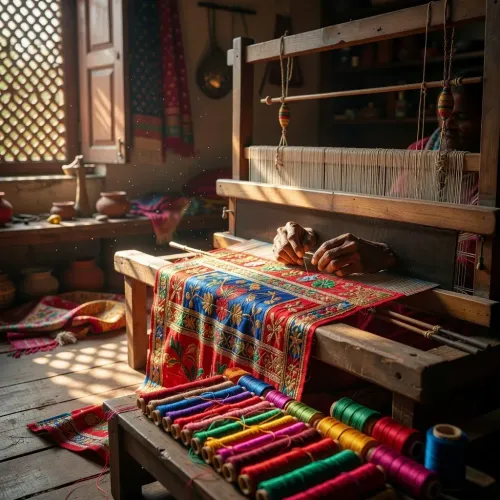
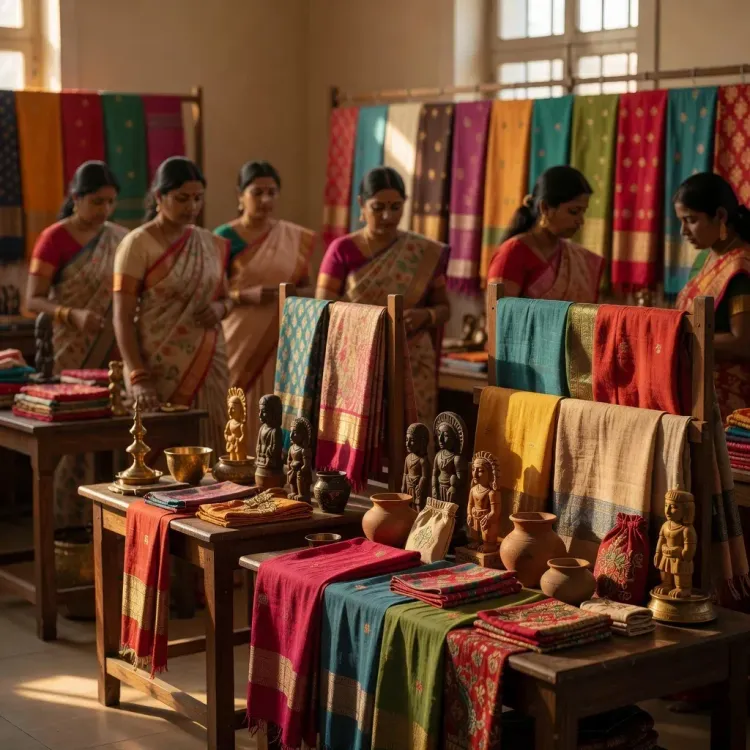
For Tripura, the stakes are especially tangible. The northeastern state has well-established handloom and handicraft clusters where rural women are the primary producers, weaving traditional fabrics that carry centuries of tribal and Bengali craft lineage. Getting those products in front of buyers in Andhra Pradesh — a geographically and culturally distant market — is precisely the kind of cross-regional linkage policymakers have long aspired to build.
Textiles Ministry's parallel role in market linkages
The event sits at the intersection of two central government frameworks. The Ministry of Rural Development runs SARAS; the Ministry of Textiles — Giriraj Singh's own portfolio — runs the National Handloom Development Programme, which has supported weaver clusters and market-access schemes since the 12th Five Year Plan period. Both ministries converge on the same objective: pull India's decentralised craft economy into mainstream commercial channels.
This convergence reflects the broader Atmanirbhar Bharat and Vocal for Local agenda, under which national and regional melas have become a deliberate policy instrument — not just a cultural showcase. The Northeast, with its dense concentration of traditional crafts and high proportion of women artisans in SHGs, sits squarely at the centre of that strategy.
Rural women at the centre of the story
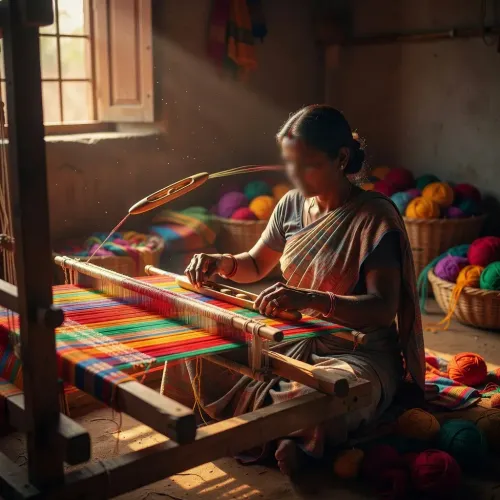
The Minister's emphasis on women's economic empowerment is not incidental. SHG-based livelihoods in India are overwhelmingly women-led, and the Northeast has been a consistent focus for SHG expansion. When Tripura's women entrepreneurs travel to Vijayawada to sell their weaves, they are not just representing a product — they are demonstrating an entire model: that artisan clusters, properly supported with marketing infrastructure, can generate real income without middlemen.
The question that follows is whether the mela's momentum translates into sustained demand — through e-commerce integration, government procurement, or export promotion initiatives that the Textiles Ministry and state government could announce as follow-through. A fair is a spark. Policy infrastructure is what fans it into a flame.
Point of View
Where cultural distinctiveness and women-led SHGs offer strong optics. The post signals the Textiles Ministry's interest in owning the rural craft marketing narrative even when the organising ministry is Rural Development, suggesting a deliberate convergence of portfolios around artisan livelihoods. The real policy test, however, lies beyond the fair: whether sustained market linkages, e-commerce onboarding, or export pathways follow for Tripura's weavers will determine whether this is a political moment or a structural shift. With assembly-level politics always live in the Northeast, the optics of empowering tribal and rural women artisans carry electoral weight alongside genuine developmental intent.
NationPress
18 Oct 2026
Frequently Asked Questions
What is the National SARAS Mela?
The National SARAS Mela is an annual fair organised by the Ministry of Rural Development under the Deendayal Antyodaya Yojana – National Rural Livelihoods Mission (DAY-NRLM), launched in 2011, to provide Self-Help Group products a national marketplace and connect rural artisans with buyers across India.
Why is the 2026 National SARAS Mela being held in Vijayawada?
Vijayawada in Andhra Pradesh is hosting the current edition of the National SARAS Mela. The mela rotates across cities to expose artisans from different states to diverse regional markets, though specific dates and participation numbers for the 2026 edition have not been officially confirmed.
What handloom and handicraft products is Tripura known for?
Tripura has well-established traditional handloom and handicraft clusters producing woven fabrics that reflect tribal and Bengali craft traditions, with rural women artisans forming the backbone of these clusters.
What is Giriraj Singh's role in India's textiles sector?
Giriraj Singh is India's Union Minister of Textiles, a senior BJP leader and Lok Sabha MP from Begusarai, Bihar. His ministry oversees schemes including the National Handloom Development Programme, which supports weaver clusters and market linkages across India.
How does the SARAS Mela connect to the Atmanirbhar Bharat mission?
The SARAS Mela is a key instrument of the Atmanirbhar Bharat and Vocal for Local frameworks, using national fairs to pull India's decentralised rural craft economy into mainstream commercial channels, reducing dependence on middlemen and expanding artisan incomes.