Giriraj Singh Marks 12 Years of Make in India With Big Numbers
Synopsis
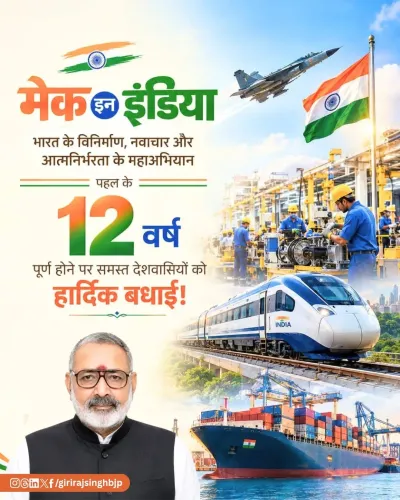
Union Textiles Minister Giriraj Singh marked 12 years of Make in India on September 25, 2026, citing 99.2% domestic mobile production, $863 billion in total exports, 14.6 lakh PLI jobs and over 2.5 lakh startups as proof of a manufacturing revolution.
Key Takeaways
Make in India completed 12 years on September 25, 2026 , having been launched in September 2014.
Minister Singh claims 99.2% of mobile phones used in India are now manufactured domestically.
Total Indian exports have reportedly reached $863 billion , edging toward the government's $1 trillion target.
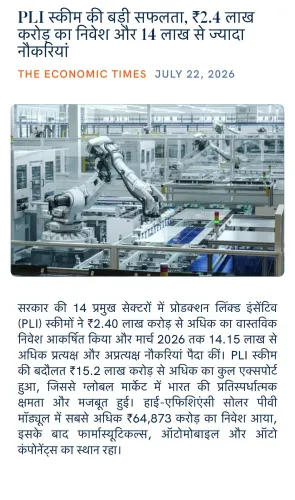
PLI schemes across 14 sectors, introduced from 2020, are credited with generating 14.6 lakh jobs .
India's registered startup count has crossed 2.5 lakh , supporting the shift to higher-value manufacturing.
Singh's 'chip to ship' framing signals policy ambition beyond assembly into semiconductors and shipbuilding.
Twelve years after Prime Minister Narendra Modi launched the Make in India initiative in September 2014, Union Textiles Minister Giriraj Singh has used the anniversary to put a scoreboard on the screen — and the numbers he is citing are striking. From near-total import dependence in mobile phones to a claimed export haul of $863 billion, the minister's post on Friday, September 25, 2026, frames the programme as nothing less than a manufacturing revolution.
Posting in Hindi, Singh declared: 'Make in India ke 12 saalon ne desh mein vinirnaan, niryaat aur navaachaar ki ek nayi kraanti la di hai' — ('12 years of Make in India have brought a new revolution of manufacturing, exports and innovation to the country'). He anchored the claim on four headline figures: 99.2 per cent of mobile phones used in India now manufactured domestically, total exports rising to $863 billion, 14.6 lakh jobs created through Production Linked Incentive (PLI) schemes, and a startup ecosystem that has crossed 2.5 lakh registered startups.
From assembly line to chip-and-ship ambition
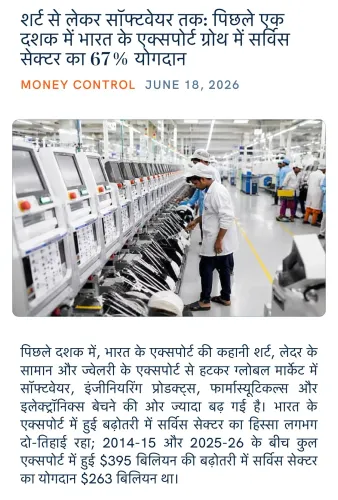
The mobile manufacturing figure is the most visceral data point Singh deploys, because it captures a full reversal. When Make in India launched in 2014, India imported the vast majority of its handsets. The shift toward near-total domestic production has been driven by a combination of import duties that made assembled phones uncompetitive and direct PLI incentives that pulled global and domestic manufacturers to set up Indian factories.
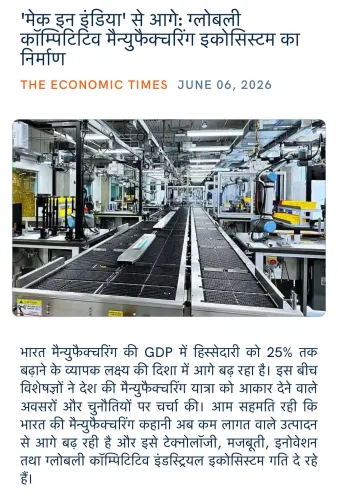
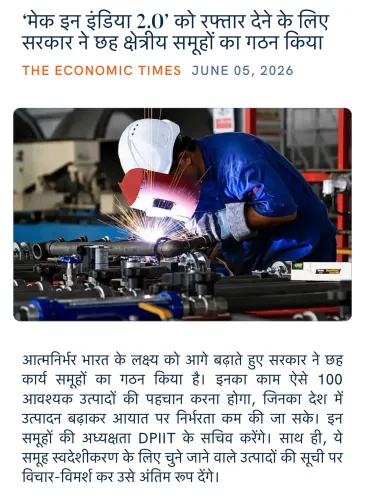
The PLI schemes, rolled out from 2020 across 14 sectors including electronics, defence, pharmaceuticals and textiles, have become the operational spine of the Make in India promise — converting a branding initiative into a hard industrial policy instrument. Singh's figure of 14.6 lakh jobs attributed to PLI represents the scheme's most politically potent output: visible, countable employment in a country where manufacturing's share of GDP has historically lagged aspirations.
The 'chip to ship' phrase and what it signals
Perhaps the sharpest line in Singh's post is the phrase 'chip se lekar ship tak' — 'from chip to ship' — a deliberate rhetorical upgrade from the earlier 'Make in India' lion-logo imagery. It signals a policy ambition that has moved beyond smartphone assembly into semiconductor fabrication and shipbuilding: two sectors where India has announced fresh investments and incentives in recent budget cycles. The phrase is a marker of intent — that the government wants India in the high-value, capital-intensive end of global supply chains, not just the labour-intensive assembly segment.
The 2.5 lakh startup figure sits alongside that ambition. India's startup ecosystem, formally tracked since the Startup India programme launched in 2016, has grown into one of the world's largest by registered count, feeding design, software and deep-tech capability into the manufacturing base.
What the export number means in global context
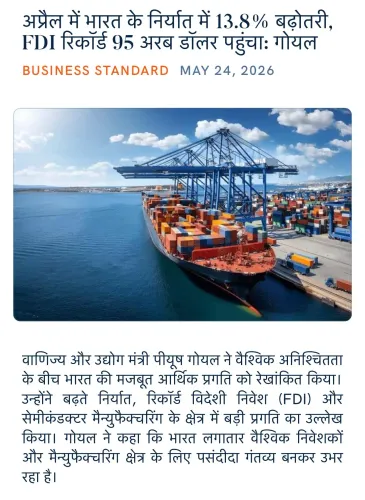
The $863 billion total exports figure, if borne out, would represent a substantial leap from the roughly $450 billion India exported in 2022-23 — and would put the country within striking distance of its long-stated target of $1 trillion in exports by 2030. Singh's post does not break this down between goods and services, a distinction that matters because India's services exports — IT, business process management, finance — have historically outpaced merchandise. The composition of that headline number will be the key test of whether the manufacturing bet has genuinely paid off.
The next Commerce Ministry quarterly data release will either corroborate or complicate the export claim, and any fresh PLI outlays in the forthcoming Union Budget will signal whether the government intends to sustain, extend or redirect its manufacturing incentive architecture.
Point of View
Deeper-technology story. The PLI job figure, if verified, gives the government a potent counter to opposition critiques about employment generation. The $863 billion exports claim will face the most scrutiny, since independent data will quickly establish how much is manufactured goods versus services — the distinction that will determine whether Make in India has genuinely rebalanced India's economic structure or simply ridden a services tailwind.
NationPress
25 Sept 2026
Frequently Asked Questions
When was Make in India launched and what is its goal?
Make in India was launched in September 2014 to position India as a global manufacturing hub, boost domestic production, attract foreign investment and create employment in the industrial sector.
What are PLI schemes and how many jobs have they created?
Production Linked Incentive schemes are sector-specific government incentives introduced from 2020 across 14 sectors. Minister Giriraj Singh claims they have generated 14.6 lakh jobs in India.
What percentage of mobile phones used in India are now made in India?
According to Minister Giriraj Singh's September 2026 post, 99.2% of mobile phones used in India are now manufactured domestically, up from heavy import dependence when Make in India launched in 2014.
What is India's total export figure cited by Giriraj Singh in 2026?
Giriraj Singh cited India's total exports as having reached $863 billion, which would place the country close to its long-standing target of $1 trillion in exports by 2030.
What does 'chip to ship' mean in India's manufacturing policy?
'Chip to ship' refers to India's ambition to manufacture across the full industrial value chain — from semiconductor chips at the high-technology end to large-scale shipbuilding — signalling a move beyond assembly into capital-intensive, high-value production.