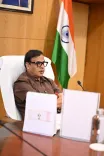
Giriraj Singh marks Make in India's 12th year with PM Modi's note
Synopsis
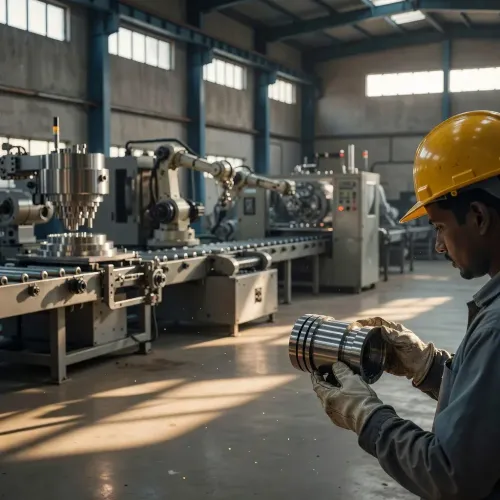
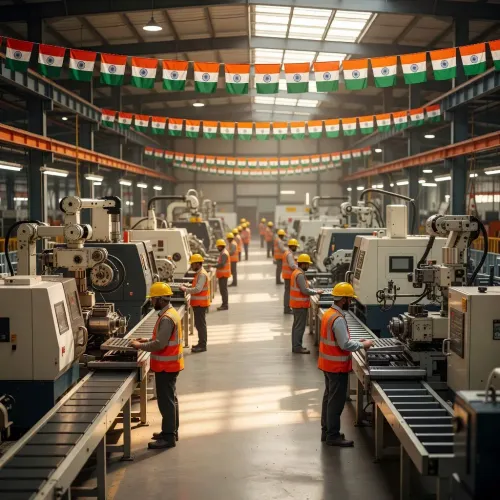
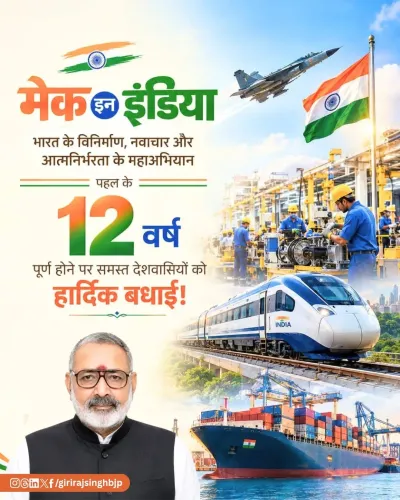
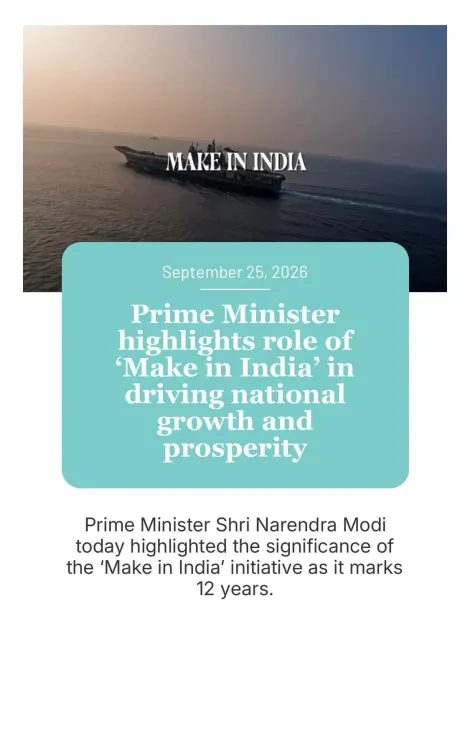
On Make in India's 12th anniversary, Union Textiles Minister Giriraj Singh shared PM Modi's statement crediting the flagship scheme with driving national growth and prosperity, spotlighting a policy that has underpinned India's manufacturing ambitions since 2014.
Key Takeaways
Make in India marks its 12th anniversary on 25 September 2026 , having been launched on 25 September 2014 by PM Narendra Modi.
Union Textiles Minister Giriraj Singh shared the Prime Minister's statement on the scheme's role in 'national growth and prosperity' via the NaMo App .
The initiative was designed to raise manufacturing's share of India's GDP and attract large-scale foreign direct investment.
From 2020 onward , Production Linked Incentive (PLI) schemes across multiple sectors were introduced as a direct policy extension of the Make in India framework.
MSMEs and large manufacturers — including those in the textiles and apparel sector overseen by Giriraj Singh's ministry — are among the primary beneficiaries.
Twelve years after Prime Minister Narendra Modi launched one of independent India's most ambitious manufacturing drives, Union Textiles Minister Giriraj Singh amplified the anniversary message on Friday, 25 September 2026, sharing the Prime Minister's own account of how Make in India has shaped national growth and prosperity.
A flagship turns twelve — and the symbolism is deliberate
Make in India was unveiled on 25 September 2014 — exactly twelve years ago to the day. The initiative was built on a single, audacious premise: transform India from a consumption economy into a manufacturing powerhouse capable of competing with the world's factory floors. The Prime Minister's statement, shared via the NaMo App, frames that journey as one of 'national growth and prosperity' — language that signals a stock-taking moment rather than a routine anniversary post.
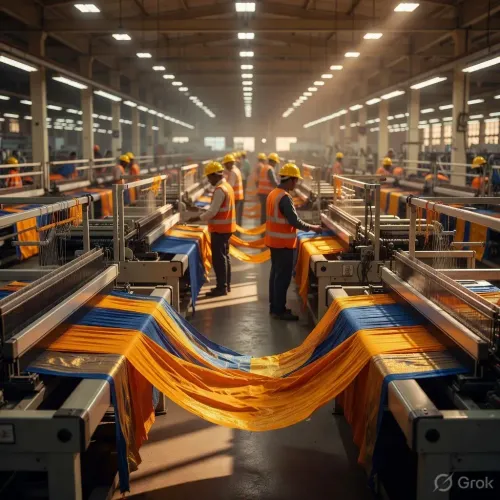
For Giriraj Singh, whose Ministry of Textiles sits at the heart of the Make in India story — textiles and apparel being among India's largest manufacturing and export sectors — amplifying this message carries particular weight. The ministry has been a direct beneficiary of the policy architecture the programme helped build.
From a 2014 launch to a decade of PLI scaffolding
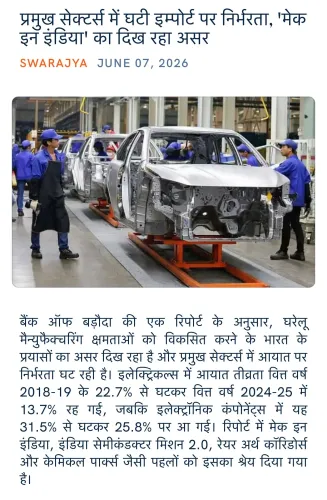
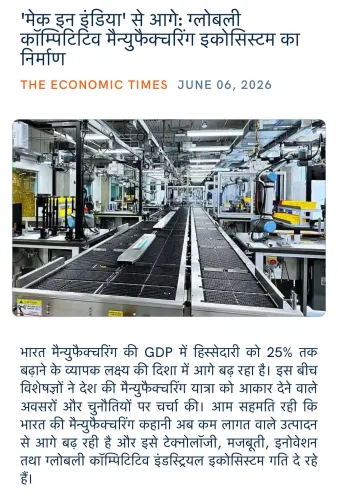
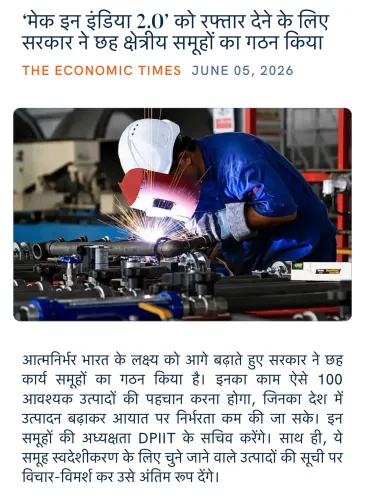
Make in India did not operate in isolation. From 2020 onward, the government layered Production Linked Incentive (PLI) schemes across more than a dozen sectors — from semiconductors and mobile phones to pharmaceuticals and technical textiles — giving manufacturers a direct financial incentive to scale domestic output. The PLI architecture is widely seen as the operational muscle behind what Make in India set as a strategic direction.
The broader goal has always been to raise manufacturing's share of GDP and pull in foreign direct investment at scale. MSMEs — the backbone of India's industrial workforce — were positioned as key beneficiaries, plugging into global supply chains that Make in India was designed to attract.
Why the anniversary message lands differently in 2026
Sharing a Prime Ministerial statement on a scheme anniversary is a routine act in Indian politics. What makes this one worth watching is the timing: a twelve-year milestone invites a reckoning — with FDI inflow data, with manufacturing's actual GDP share, with how many PLI beneficiaries delivered on their output commitments. The Ministry of Commerce and Industry periodically releases those numbers, and the anniversary is often the trigger for that data to surface.
For now, the Textiles Minister has placed the Prime Minister's framing front and centre — that Make in India is an engine of 'national growth and prosperity.' The data, when it comes, will tell the fuller story.
Point of View
Lending his platform to this message reinforces the Textiles Ministry's alignment with the government's manufacturing-first narrative at a moment when PLI outcomes are increasingly under scrutiny. The deeper question the anniversary raises — whether manufacturing has meaningfully closed the gap with services in India's GDP mix — is one the government will want to answer with data, not just messaging. How that story is told in the months ahead will define whether Make in India is treated as a legacy achievement or an ongoing, evolving programme.
NationPress
25 Sept 2026
Frequently Asked Questions
When was Make in India launched?
Make in India was launched by Prime Minister Narendra Modi on 25 September 2014 . The initiative aimed to boost domestic manufacturing, attract foreign direct investment, and raise manufacturing's share of India's GDP.
What is the goal of Make in India?
The scheme was designed to transform India into a global manufacturing hub by facilitating investment, fostering innovation, and building world-class infrastructure. It targets increased manufacturing contribution to GDP and large-scale job creation.
What is Giriraj Singh's role in the government?
Giriraj Singh is the Union Minister of Textiles in the Government of India, a senior BJP leader, and a Lok Sabha Member of Parliament from Begusarai, Bihar .
How is the PLI scheme related to Make in India?
The Production Linked Incentive (PLI) schemes , rolled out from 2020 onward across more than a dozen sectors, are widely regarded as the operational extension of Make in India — providing direct financial incentives for manufacturers to scale domestic production.
Why is Make in India important for the textiles sector?
Textiles and apparel are among India's largest manufacturing and export industries. The Make in India framework, combined with PLI incentives for technical textiles and man-made fibres, has made the sector a central pillar of the government's domestic manufacturing strategy.