Giriraj Singh: MP's Lakhpati Didis now stitch bags for Indian Army
Synopsis
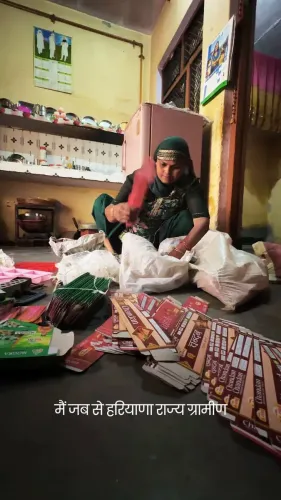
Union Textiles Minister Giriraj Singh spotlighted Lakhpati Didis from Badarwas, Madhya Pradesh, who are now manufacturing rucksack bags for the Indian Army — a grassroots success story at the intersection of NRLM, Atmanirbhar Bharat, and women's economic empowerment.
Key Takeaways
Union Textiles Minister Giriraj Singh shared on 21 November 2026 that Lakhpati Didis from Badarwas, Madhya Pradesh , are stitching rucksack bags for the Indian Army .
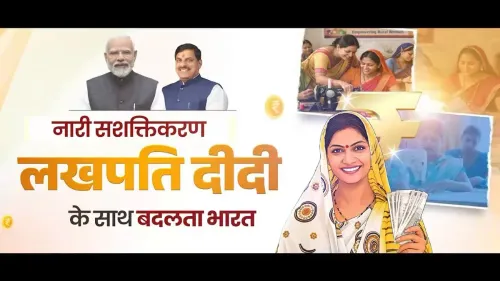
The Lakhpati Didi programme targets annual household income of at least Rs 1 lakh for rural women through SHGs under DAY-NRLM , launched in 2011 .
Supplying to the Army requires quality and volume consistency, marking these women as credible institutional vendors, not just welfare beneficiaries.
The initiative reflects a broader policy of linking NRLM self-help groups to defence procurement as part of the Atmanirbhar Bharat framework.
Scaling such SHG-to-defence supply arrangements nationally remains the key next step flagged by policy observers.
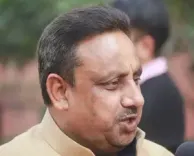
From village self-help circles to the supply chain of the Indian Army — women from Badarwas, Madhya Pradesh, are making a journey that few imagined possible. Union Textiles Minister Giriraj Singh highlighted their story on Saturday, 21 November 2026, calling it an inspiring example of women's self-reliance and empowerment.
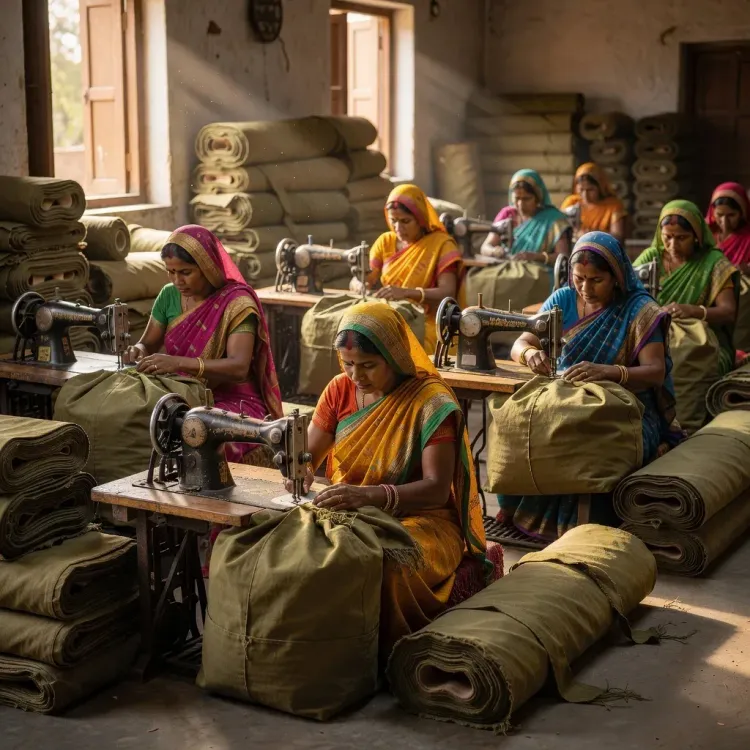
Posting in Hindi, the minister wrote: 'Madhya Pradesh ke Badarwas ki Lakhpati Diidiyaan apni mehnat aur hunar se nayi pehchaan bana rahi hain.' ('The Lakhpati Didis of Badarwas, Madhya Pradesh, are building a new identity through their hard work and skill.') The specific achievement he flagged: these women are now manufacturing rucksack bags (pitthu bags) for the Indian Army.Who are the Lakhpati Didis of Badarwas?
The Lakhpati Didi initiative is a targeted component of the Deendayal Antyodaya Yojana–National Rural Livelihoods Mission (DAY-NRLM), launched in 2011 to mobilise rural women into self-help groups and push their annual household income above Rs 1 lakh through diversified livelihoods. Badarwas is a town in Shivpuri district, nestled in the heartland of a state that runs one of the country's largest NRLM networks.
What sets this group apart is the institutional buyer at the other end of their stitching machines: the Indian Army. Rucksacks and load-bearing bags are standard field equipment, procured in large volumes and to precise specifications. Landing this contract is not a soft achievement — it demands consistent quality, volume reliability, and supply-chain discipline.
SHG-to-defence supply: a policy bet paying off
This is not an isolated story. Since the mid-2010s, several states have piloted arrangements linking women-led self-help groups to defence establishments for textiles, accessories, and utility equipment — part of a deliberate policy push under Atmanirbhar Bharat to route institutional procurement toward domestic, community-based producers.
For a Textiles Minister, the optics are layered. Giriraj Singh's ministry sits at the intersection of two policy imperatives: deepening women's economic participation in the textile value chain, and reducing India's dependence on large industrial suppliers for items that community enterprises can produce competitively. A pitthu bag stitched in Badarwas is simultaneously a livelihood, a defence input, and a data point in an ongoing argument about what 'Make in India' can look like at the grassroots.
The broader NRLM architecture now spans tens of millions of women across rural India. The challenge — and the ambition flagged by watchers of this space — is whether arrangements like Badarwas can be systematically scaled, with defence procurement manuals creating reserved or preferential categories for women-led enterprises rather than relying on individual state-level pilots.
What it means for rural women in MP
For the women themselves, supplying to the Army is a reputational milestone as much as an economic one. It signals that their products meet a standard demanding enough for field soldiers — and that is a credential that travels. It opens doors to other institutional buyers, government e-marketplaces, and export conversations.
The Lakhpati Didi framework is designed precisely to create this upward spiral: a base income threshold, a support structure, and then an institutional buyer who treats the SHG as a serious vendor, not a welfare recipient. Badarwas appears to be that model working as intended.
When a rucksack stitched in a Madhya Pradesh village ends up on a soldier's back, the distance between rural India and national security shrinks to a seam.
Point of View
Not a one-off pilot. By amplifying Badarwas, the minister is effectively lobbying — through public narrative — for defence procurement rules to institutionalise reserved categories for women-led enterprises. The move also reinforces the Atmanirbhar Bharat argument that quality domestic production can emerge from rural India's grassroots, not just industrial corridors. The real test is whether this becomes a replicable template or remains a compelling but isolated story.
NationPress
21 Nov 2026
Frequently Asked Questions
What is the Lakhpati Didi scheme?
The Lakhpati Didi initiative is a component of the Deendayal Antyodaya Yojana–National Rural Livelihoods Mission (DAY-NRLM) that supports women in self-help groups to achieve an annual household income of at least Rs 1 lakh through diversified livelihoods and skilling.
What are the Badarwas Lakhpati Didis making for the Indian Army?
Women from Badarwas in Madhya Pradesh's Shivpuri district are manufacturing rucksack bags, known locally as pitthu bags, for the Indian Army as part of a grassroots defence supply arrangement.
What is DAY-NRLM and when was it launched?
The Deendayal Antyodaya Yojana–National Rural Livelihoods Mission was launched in 2011 to mobilise rural women into self-help groups and support sustainable, diversified livelihoods across India.
How does supplying to the Army benefit rural women's SHGs?
Winning an Army supply contract certifies that the SHG meets exacting quality and volume standards, building a credible vendor track record that can open doors to other institutional buyers and government marketplaces beyond the initial order.
What is Giriraj Singh's role in textiles policy?
Giriraj Singh serves as India's Union Minister of Textiles, overseeing policy for the sector including programmes that link women's self-help groups to the textile value chain and institutional procurement.