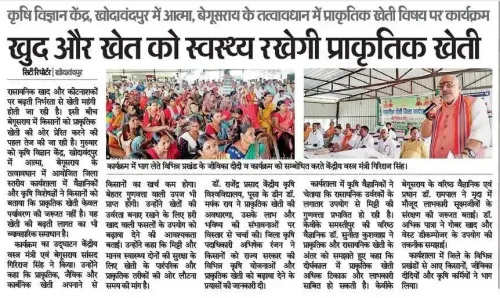
Giriraj Singh on Biochar and Soil Carbon at Kalmeshwar

Synopsis
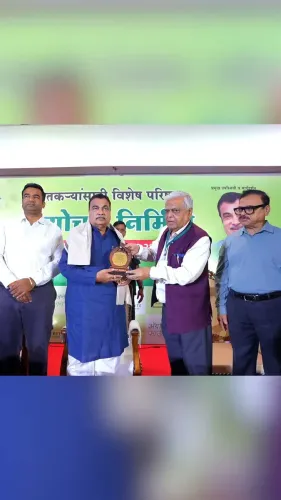
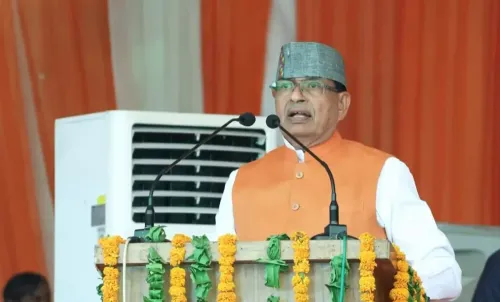
Union Textiles Minister Giriraj Singh engaged with agri-entrepreneurs in Kalmeshwar, Nagpur on 26 September 2026, discussing how biochar can raise soil carbon levels, boost microbial activity, and restore farmland health — a notable outreach on soil science outside his textiles portfolio.
Key Takeaways
Union Textiles Minister Giriraj Singh met agri-entrepreneurs and agricultural innovators in Gumthala and Kalmeshwar , Nagpur district, Maharashtra on 26 September 2026 .
The discussion focused on the role of carbon in soil health and the potential of biochar to increase soil carbon levels.
Singh stated that carbon acts as food and foundation for soil microorganisms , and raising carbon levels improves overall soil vitality.
India's Soil Health Card scheme (2015) addresses nutrient deficits but has not fully resolved the crisis of low organic carbon across farmlands.
Kalmeshwar sits in Vidarbha, Nagpur district — a region marked by agrarian distress and cotton farming pressure, giving the conversation added urgency.
Any move to integrate biochar methods into national soil health programmes remains a key development to watch.
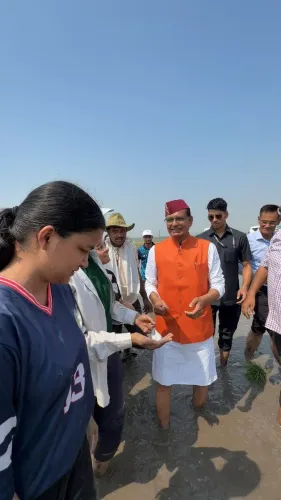
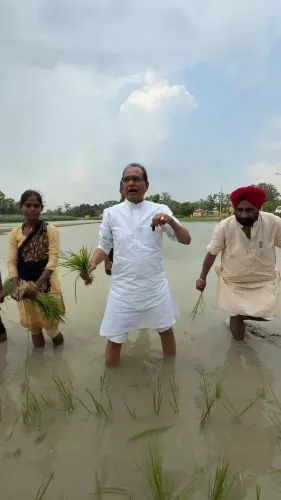
Carbon — not just the climate villain, but the very lifeblood beneath your feet. Union Textiles Minister Giriraj Singh on Saturday, 26 September 2026, engaged with agri-entrepreneurs and agricultural innovators in Gumthala and Kalmeshwar, a region in Nagpur district, Maharashtra, sharing ideas on how raising soil carbon through biochar could revive India's degrading farmlands.
Singh framed the conversation around a simple but consequential premise: 'Carbon ke bina mitti ka jeevan adhura hai' — 'without carbon, the life of soil is incomplete.' Carbon, he noted, serves as both food and foundation for soil microorganisms. Boost the carbon, and microbial activity follows. Boost the microbes, and the health of the soil itself transforms.
Why Biochar is Back in the Conversation
Biochar — charred organic matter worked into the soil — has gained renewed attention as a low-cost, locally replicable method to sequester carbon in agricultural land. In degraded soils, where intensive chemical farming has stripped organic matter over decades, biochar offers a route to rebuild microbial populations without waiting for years of composting cycles. The minister's engagement with entrepreneurs specifically working on agricultural innovation signals an interest in scaling grassroots solutions.
India launched the Soil Health Card scheme in 2015 to map soil nutrient deficits and nudge farmers toward balanced fertiliser use. Yet organic carbon levels across Indian farmlands have remained critically low in many states, pointing to a structural gap the scheme alone has not closed. Biochar integration into existing soil health programmes is an active area of discussion among agri-researchers and policymakers.
What the Kalmeshwar Dialogue Points To
Central ministers engaging directly with district-level agri-innovators on soil science — rather than on crop procurement or subsidy logistics — marks a distinct register of policy outreach. The setting matters: Nagpur district sits in Vidarbha, a region long associated with agrarian distress, cotton farming pressure, and soil exhaustion. Conversations about carbon sequestration here carry weight beyond the academic.
Singh's willingness to step into this territory — outside his textiles brief — reflects a pattern of senior BJP leaders bringing a whole-of-government pitch to farming communities ahead of state and national political cycles. The substance, however, stands on its own merits: healthy soil microbiomes mean lower input costs, better water retention, and more resilient harvests for India's smallholders.
If biochar moves from field conversation to scheme integration, a million Indian farms could become both more productive and a measurable carbon sink. The ground is ready. The question is whether the policy follows.
Point of View
Particularly in agrarian distress zones like Vidarbha. The biochar conversation plugs into a genuine policy gap: India's Soil Health Card scheme mapped the problem in 2015, but organic carbon revival at scale remains unfinished business. If these dialogues feed into programme design, they could give the government a credible, science-backed narrative on climate-resilient agriculture ahead of the political calendar. The real test is whether field-level enthusiasm translates into scheme integration with measurable targets.
NationPress
26 Sept 2026
Frequently Asked Questions
What is biochar and how does it help soil health?
Biochar is charred organic matter that is mixed into soil to increase carbon content. It improves soil structure, boosts microbial activity, retains moisture, and reduces the need for chemical fertilisers, making it a tool for restoring degraded farmland.
Why is carbon important for soil?
Carbon serves as food and structural support for soil microorganisms. Higher carbon levels increase microbial activity, which in turn improves nutrient cycling, water retention, and overall soil fertility.
What did Giriraj Singh say about soil carbon at Kalmeshwar?
Union Textiles Minister Giriraj Singh said that without carbon, the life of soil is incomplete. He discussed how biochar can be used to raise carbon levels in soil, thereby boosting microbial health and improving farm productivity.
What is India's Soil Health Card scheme?
The Soil Health Card scheme was launched in 2015 to assess the nutrient status of soil across Indian farmlands and guide farmers toward balanced fertiliser use. It identified widespread deficits in organic carbon but addressing those deficits at scale remains an ongoing challenge.
Is Kalmeshwar linked to Vidarbha's agrarian distress region?
Yes. Kalmeshwar is a town in Nagpur district, Maharashtra , which falls within the Vidarbha region — an area historically associated with agrarian distress, cotton farming pressure, and soil degradation, making soil health discussions there particularly relevant.