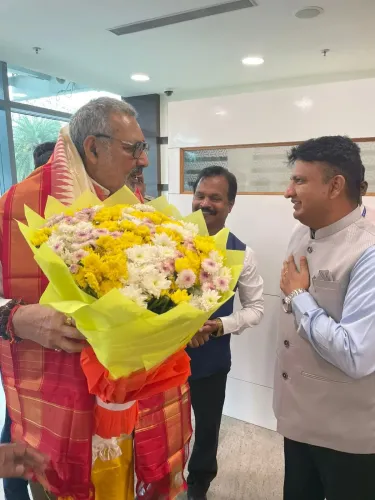
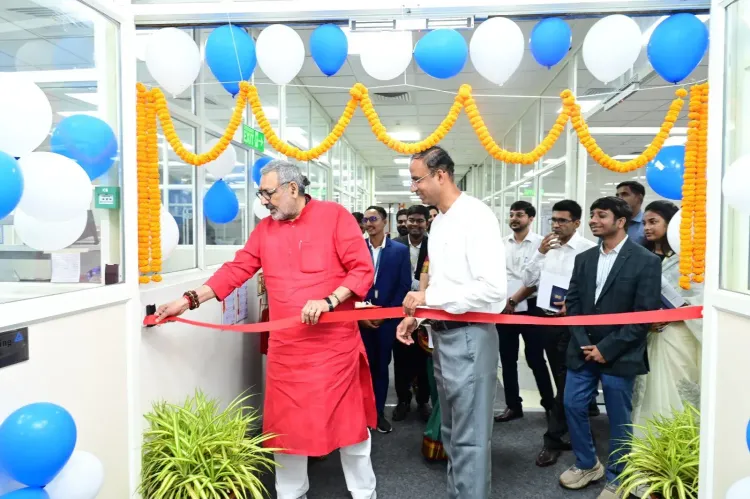
Giriraj Singh Inaugurates Medical Textiles Lab at AMTZ
Synopsis
Union Textiles Minister Giriraj Singh inaugurated a Medical Textiles Testing Laboratory at Andhra Pradesh MedTech Zone on 30 May 2026, touring cutting-edge facilities for medical devices, 3D printing, and biomaterials — underscoring India's push for self-reliance in technical textiles under the Rs 1,480-crore National Technical Textiles Mission.
Key Takeaways
Union Textiles Minister Giriraj Singh inaugurated a Medical Textiles Testing Laboratory at AMTZ, Andhra Pradesh on 30 May 2026 .
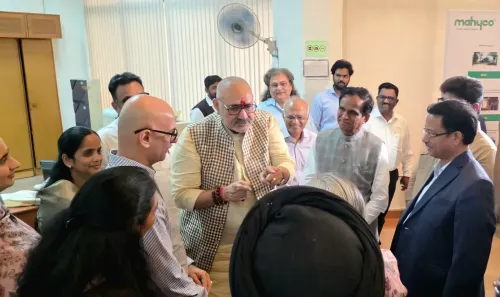
The minister toured facilities for medical devices, diagnostics, sterilisation, 3D printing, surgical instruments, and advanced biomaterials during the visit.
The National Technical Textiles Mission , approved in 2020 , carries an outlay of Rs 1,480 crore and directly funds such testing and R&D infrastructure.
The inauguration aligns with the Make in India and Aatmanirbhar Bharat frameworks aimed at reducing India's import dependence in medical consumables.
A dedicated testing lab at AMTZ lowers certification costs for medical textile manufacturers and technical textiles exporters seeking access to global markets.
Further policy announcements on export targets and PLI incentives for medical textiles are expected in upcoming budget and policy cycles.
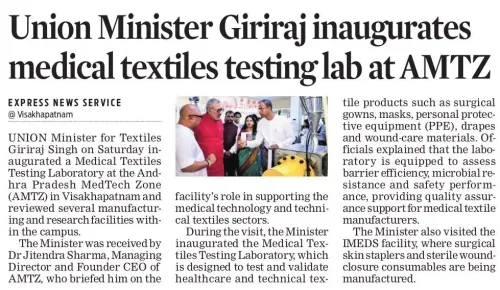
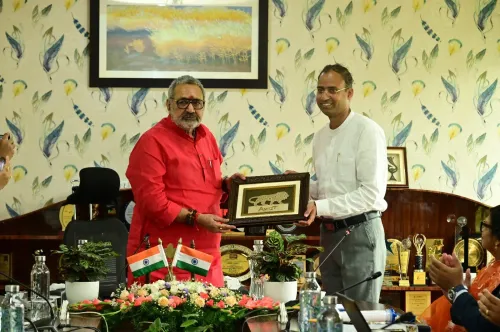
Union Textiles Minister Giriraj Singh on Saturday, 30 May 2026, inaugurated a Medical Textiles Testing Laboratory at the Andhra Pradesh MedTech Zone (AMTZ), marking a significant step in the government's push to build domestic capacity in high-value technical textiles and healthcare manufacturing.
Context
During his visit to AMTZ, Minister Singh also toured state-of-the-art facilities for medical devices, diagnostics, sterilisation, 3D printing, surgical instruments, and advanced biomaterials manufacturing. Posting on X, he noted — 'मेडिकल टेक्सटाइल्स, तकनीकी वस्त्र एवं स्वास्थ्य प्रौद्योगिकी के क्षेत्र में भारत की आत्मनिर्भरता और वैश्विक प्रतिस्पर्धात्मकता को नई ऊंचाइयों तक ले जाने की अपार संभावनाएं यहां दिखाई देती हैं' ['Immense possibilities are visible here to take India's self-reliance and global competitiveness in medical textiles, technical textiles, and health technology to new heights'].
AMTZ, located in Andhra Pradesh, is a dedicated industrial cluster integrating testing, sterilisation, and advanced biomaterials production — a model that aligns with the cluster-based approach the central government has promoted to build end-to-end manufacturing ecosystems.
Policy Backdrop
The inauguration fits squarely within two flagship frameworks: the Make in India initiative launched in 2014 and the Aatmanirbhar Bharat campaign announced in 2020, both of which identified medical textiles and technical textiles as priority sectors for reducing import dependence.
The National Technical Textiles Mission (NTTM), approved in 2020 with an outlay of Rs 1,480 crore, provides the direct policy spine for such investments — covering research, skilling, and market development in technical textiles including medical applications. A Production Linked Incentive (PLI) scheme for medical devices, also notified in 2020, further incentivises domestic manufacturing of devices and related components.
The pandemic-era supply disruptions in medical consumables gave fresh urgency to these programmes, exposing India's dependence on imports for critical healthcare inputs ranging from surgical drapes to wound-care materials.
Stakeholders and Impact
The medical textile manufacturers, medical device industry, and technical textiles exporters stand to benefit most directly from expanded testing and certification infrastructure at AMTZ. A dedicated testing lab reduces the cost and time burden on manufacturers seeking quality certification, which is a known bottleneck for smaller producers trying to access global markets.
For Andhra Pradesh, the AMTZ cluster represents a significant economic anchor — drawing investment in high-technology manufacturing and creating skilled employment in a sector that blends textiles expertise with biomedical engineering. The state's role as a hub for medical device manufacturing has grown steadily since AMTZ's establishment.
What's Next
The visit signals continued ministerial attention to the intersection of textiles and healthcare technology, a space that is gaining policy momentum ahead of the next Union Budget cycle. Observers will watch for fresh announcements on export targets for medical textiles, additional R&D facilities under the National Technical Textiles Mission, or new production-linked incentives tailored to the sector.
With India's technical textiles market still heavily import-dependent in several sub-segments, the rollout of testing and certification infrastructure — such as the lab inaugurated at AMTZ — will be a key enabler for domestic producers aiming to compete globally under the Viksit Bharat vision.
Point of View
A space that has grown in strategic importance since pandemic-era supply shocks. For Giriraj Singh, the AMTZ visit reinforces the ministry's narrative that technical textiles — long overshadowed by apparel in India's textile story — are now a priority export and self-reliance play. The Rs 1,480-crore National Technical Textiles Mission provides the fiscal scaffolding, but testing infrastructure like this lab is the operational enabler that can move manufacturers from aspiration to export-ready status. The broader arc points toward India attempting to capture a larger share of the global medical textiles market, a segment where quality certification and testing access have historically been the decisive bottleneck for domestic producers.
NationPress
14 Oct 2026
Frequently Asked Questions
What did Giriraj Singh inaugurate at AMTZ in May 2026?
Union Textiles Minister Giriraj Singh inaugurated a Medical Textiles Testing Laboratory at the Andhra Pradesh MedTech Zone (AMTZ) on 30 May 2026 , and also toured facilities for medical devices, diagnostics, sterilisation, 3D printing, and advanced biomaterials manufacturing.
What is AMTZ and where is it located?
AMTZ (Andhra Pradesh MedTech Zone) is a dedicated industrial cluster in Andhra Pradesh that integrates medical device manufacturing, testing, sterilisation, and advanced biomaterials production under one roof.
What is the National Technical Textiles Mission?
The National Technical Textiles Mission (NTTM) is a central government programme approved in 2020 with an outlay of Rs 1,480 crore to promote research, skilling, and market development in technical textiles, including medical textile applications.
How does the AMTZ lab help medical textile manufacturers?
A dedicated testing and certification lab at AMTZ reduces the cost and time burden for medical textile and medical device manufacturers seeking quality certification, which is a key bottleneck for smaller producers trying to access global export markets.
What is Aatmanirbhar Bharat's role in medical textiles?
The Aatmanirbhar Bharat campaign, announced in 2020 , includes targeted support for medical and technical textiles to reduce India's dependence on imports in critical healthcare inputs such as surgical materials and wound-care products.