Giriraj Singh Pitches Modi Welfare Model Against 'Appeasement'
Synopsis
Union Textiles Minister Giriraj Singh posted on X invoking PM Modi's ration, housing and health schemes as proof of non-discriminatory welfare delivery, sharply contrasting the BJP's model against what he called a mindset of 'appeasement and extremism.'
Key Takeaways
Giriraj Singh posted on 22 October 2026 framing PM Modi 's welfare record as reaching every citizen without discrimination.
He cited three specific pillars: ration ( PMGKAY ), housing ( PMAY, launched 2015 ) and healthcare ( Ayushman Bharat, launched 2018 ).
The post contrasted this 'development model' against a 'mindset of appeasement and extremism,' a standard BJP political framing.
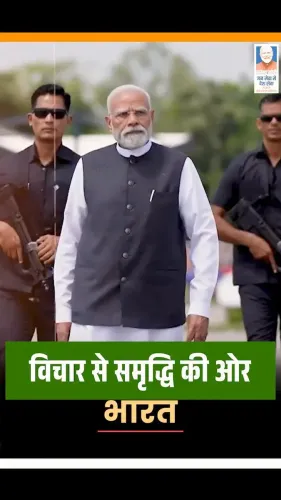
No new scheme or policy announcement accompanied the post; it was a messaging exercise with an attached video.
The framing reflects a recurring BJP electoral strategy of presenting universal welfare as evidence of ideological neutrality.
Every ration card, every pucca house, every health card — Union Textiles Minister Giriraj Singh wants Indians to see those as proof of a governing philosophy, not just a programme. On Thursday, 22 October 2026, the senior BJP leader and Lok Sabha MP from Begusarai posted sharply on X, holding up Prime Minister Narendra Modi's welfare record as a direct rebuke to what he called an ideology of 'appeasement and extremism.'
Singh wrote — 'बिना किसी भेदभाव के हर नागरिक तक योजनाएँ पहुँचाना ही माननीय प्रधानमंत्री श्री नरेन्द्र मोदी जी की सरकार की नीति है, चाहे राशन हो, घर हो या इलाज।' — 'Reaching every citizen without any discrimination through government schemes — whether ration, housing or healthcare — is the policy of Prime Minister Modi's government.' He then drew the contrast: 'On one side is this model of public welfare and development; on the other is a mindset that only promotes appeasement and extremism.'
Three schemes, one political argument
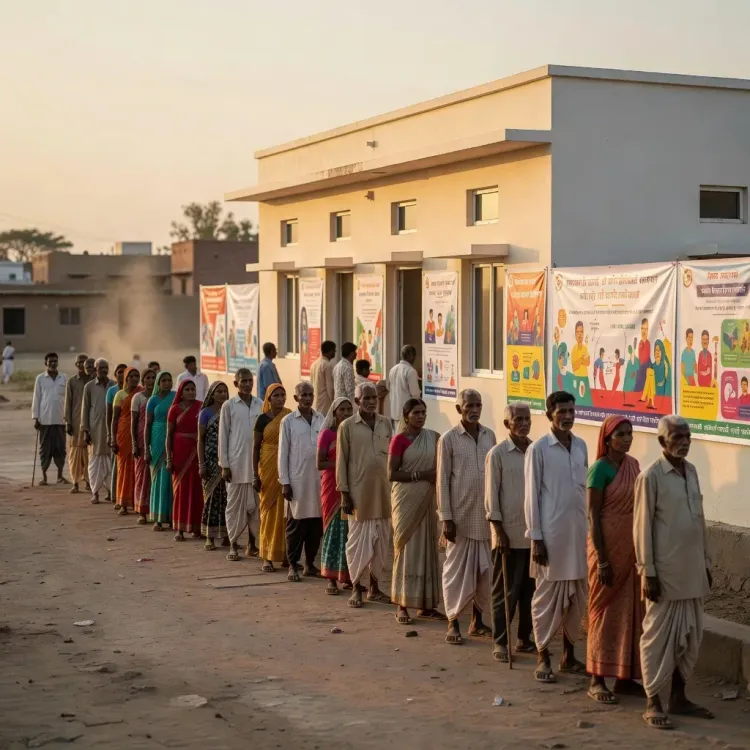
The three pillars Singh invoked — ration, housing, healthcare — map directly onto the Modi government's flagship social-sector programmes. The Pradhan Mantri Garib Kalyan Anna Yojana, extended repeatedly since 2020, supplies free foodgrains to ration card holders. Pradhan Mantri Awas Yojana, launched in 2015, targets pucca house construction for eligible rural and urban families. And Ayushman Bharat – Pradhan Mantri Jan Arogya Yojana, rolled out in 2018, extends health coverage to low-income households. Singh's post bundles all three into a single 'non-discriminatory delivery' thesis.
The framing is a staple of BJP political communication: present universal welfare as evidence of ideological neutrality, then contrast it against 'vote-bank' politics — the charge that certain opposition formations tilt policy toward specific religious or caste constituencies. Singh names no party or person in his post, but the 'appeasement and extremism' phrase leaves little ambiguity about the intended target.
Why the BJP returns to this contrast repeatedly
The non-discrimination argument serves a dual purpose. It deflects criticism that BJP welfare schemes benefit Hindu communities disproportionately, and it simultaneously brands the opposition as divisive. The BJP has deployed this framing across multiple state election cycles, where welfare delivery data — houses sanctioned, beneficiary counts, insurance claims settled — becomes campaign currency. Singh's post, carrying a video, suggests coordinated messaging rather than a spontaneous observation.
No specific new scheme or policy announcement accompanies the post. The message is positioning, not proclamation — a reminder to the base and a provocation to rivals, packaged around programmes whose beneficiary numbers the government has consistently cited as proof of reach.
When welfare statistics become campaign slogans and slogans are expected to become votes, the real question is whether delivery numbers on the ground match the confidence of the messaging — and that audit happens at every ballot box.
Point of View
Sabka vikas' political grammar — universal welfare framed as the antithesis of identity-based appeasement. The contrast is designed to work on two levels simultaneously: it defends the government's social spending record against any communal-bias charge, and it delegitimises opposition welfare promises as sectarian pandering. What makes this recurring framing durable is that it is anchored in real, large-scale programmes with verifiable beneficiary data, giving it policy credibility beyond pure rhetoric. The open question, especially ahead of any upcoming electoral cycle, is whether on-ground delivery metrics continue to validate the 'no discrimination' claim or whether gaps between sanction and completion data invite scrutiny.
NationPress
22 Oct 2026
Frequently Asked Questions
What did Giriraj Singh post about welfare schemes?
Singh posted that PM Modi's government policy is to reach every citizen without discrimination through schemes covering ration, housing and healthcare, contrasting this 'development model' with what he called 'appeasement and extremism.'
Which welfare schemes did Giriraj Singh refer to?
Singh alluded to three major central programmes: the Pradhan Mantri Garib Kalyan Anna Yojana for free rations, Pradhan Mantri Awas Yojana for housing, and Ayushman Bharat – PMJAY for health coverage.
What is Pradhan Mantri Awas Yojana?
PMAY was launched in 2015 to provide pucca (permanent) houses to eligible rural and urban households across India, and is one of the Modi government's flagship social-sector initiatives.
What is Ayushman Bharat PMJAY?
Ayushman Bharat – Pradhan Mantri Jan Arogya Yojana was rolled out in 2018 and provides health insurance coverage to low-income families for secondary and tertiary hospitalisation.
What does BJP mean by 'appeasement politics' in the context of welfare?
The BJP uses the term to accuse certain opposition parties of designing welfare or policy concessions to favour specific religious or caste communities as a vote-bank strategy, rather than delivering universally — a charge the opposition disputes.