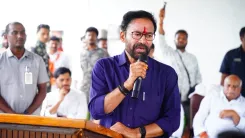
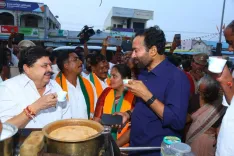
Giriraj Singh visits Indie Haat, backs Vocal for Local push
Synopsis
Union Textiles Minister Giriraj Singh visited Indie Haat at the National Crafts Museum in New Delhi on 13 July 2026, expressing satisfaction at seeing India's handloom and handicraft traditions on one platform and reaffirming the government's Vocal for Local and Aatmanirbhar Bharat commitments for artisans and weavers.
Key Takeaways
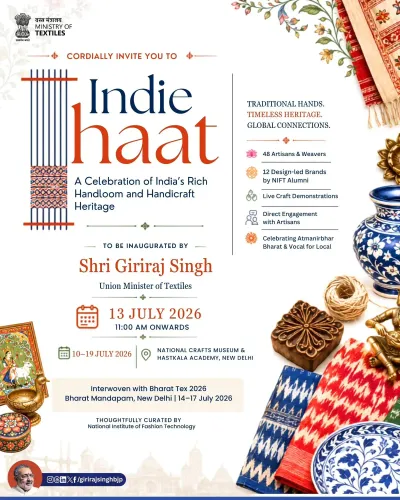
Giriraj Singh , Union Textiles Minister, attended the Indie Haat exhibition at the National Crafts Museum and Hastkala Academy, New Delhi on 13 July 2026 .
Indie Haat is a periodic platform connecting artisans and handloom weavers directly with urban consumers, reducing dependence on intermediaries.
The minister linked the event to the government's Vocal for Local and Aatmanirbhar Bharat campaigns, both launched by PM Modi in May 2020 .
The Ministry of Textiles has organised crafts bazaars and haats at the National Crafts Museum since at least the early 2010s as a market-linkage tool for decentralised producers.
Handlooms and handicrafts serve dual policy goals: cultural heritage preservation and rural employment generation.
The Indie Haat format may be expanded to state capitals and integrated with upcoming textiles export promotion and cluster development programmes.
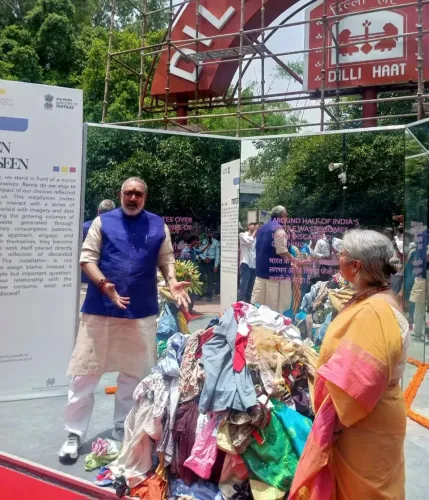
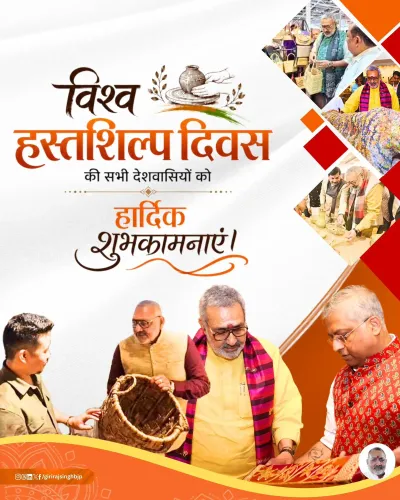
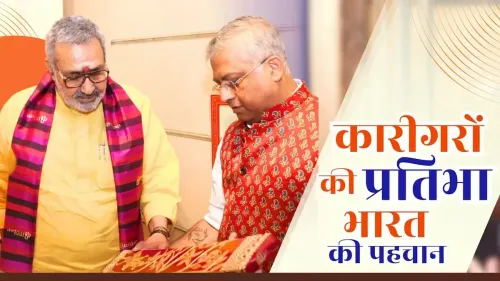
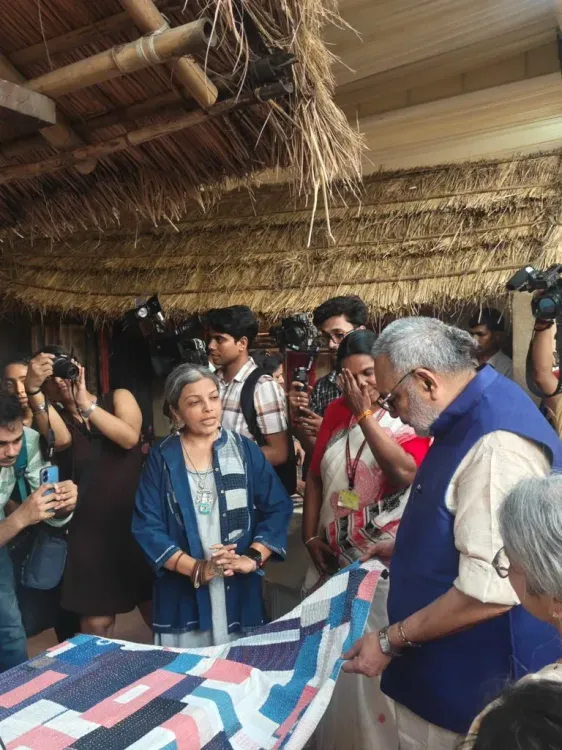
Union Textiles Minister Giriraj Singh visited the National Crafts Museum and Hastkala Academy in New Delhi on Monday, 13 July 2026, attending the Indie Haat exhibition that brought together artisans and weavers from across India under one roof.
Sharing his impressions on X, the minister said he was delighted to see India's rich handloom and handicraft traditions given concrete expression on a single platform. 'भारत की समृद्ध हथकरघा एवं हस्तशिल्प परंपरा को एक मंच पर साकार रूप में देखकर प्रसन्नता हुई' ('I was delighted to see India's rich handloom and handicraft tradition given concrete form on one platform'), he wrote, adding that such events strengthen the resolve of 'Vocal for Local' and Aatmanirbhar Bharat while giving artisans, weavers, and local products a new identity.
Context
Indie Haat is a periodic exhibition platform designed to connect craftspeople and handloom weavers directly with urban consumers, bypassing layers of intermediaries that have historically compressed artisan earnings. The event is hosted at the National Crafts Museum and Hastkala Academy, New Delhi's premier institution dedicated to the preservation, documentation, and public display of India's craft heritage. Singh's attendance signals continued ministerial-level attention to market-linkage events as a tool for artisan livelihood support.
Policy Backdrop
The twin campaigns of Vocal for Local and Aatmanirbhar Bharat were formally launched by Prime Minister Narendra Modi in May 2020, with textiles and handicrafts among the first sectors earmarked for domestic-demand promotion. The Ministry of Textiles has organised successive editions of crafts bazaars and haats at the National Crafts Museum since at least the early 2010s, using the institution as a bridge between decentralised producers and metropolitan buyers. The post-2020 policy environment added fresh urgency to these efforts by explicitly linking cultural showcasing with import-substitution goals in the textiles value chain.
Handlooms and handicrafts occupy a dual role in Indian policy — as heritage assets deserving preservation and as significant employment generators, particularly in rural and semi-urban clusters. The Ministry of Textiles oversees a range of cluster development and export promotion programmes aimed at integrating these decentralised producers into formal supply chains.
Stakeholders and Impact
The primary beneficiaries of platforms such as Indie Haat are artisans, handloom weavers, and local craftspeople who gain direct market access and visibility without the cost burden of large trade fairs. Urban consumers benefit from curated access to authentic, locally made goods. For the government, such events serve as visible demonstrations that cultural policy and economic self-reliance can be pursued simultaneously, reinforcing the narrative around reducing dependence on imported textiles and craft goods.
Ministerial presence at these events also carries a signalling function for the broader artisan community, indicating that policy attention at the highest levels of the ministry remains focused on grassroots producers rather than exclusively on large-scale industrial textiles.
What's Next
The Indie Haat format could potentially be expanded to state capitals and integrated with forthcoming textiles export promotion schemes or cluster development programmes. As the government continues to advance the Aatmanirbhar Bharat agenda, craft-focused market events are likely to remain a recurring feature of the Ministry of Textiles' public engagement calendar, with the National Crafts Museum serving as a flagship venue for such initiatives in the national capital.
Point of View
Reinforcing the BJP government's sustained effort to attach cultural identity to economic nationalism through the Vocal for Local frame. By appearing at a craft exhibition and invoking Aatmanirbhar Bharat, the minister signals that the textiles portfolio remains anchored in grassroots artisan welfare rather than purely in industrial-scale manufacturing. The move also fits a broader pattern in which cultural institutions like the National Crafts Museum are consciously deployed as policy stages, lending heritage credibility to what are essentially market-linkage interventions. Whether such events translate into measurable income gains for weavers and craftspeople depends on follow-through in the form of procurement mandates, export facilitation, and cluster investment — areas that will be watched in the coming budget cycle.
NationPress
13 Jul 2026
Frequently Asked Questions
What is Indie Haat and where is it held?
Indie Haat is a periodic exhibition platform that connects Indian artisans and handloom weavers directly with urban consumers. It is held at the National Crafts Museum and Hastkala Academy in New Delhi, a premier institution dedicated to India's craft heritage.
Why did Giriraj Singh visit Indie Haat on 13 July 2026?
Union Textiles Minister Giriraj Singh attended Indie Haat in his official capacity to show ministerial support for India's handloom and handicraft sector, reinforcing the government's Vocal for Local and Aatmanirbhar Bharat policy commitments.
What is the Vocal for Local campaign?
Vocal for Local is a government campaign encouraging Indians to buy domestically made goods. It was launched by Prime Minister Narendra Modi in May 2020 as part of the broader Aatmanirbhar Bharat self-reliance initiative, with textiles and crafts among its primary focus areas.
What is Aatmanirbhar Bharat and how does it relate to handicrafts?
Aatmanirbhar Bharat, or Self-Reliant India, is a campaign announced by PM Modi in May 2020 to reduce import dependence and boost domestic production. For handicrafts and handlooms, it means creating stronger market linkages for artisans and promoting Indian-made goods over imports.
How does the National Crafts Museum support Indian artisans?
The National Crafts Museum and Hastkala Academy in New Delhi preserves, documents, and publicly displays India's handloom and handicraft traditions. It also hosts market events like Indie Haat that give artisans and weavers direct access to urban buyers.