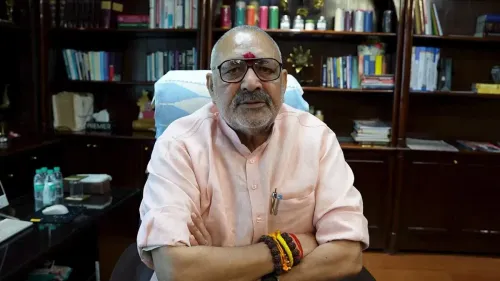
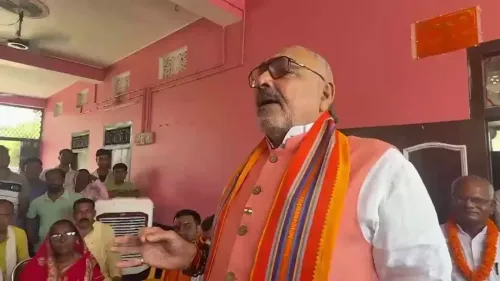
Giriraj Singh: Women, Poor, Youth Are NDA's Biggest Strength
Synopsis
Union Textiles Minister Giriraj Singh declared the trust of women, the poor, and youth to be the NDA's greatest political strength, urging coalition partners to stay united and deepen their commitment to welfare delivery under PM Narendra Modi's leadership.
Key Takeaways
Giriraj Singh , Union Textiles Minister and BJP MP from Begusarai , posted on X on October 20, 2026 stressing NDA's core support base.
He identified women, the poor, and youth as the three pillars of the NDA's political trust and moral mandate.
Singh credited welfare and development work under PM Narendra Modi for strengthening this public confidence.
The post carries an internal NDA coalition message, calling on alliance partners to stay united around the jankalyan (people's welfare) agenda.
The statement aligns with a recurring BJP-NDA pattern of anchoring political messaging to welfare delivery targeting these three demographic groups since 2014 .
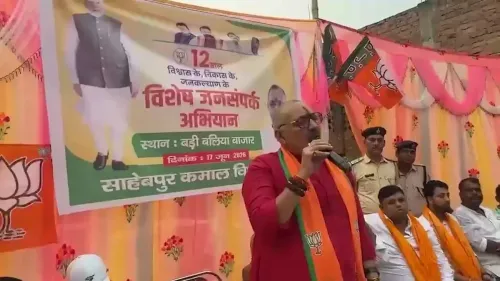
The trust of women, the poor, and the young — Union Textiles Minister Giriraj Singh says that is the foundation everything else rests on. In a post on X on Tuesday, October 20, 2026, the senior BJP leader and Lok Sabha MP from Begusarai, Bihar, framed the NDA's political capital not in terms of seats or alliances, but in terms of social faith — and called on the coalition to deepen it together.
Posting in Hindi, Singh wrote: 'महिलाओं, गरीबों और युवाओं का विश्वास NDA की सबसे बड़ी ताकत है' — 'The trust of women, the poor, and the youth is the NDA's greatest strength.' He credited the welfare and development work carried out under Prime Minister Narendra Modi's leadership for reinforcing that trust, and urged NDA partners to collectively advance their commitment to public service and jankalyan (people's welfare).
Singh's Three-Pillar Frame for NDA's Electoral and Moral Authority
The trio Singh invokes — women, the poor, youth — is not accidental. Since 2014, the National Democratic Alliance has built its governance identity around targeted welfare delivery to exactly these groups: direct-benefit transfers, housing schemes, skill-development programmes, and subsidised provisions that reach households by name, not by category. The argument is simple: governance that is felt personally creates trust that holds politically.
Singh's framing goes a step further, linking welfare delivery to alliance cohesion. The call to NDA partners to stay united and push forward together signals an internal message as much as a public one — that shared purpose in serving these constituencies is the glue that keeps the coalition intact.
A Reminder That Welfare Messaging Is Also Alliance Management
Senior ministers periodically anchor the NDA's larger narrative to on-the-ground scheme delivery — a way of keeping partners aligned on a common story heading into any electoral cycle. Singh's post fits that pattern precisely. It is a consolidation message: here is what we stand for, here is why people trust us, here is the work still ahead.
For a coalition government, that kind of messaging discipline matters. It reminds every constituent party that the brand they are selling to voters is a welfare brand — and that maintaining it requires collective, not individual, effort.
The minister's challenge to his own alliance: hold the trust you have earned, and earn more. That is not a small ask in a country where women, the poor, and the youth together constitute the overwhelming majority of the electorate.
Point of View
The poor, and youth — the NDA's three highest-priority electoral segments — he simultaneously justifies the government's welfare architecture and reminds alliance partners what they are collectively accountable for. The call for 'unity' is the tell; it suggests the need to reinforce cohesion, not merely celebrate it. In a broad-tent coalition, this kind of public signalling from a senior minister serves as both a rallying note and a soft reminder that the shared brand depends on shared discipline in delivery.
NationPress
20 Oct 2026
Frequently Asked Questions
What did Giriraj Singh say about NDA's strength?
Giriraj Singh said the trust of women, the poor, and the youth is the NDA's greatest strength, and credited PM Modi's welfare and development work for reinforcing it.
Why is Giriraj Singh talking about NDA unity?
Singh called for NDA partners to stay united around the mission of public service and jankalyan, signalling both internal coalition messaging and a renewed commitment to welfare delivery.
Who is Giriraj Singh?
Giriraj Singh is a senior BJP leader, Union Minister of Textiles in the NDA government, and Lok Sabha MP representing Begusarai constituency in Bihar.
What does 'jankalyan' mean in BJP political messaging?
'Jankalyan' translates to 'people's welfare' and is a core term in the NDA's governance vocabulary, referring to targeted welfare schemes for the poor, women, and youth.
How does the NDA build trust among women and youth voters?
The NDA has since 2014 focused on direct-benefit transfers, housing schemes, skill development, and subsidised services specifically reaching women, poor households, and young people by name.