Union Government Stabilizes Fertiliser Prices to Protect Farmers Amid Global Market Changes
Synopsis
In a bid to safeguard farmers from global market volatility, the Union Government has stabilized fertiliser prices for the Rabi 2025-26 season, ensuring affordable access to key fertilisers. This strategic move promises to support Indian agriculture amidst fluctuating international prices.
Key Takeaways
Stable prices for DAP at Rs 1,350 per 50 kg bag.
Government provisions of Rs 3,500 per MT to cover various costs.
Real-time monitoring of fertiliser distribution through the iFMS platform.
Support for balanced nutrition through the NBS framework.
Average prices for other fertiliser grades are provided for transparency.
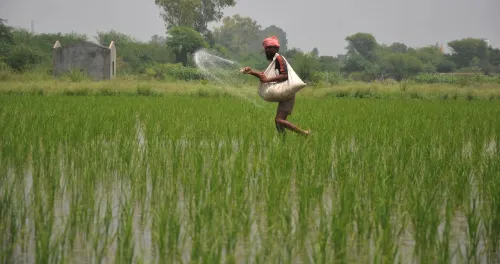
New Delhi, March 10 (NationPress) The Union Government is taking proactive measures to protect Indian farmers from fluctuations in global markets by ensuring that essential fertilisers remain accessible at reasonable prices for the current Rabi season of 2025-26, as stated in Parliament on Tuesday.
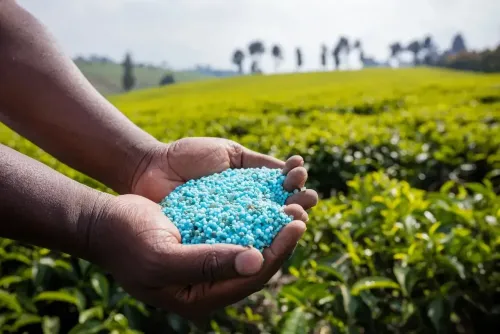
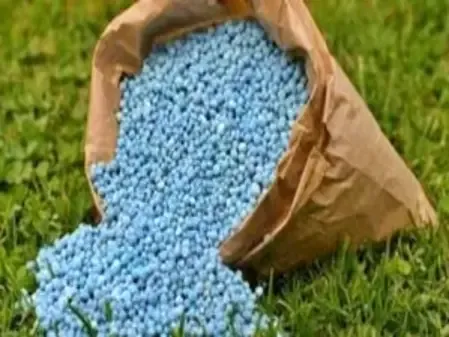
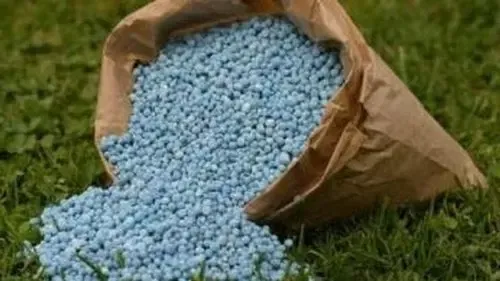
In a detailed report regarding the fertiliser industry, the Ministry of Chemicals and Fertilisers revealed that the Maximum Retail Price (MRP) for di-ammonium phosphate (DAP) has been fixed at a steady Rs 1,350 per 50 kg bag.
To maintain this price stability for DAP, the government has introduced special provisions of Rs 3,500 per metric tonne (MT) to cover various expenses such as logistics from production facilities to farm gates, GST components, and ensuring a reasonable 4 percent return for manufacturers. This initiative guarantees that any shifts in global pricing do not adversely affect farmers, as explained by Minister of State for Chemicals and Fertilisers, Anupriya Patel, in a written response to the Rajya Sabha.
As of March 5, the supply of phosphatic and potassic (P&K) fertilisers across the nation has been more than adequate. Current data shows that the availability of DAP is at 71.89 lakh metric tonnes (LMT), surpassing the pro-rata requirement of 51.38 LMT, while the stock of muriate of potash (MOP) is 18.17 LMT against a need of 14.18 LMT. For NPKS, total availability stands at 108.39 LMT, significantly above the pro-rata requirement of 76.48 LMT.
The Ministry employs the integrated Fertiliser Management System (iFMS), an online platform that enables real-time tracking of all subsidised fertilisers. This system works in close partnership with the Ministry of Railways to prioritize the movement of goods and ensure timely distribution across various states.
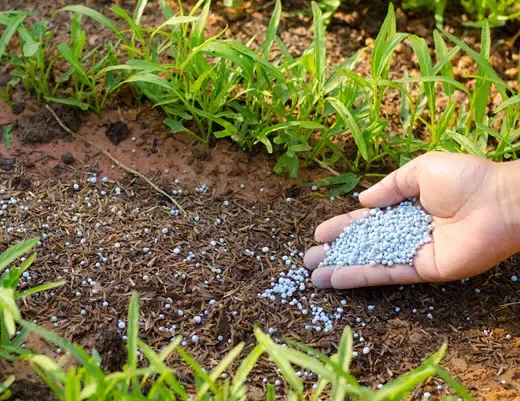
Under the revised Nutrient Based Subsidy (NBS) framework, the government is promoting balanced nutrition by introducing additional fertiliser grades such as 10:26:26 and 12:32:16. By offering subsidies based on the specific nitrogen (N), phosphorus (P), and potassium (K) content, the NBS policy empowers farmers to select nutrients tailored to their crop and soil needs, the minister remarked.
The average retail prices for other key grades (per 50 kg bag) during the 2025-26 season are: NPK 10-26-26 at Rs 1,814.82, NPK 12-32-16 at Rs 1,711.87, and MOP at Rs 1,710.54.
This strategic initiative not only facilitates balanced nutrient application but also seeks to mitigate the excessive dependence on urea, thereby maintaining soil health, the minister concluded.
Point of View
It's evident that the Union Government's decision to cap fertiliser prices is a strategic move aimed at protecting farmers from the unpredictable nature of global markets. By ensuring price stability, the government is not only safeguarding agricultural productivity but also supporting the livelihoods of farmers during these uncertain times.
NationPress
7 Oct 2026
Frequently Asked Questions
What measures has the government taken to stabilize fertiliser prices?
The government has fixed the MRP of di-ammonium phosphate (DAP) at Rs 1,350 per 50 kg bag and provided special provisions to cover logistics and manufacturing costs.
How does the Nutrient Based Subsidy (NBS) framework work?
The NBS framework offers subsidies based on the specific nutrient content of fertilisers, allowing farmers to choose products that meet their crop and soil needs.
What is the current availability of fertilisers in India?
As of March 5, the availability of DAP is 71.89 LMT, MOP is 18.17 LMT, and NPKS is 108.39 LMT, all exceeding their respective pro-rata requirements.