Public Examinations Amendment Bill 2026: 10-year jail, ₹10 crore fine for paper leaks
Synopsis
India's sharpest-ever legal response to examination paper leaks is headed to Parliament: a 10-year prison term, a ₹10 crore fine, asset confiscation, and a three-month trial deadline. The 2026 amendment to the Public Examinations Act is the government's second major legislative intervention in two years — and a direct reckoning with the organised networks that shook NEET and NET in 2024.
Key Takeaways
The Public Examinations (Prevention of Unfair Means) Amendment Bill, 2026 will be introduced in Parliament on 28 July by Union Minister Dr Jitendra Singh .
The Bill proposes imprisonment of up to 10 years and a fine of up to ₹10 crore for paper leak offenders.
Asset confiscation of the convicted and fast-track courts mandated to deliver verdicts within three months are key new provisions.
The Union Cabinet cleared the Bill on Friday ; it amends the Public Examinations (Prevention of Unfair Means) Act, 2024 .
Prime Minister Narendra Modi announced the move via his official X account , calling for strict action against paper leaks.
The government mobilised resources to ensure examinations for nearly 22 lakh candidates proceeded without disruption.
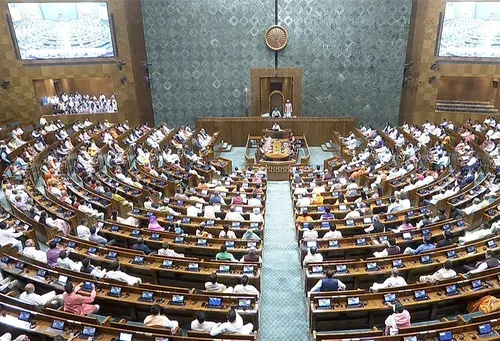
The Union government is set to introduce the Public Examinations (Prevention of Unfair Means) Amendment Bill, 2026 in Parliament on Monday, 28 July, tabling the toughest legal framework India has seen against examination paper leaks and malpractices. Union Minister Dr Jitendra Singh will table the Bill, which amends the Public Examinations (Prevention of Unfair Means) Act, 2024, and a formal government notification for its introduction has already been issued.
Key Provisions of the Amendment Bill
The proposed legislation introduces a sweeping set of punitive measures. Offenders found guilty of paper leaks or examination fraud could face imprisonment of up to 10 years and a fine of up to ₹10 crore. In addition, the Bill provides for confiscation of assets of the convicted, a provision that goes well beyond the penalties under the existing 2024 Act.
Crucially, the amendment mandates the establishment of fast-track courts that must complete trials and deliver judgments within three months of the offence being brought before them — a mechanism designed to eliminate the prolonged delays that have historically allowed accused individuals to evade accountability.
Cabinet Clearance and Legislative Timeline
The Union Cabinet cleared the Bill and its related provisions on Friday, approving the fast-track court framework and enhanced punishments, according to official sources. The Bill's introduction in Parliament follows directly from that clearance, with the legislative agenda formally notified thereafter.
This comes shortly after Prime Minister Narendra Modi publicly committed to introducing a comprehensive Bill with stringent paper-leak provisions. The announcement accelerated an already active legislative push that has been building since mid-2024.
PM Modi's Warning and Prior Government Action
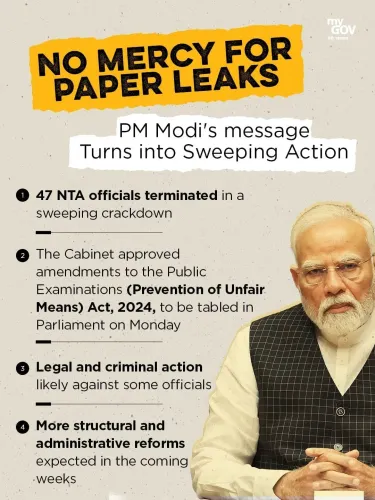
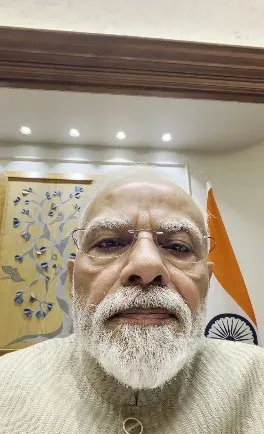
In a video message posted on his official X account, Prime Minister Modi stated that the Central government had prepared a comprehensive draft Bill to introduce stricter provisions and severe punishments for those involved in paper leak cases. He also posted: 'More strict actions against paper leaks to come in tomorrow's Cabinet!'
Modi expressed deep concern over the toll examination irregularities take on students and families, noting that over the past two-and-a-half months, the Union government's actions had resulted in the arrest and imprisonment of individuals responsible for such offences.
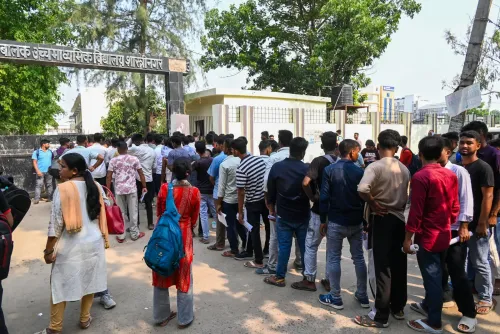
The Prime Minister also highlighted that all available resources were mobilised to ensure examinations for nearly 22 lakh candidates were conducted without disruption — a direct response to the crisis of confidence triggered by high-profile paper leak controversies in 2024.
Why This Legislation Matters
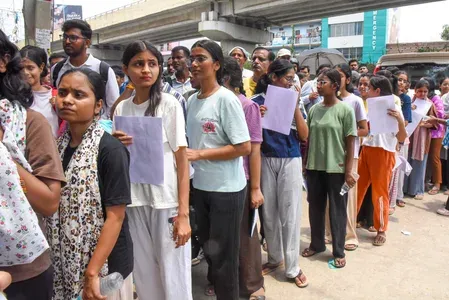
India's competitive examination ecosystem — covering recruitment to central government services, medical colleges, and engineering institutions — has been repeatedly shaken by organised paper leak networks. The NEET-UG and NET controversies of 2024 exposed systemic vulnerabilities and triggered nationwide protests by students.
The 2024 Act was itself a legislative response to those events, but critics argued its penalties were insufficient to deter well-funded criminal networks. The 2026 amendment attempts to address that gap with asset confiscation and time-bound adjudication. Notably, this is the second major legislative intervention on examination integrity within two years — a signal of how persistently the problem has defied earlier fixes.
With the Bill now headed to Parliament, its passage and subsequent enforcement framework will determine whether India's examination system can restore the trust of millions of aspirants who depend on it.
Point of View
But enforcement has always been the gap, not the law on paper. The three-month trial mandate is ambitious in a judiciary already stretched thin; without dedicated judicial resources, it risks becoming another aspirational deadline. The real test will be the first conviction under this amended Act — and whether it is secured within the promised window.
NationPress
27 Jul 2026
Frequently Asked Questions
What is the Public Examinations Amendment Bill 2026?
It is a proposed amendment to the Public Examinations (Prevention of Unfair Means) Act, 2024, to be introduced in Parliament on 28 July 2026. The Bill introduces imprisonment of up to 10 years, fines of up to ₹10 crore, asset confiscation, and fast-track courts mandated to deliver verdicts within three months for paper leak and examination fraud offences.
Who will table the Public Examinations Amendment Bill in Parliament?
Union Minister Dr Jitendra Singh will table the Bill in Parliament on Monday, 28 July 2026. A formal government notification for its introduction has already been issued.
What are the new penalties proposed for paper leak offenders?
The Bill proposes up to 10 years in prison, a fine of up to ₹10 crore, and confiscation of assets for those convicted of paper leaks or examination malpractices — significantly stricter than the provisions under the existing 2024 Act.
What are fast-track courts under this Bill and how will they work?
Fast-track courts established under the Bill will be mandated to complete trials and deliver judgments within three months of an examination-fraud case being brought before them. The mechanism is designed to ensure swift justice and prevent prolonged delays that have historically benefited accused individuals.
Why has the government brought this Bill now?
The Bill follows the NEET-UG and NET paper leak controversies of 2024, which triggered nationwide student protests and exposed systemic vulnerabilities. Prime Minister Modi publicly committed to stronger legislation, and the Union Cabinet cleared the Bill on Friday before its Parliament introduction the following Monday.