Anti-paper leak law: Stricter penalties, Special Task Force, fast-track courts proposed
Synopsis
India's Centre is preparing its most aggressive crackdown yet on examination fraud — proposing seven-year jail terms, ₹10 crore fines for organised paper leak networks, two-month investigation deadlines via statutory Special Task Forces, and three-month trial mandates in dedicated fast-track courts. It is a direct escalation of the 2024 anti-paper leak law, and a signal that the government views that legislation as unfinished business.
Key Takeaways
The Centre plans to amend the Public Examination (Prevention of Unfair Means) Act, 2024 with significantly tougher provisions against paper leaks.
Individuals involved in paper leaks may face up to 5 years' imprisonment and a ₹50 lakh fine; organised criminal groups up to 7 years and ₹10 crore .
Examination service providers found guilty could be fined ₹5 crore and blacklisted for 8 years .
Statutory Special Task Forces will be empowered to complete paper leak investigations within 2 months .
Special Fast Track Courts , set up by state governments with High Court consultation, must complete trials within 3 months on a day-to-day basis.
Special Public Prosecutors will be appointed exclusively for examination fraud cases; all pending probes and cases will be transferred to the new bodies.
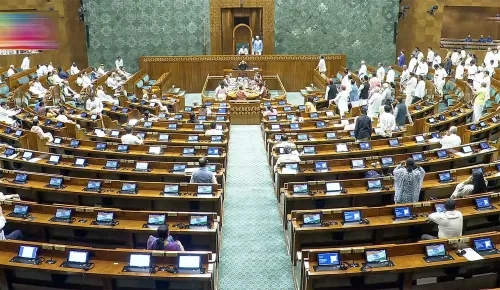
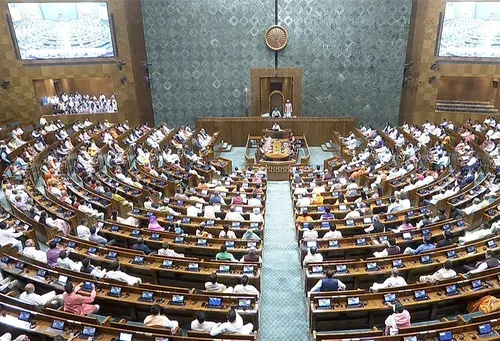
The Centre is preparing to significantly tighten the legal framework against examination fraud, with proposed amendments to the Public Examination (Prevention of Unfair Means) Act, 2024 that would introduce harsher penalties, statutory Special Task Forces (STFs), and Special Fast Track Courts to deal with paper leak cases. According to government sources, the changes are designed to strengthen deterrence, accelerate investigations, and ensure swift conviction of offenders involved in organised exam malpractice.
Enhanced Penalties Under the Proposed Amendments
Under the proposed changes, an individual found guilty of involvement in a paper leak could face up to five years' imprisonment and a fine of ₹50 lakh. Examination service providers found culpable may be slapped with a penalty of ₹5 crore and face blacklisting for eight years.
The management of such service providers could additionally face five years' imprisonment along with a ₹5 crore fine. Organised criminal networks operating paper leak rackets may attract seven years' imprisonment and a fine of ₹10 crore — the steepest proposed penalty in the framework.
Special Task Forces to Fast-Track Investigations
The amendments propose the creation of statutory Special Task Forces empowered to investigate paper leak and examination fraud cases. Each STF will be mandated to complete its investigation within two months, replacing what critics have described as slow, fragmented probes under existing mechanisms.
Notably, all pending investigations currently underway will be transferred to these newly constituted STFs, ensuring a consolidated and time-bound approach to cases that have often languished for years.
Fast-Track Courts for Day-to-Day Trials
On the judicial side, the proposals call for Special Fast Track Courts to be established by state governments in consultation with the respective High Courts. These courts will be required to hear cases on a day-to-day basis and complete trials within three months.
All pending examination fraud cases are also proposed to be transferred to these courts for disposal within the same three-month window. The amendments further provide for the appointment of Special Public Prosecutors dedicated exclusively to examination-related cases.
Building on the 2024 Law
The proposed changes build upon the Public Examination (Prevention of Unfair Means) Act, 2024, enacted by the Bharatiya Janata Party (BJP)-led government in the wake of widespread public outrage over alleged irregularities in competitive examinations, including the NEET-UG controversy. While the 2024 legislation was widely seen as a foundational deterrent against the paper leak mafia, government sources indicate the existing provisions have been assessed as insufficient against well-organised criminal networks.
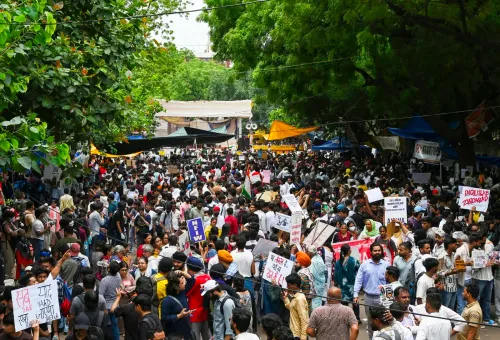
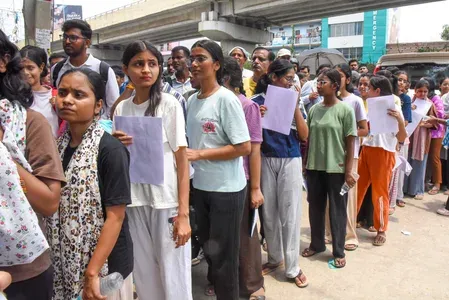
This comes amid sustained pressure from students, opposition parties, and civil society to overhaul the examination integrity ecosystem in India. The proposed amendments signal that the Centre views the 2024 Act as a baseline rather than a ceiling. The shape of the final legislation will depend on parliamentary deliberation and stakeholder consultations in the weeks ahead.
Point of View
And these escalations suggest the government acknowledges that law did not go far enough. The two-month investigation mandate for STFs and three-month trial cap for fast-track courts are ambitious timelines in a judicial system where examination fraud cases have historically taken years. The real test will be whether state governments — who must establish the fast-track courts — are given adequate resources and whether the STFs are insulated from political interference. Blacklisting service providers for eight years is a meaningful structural deterrent, but its effectiveness hinges entirely on enforcement rigour that past regulatory action in this space has not consistently demonstrated.
NationPress
24 Oct 2026
Frequently Asked Questions
What are the key changes proposed in the anti-paper leak law amendments?
The proposed amendments to the Public Examination (Prevention of Unfair Means) Act, 2024 include higher penalties of up to seven years' imprisonment and ₹10 crore fines for organised paper leak networks, statutory Special Task Forces mandated to complete investigations in two months, and Special Fast Track Courts required to finish trials within three months.
What penalties will individuals face for paper leak involvement under the new proposals?
An individual involved in a paper leak could face up to five years' imprisonment and a ₹50 lakh fine. Organised criminal groups may attract seven years' imprisonment and a ₹10 crore fine, while examination service providers could be fined ₹5 crore and blacklisted for eight years.
What is a Special Task Force under the proposed examination fraud law?
A Special Task Force (STF) is a statutory investigative body proposed under the amendments, specifically constituted to probe paper leak and examination fraud cases. Each STF will be required to complete its investigation within two months, and all currently pending investigations will be transferred to these forces.
How will the Special Fast Track Courts work?
State governments will be required to establish Special Fast Track Courts in consultation with their respective High Courts. These courts will hear examination fraud cases on a day-to-day basis and must complete trials within three months. All pending cases will be shifted to these courts for time-bound disposal.
What is the Public Examination (Prevention of Unfair Means) Act, 2024?
It is a central law enacted by the BJP-led government to deter paper leaks and examination fraud in public competitive exams. The proposed amendments seek to make its provisions significantly more stringent, following assessments that the existing penalties and investigation mechanisms are insufficient against organised exam malpractice.