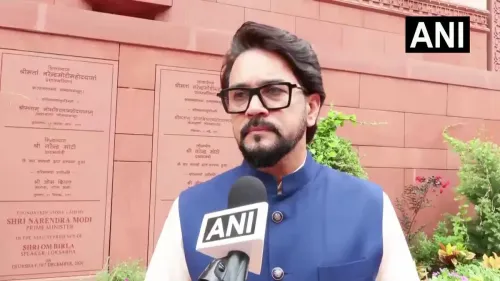
Anti-paper leak Bill 2026: Congress MP Manish Tewari calls it 'band-aid solution'

Synopsis
Congress MP Manish Tewari has publicly torn into the government’s anti-paper leak amendment as a political pacifier with no real bite — and Parliament’s repeated adjournments on the same day suggest the Opposition intends to press that argument hard. With NEET protests still raw and an apology demand for police action unresolved, the Bill’s passage is far from smooth.
Key Takeaways
Congress MP Manish Tewari called the Public Examinations (Prevention of Unfair Means) Amendment Bill, 2026 a ‘band-aid solution’ on 27 July .
He alleged the Bill was introduced solely to ‘pacify public anger’ following NEET paper leak protests, not to address systemic failures.
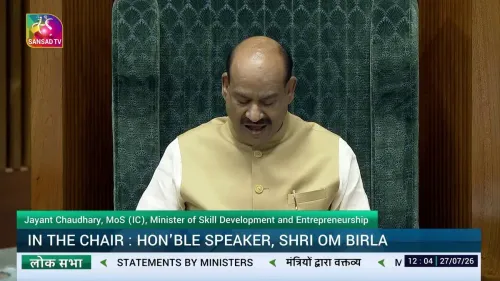
The Lok Sabha was adjourned three times on Monday as the Opposition continued to demand an apology from Home Minister Amit Shah over the 20 July police action on NEET protesters.
The Bill proposes imprisonment of up to 10 years , fines of up to ₹10 crore , asset confiscation, and verdicts within three months .
It amends the Public Examinations (Prevention of Unfair Means) Act, 2024 and includes provisions for fast-track courts .
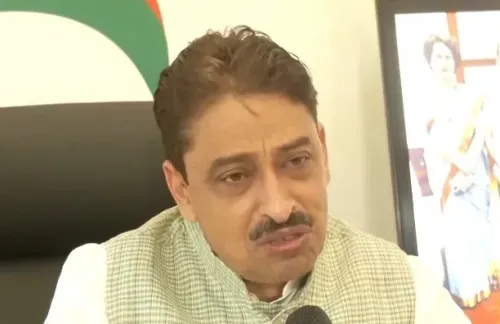
Congress MP Manish Tewari on Monday, 27 July dismissed the Public Examinations (Prevention of Unfair Means) Amendment Bill, 2026 as a “band-aid solution,” arguing the Centre introduced it primarily to defuse mounting public anger over repeated paper leaks and exam irregularities — rather than to fix the structural rot in India’s examination system.
What Tewari Said
Speaking to reporters outside Parliament, Tewari was unsparing in his assessment. “It is nothing more than a band-aid solution. If the government were sensitive or serious, it would have brought a draft that comprehensively addressed the challenges facing India’s education system and introduced a detailed piece of legislation,” he said.
He added: “This has been brought only to pacify public anger, especially because the youth are deeply agitated. After the police action, this Bill has been introduced to calm their anger. There is nothing substantial in this Bill.”
Parliament in Turmoil
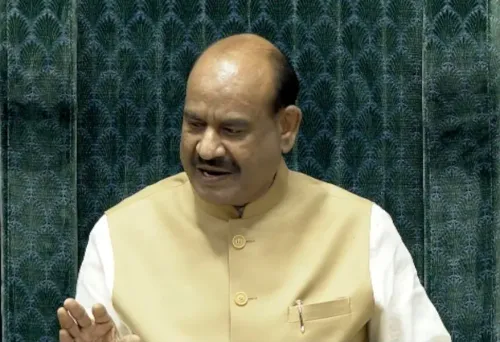
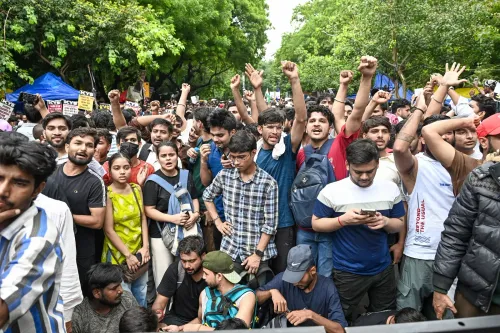
Tewari’s remarks came as the Lok Sabha was adjourned for the third time on Monday, with Opposition MPs continuing to raise slogans following the Bill’s introduction. The immediate flashpoint is the police action on 20 July against NEET protesters — the Opposition is demanding a formal apology from Home Minister Amit Shah over the crackdown. The government, in turn, has accused the Congress and its allies of sidestepping a substantive debate on the legislation and deliberately derailing proceedings.
Key Provisions of the Bill
The amendment seeks to strengthen the Public Examinations (Prevention of Unfair Means) Act, 2024, with significantly harsher penalties. Among the notable provisions are imprisonment of up to 10 years, fines of up to ₹10 crore, and confiscation of assets of those convicted. The Bill also mandates a mechanism to ensure verdicts are delivered within three months of charges being framed.
The Union Cabinet had earlier cleared the Bill along with related provisions to establish fast-track courts for cases involving paper leaks and examination fraud. Officials have framed the legislation as a move to enhance transparency and protect students’ futures through stricter legal safeguards.
The Larger Context
The Bill arrives against a backdrop of sustained public outrage over high-stakes exam irregularities, most visibly the NEET paper leak controversy that triggered nationwide protests by students and aspirants. Critics have argued that the government’s response has been reactive rather than preventive. Notably, this is the second legislative intervention on exam integrity in two years — the original 2024 Act was itself passed in the wake of earlier irregularities. Whether the 2026 amendment represents a genuine systemic fix or, as the Opposition contends, a political fire-fighting measure, will likely be tested in how swiftly and effectively the fast-track courts are operationalised.
With Parliament’s monsoon session already disrupted, the government faces pressure to steer the Bill through amid an Opposition that shows no sign of standing down.
Point of View
A 2026 amendment would not be necessary. Tewari’s ‘band-aid’ charge stings precisely because it is difficult to rebut: stricter penalties mean little without an investigative apparatus capable of building watertight cases against exam-fraud networks that routinely operate across state lines. The fast-track court mechanism is the one genuinely new structural element, but its credibility will depend entirely on whether it is staffed and funded — details the Bill has yet to specify. Parliament’s repeated adjournments also mean the legislation is being debated in the streets rather than on the floor, which serves neither the government nor the students it claims to protect.
NationPress
27 Jul 2026
Frequently Asked Questions
What is the Public Examinations (Prevention of Unfair Means) Amendment Bill, 2026?
It is an amendment to the Public Examinations (Prevention of Unfair Means) Act, 2024, introduced in Parliament on 27 July 2026. The Bill proposes harsher penalties — up to 10 years’ imprisonment and fines of up to ₹10 crore — along with fast-track courts and a mandate for verdicts within three months, aimed at curbing paper leaks and exam fraud.
Why did Congress MP Manish Tewari criticise the Bill?
Tewari argued the Bill lacks substantive amendments and is merely a political move to pacify public anger over the NEET paper leak controversy and subsequent student protests. He called for comprehensive legislation addressing the structural challenges in India’s examination system rather than incremental changes.
Why was Parliament adjourned multiple times on 27 July?
The Lok Sabha was adjourned three times as Opposition MPs continued to raise slogans demanding an apology from Home Minister Amit Shah over police action against NEET protesters on 20 July. The disruptions prevented a structured debate on the newly introduced Bill.
What are the key penalties proposed in the amendment Bill?
The Bill proposes imprisonment of up to 10 years, fines of up to ₹10 crore, and confiscation of assets for those convicted of examination fraud or paper leaks. It also mandates that courts deliver verdicts within three months of charges being framed.
How does the 2026 amendment differ from the original 2024 Act?
The 2026 amendment builds on the Public Examinations (Prevention of Unfair Means) Act, 2024, by introducing stricter penalties and establishing fast-track courts for faster adjudication. The government says the changes are designed to strengthen transparency and better protect students, though critics argue the core legislative architecture remains unchanged.