Exam paper leak bill 2026: Opposition says laws aren't the problem
Synopsis
Opposition MPs aren't just opposing a Bill — they're challenging its entire premise. With the CBI yet to file a chargesheet in past paper leak cases and the main accused reportedly at large, their argument is blunt: India doesn't have a law problem, it has an accountability problem. The government's answer — 10-year jail terms and fast-track courts — may satisfy headlines without fixing the system.
Key Takeaways
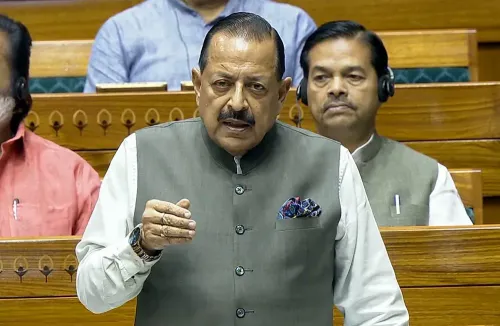
The Public Examinations (Prevention of Unfair Means) Amendment Bill, 2026 is set to be tabled in Parliament on 27 July by Union Minister Dr Jitendra Singh .
The Bill proposes imprisonment of up to 10 years , fines up to ₹10 crore , asset confiscation, and fast-track court verdicts within three months .
RJD MP Manoj Kumar Jha called the Bill 'headline management', arguing leaks stem from people within the system, not absent laws.
Congress MP Imran Masood alleged the CBI has not yet filed a chargesheet and that the main accused in a previous case remains at large.
SP MP Ram Gopal Yadav argued that stricter punishment has historically not eliminated crime, citing Section 302 murder cases as precedent.
TMC MP Saugata Roy demanded a Prime Ministerial apology and condemned pellet gun use against student protestors.
As Union Minister Dr Jitendra Singh prepares to table the Public Examinations (Prevention of Unfair Means) Amendment Bill, 2026 in Parliament on Monday, 27 July, Opposition MPs have mounted a sharp challenge — arguing that the absence of legislation was never the reason examination paper leaks occurred in India, and that the government has yet to hold anyone accountable for past cases.
Opposition's Core Argument
Rashtriya Janata Dal (RJD) MP Manoj Kumar Jha framed the issue as one of systemic rot rather than legislative gaps. 'Those responsible for monitoring them are turning a blind eye and promoting such activities,' he said, adding that corruption in one domain inevitably breeds it in another. He dismissed the Bill as 'merely headline management' unless deeper structural failures within the examination ecosystem are addressed.
Samajwadi Party (SP) MP Ram Gopal Yadav echoed that view, arguing that tougher laws have historically not eliminated crime. 'Even the harshest punishment cannot stop crimes. In cases of murder under Section 302, despite the punishment of life imprisonment or the death penalty, murders have never stopped,' he said, adding that paper leaks originate from those who set the paper, printing facilities, or influential coaching centres operating in nexus with insiders.
Congress Raises Accountability Deficit
Congress MP Imran Masood pointed to what he called a pattern of legislative action without enforcement. 'Your CBI has not yet filed the chargesheet, and the main accused mentioned has escaped. You do not want to take action; you only want to keep making statements. If you had taken action, there would have been some result,' Masood said.
Fellow Congress MP Syed Naseer Hussain accused the government of using the Bill to deflect from questions about police action against student protestors. He noted that while the proposed legislation raises the imprisonment term from three months to six months and increases fines from ₹50 lakh to ₹1 crore under certain provisions, it falls short of addressing the systemic education reforms students had demanded.
TMC Flags Unresolved Demands
All India Trinamool Congress (TMC) MP Saugata Roy said the Opposition remained dissatisfied, stating that several of its demands had not been met by the government. Roy called for a formal apology from the Prime Minister and condemned the use of pellet guns against protestors — issues he said the Opposition would raise during the parliamentary session.
What the Bill Proposes
The amendment to the Public Examinations (Prevention of Unfair Means) Act, 2024 — cleared by the Union Cabinet on Friday — introduces significantly harsher penalties. Key provisions include imprisonment of up to 10 years, fines of up to ₹10 crore, confiscation of assets of the convicted, and a mandate for fast-track courts to deliver verdicts within three months. The move follows Prime Minister Narendra Modi's announcement that a comprehensive Bill targeting paper leaks and examination fraud would be brought before Parliament.
The government has maintained that the proposed amendments are designed to enhance transparency, protect students' futures, and ensure swift justice — but whether the legislative push translates into prosecutorial action remains the Opposition's central question.
Point of View
A Bill with steeper fines and longer sentences addresses optics more than outcomes. India has a long history of legislating around enforcement failures rather than fixing them — the 2024 Act this Bill amends is barely two years old. Fast-track courts are only as effective as the investigations that feed them. Without prosecutorial follow-through, the new penalties risk becoming another layer of unenforced law.
NationPress
25 Oct 2026
Frequently Asked Questions
What is the Public Examinations (Prevention of Unfair Means) Amendment Bill, 2026?
It is an amendment to the Public Examinations (Prevention of Unfair Means) Act, 2024, introduced to impose harsher penalties for examination fraud and paper leaks. Key provisions include up to 10 years imprisonment, fines of up to ₹10 crore, asset confiscation, and fast-track court verdicts mandated within three months.
Why is the Opposition opposing the exam amendment bill?
Opposition MPs argue that paper leaks occur due to systemic failures and complicit insiders — not a lack of laws. They also allege that the government has not enforced existing provisions, pointing to the CBI's failure to file a chargesheet in previous paper leak cases.
Who is tabling the Bill in Parliament?
Union Minister Dr Jitendra Singh is scheduled to table the Bill in Parliament on 27 July 2026. The Union Cabinet cleared the legislation on the preceding Friday.
What did RJD MP Manoj Kumar Jha say about the Bill?
Jha argued that paper leaks happen because people within the system are either complicit or looking the other way, and dismissed the Bill as 'headline management'. He said systemic corruption must be rooted out before any law can be effective.
What specific changes does the Bill make to penalties?
The Bill significantly escalates penalties compared to earlier provisions — raising imprisonment to up to 10 years and fines to up to ₹10 crore. It also mandates asset confiscation for the convicted and requires fast-track courts to complete trials within three months.