What is the Government's Plan for AI-Driven Transformation in the Steel Sector?
Synopsis
The Ministry of Steel has launched a transformative roadmap aimed at integrating AI into the steel industry, showcasing innovative platforms and collaborative efforts to enhance productivity and sustainability. This initiative marks a significant step toward making India a leader in the global steel market.
Key Takeaways
AI integration is a priority for the Ministry of Steel.
The AI in Steel Pavilion fosters collaboration for innovative solutions.
Ambitious targets for crude steel capacity have been set.
Operational challenges are being actively addressed.
Industry leaders are seeking tailored AI solutions.
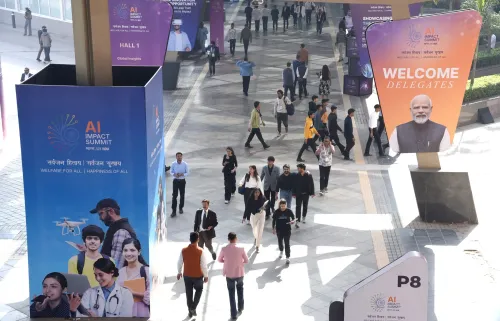
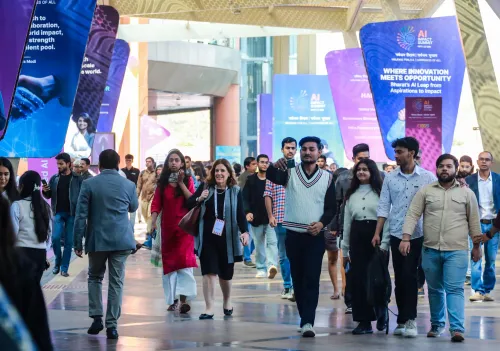
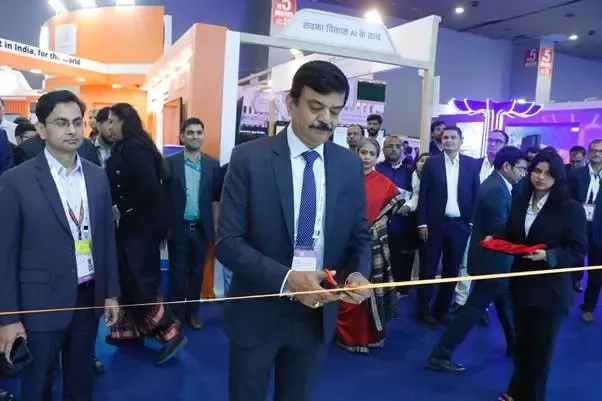
New Delhi, Feb 18 (NationPress) The Ministry of Steel revealed a detailed blueprint for Digital Opportunities in the Steel Sector during the India AI Impact Summit 2026 at Bharat Mandapam, reaffirming its dedication to evolving India into a technology-oriented global steel leader.
This roadmap acknowledges that the forthcoming growth in the steel industry will be characterized not just by increased capacity but also by the integration of intelligent systems, predictive analytics, automation, and data-driven decision-making throughout the value chain.
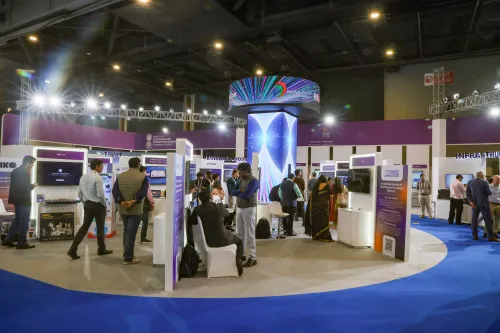
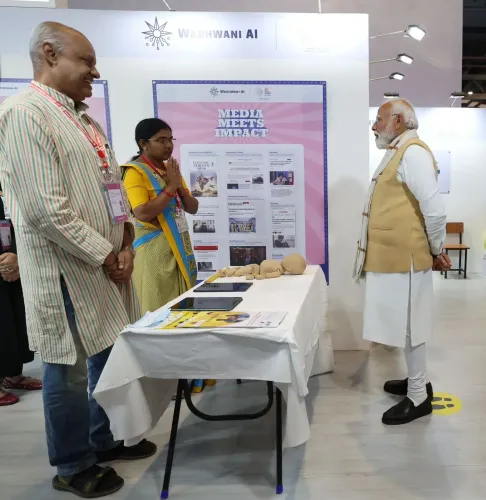
Central to this initiative is the AI in Steel Pavilion, an unprecedented collaborative platform that highlights real-time industry challenges and encourages participation from AI solution providers, startups, technology firms, and research institutions to jointly develop practical and scalable solutions.
The pavilion represents a significant shift from gradual digitization to a focused effort on AI integration across various sectors, including mining, logistics, production, quality assurance, marketing, and corporate governance. It emphasizes the Ministry's strategy to progress from isolated pilot projects to comprehensive systemic change.
A high-level discussion convened major steel producers, iron ore miners, senior policymakers, and AI innovators to explore the digital future of the industry. Prominent public sector enterprises and private participants shared their forward-looking digitalization strategies, pinpointing areas where AI interventions can yield both immediate and long-term advantages.
The dialogue centered on execution. Specific impactful use cases were identified, and industry leaders expressed their technological needs from AI companies and startups, including predictive maintenance algorithms, computer vision systems, supply chain optimization models, and intelligent decision support systems.
This session facilitated a two-way dialogue. Industry representatives identified operational hurdles such as minimizing downtime, maximizing yield, improving worker safety, optimizing raw material blending, reducing emissions, and enhancing demand forecasting.
AI companies demonstrated their willingness to provide advanced technological solutions tailored to these needs. This synergy is expected to establish a structured innovation pipeline, ensuring that promising AI solutions are swiftly tested, validated, and implemented across the steel ecosystem.
In his address, Steel Secretary Sandeep Poundrik emphasized the impressive growth trajectory of India's steel sector. With an eye on the goal of a developed India by 2047, he mentioned that the Ministry has outlined ambitious and time-sensitive targets: crude steel capacity is set to rise from approximately 200 million tonnes to 300 million tonnes by 2030-2031 and further to 400 million tonnes by 2035-2036.
This expansion will be bolstered by parallel advancements in mining output, logistics infrastructure, beneficiation capacity, and downstream value addition. Intelligent automation, digital twins, advanced analytics, and AI-driven process control systems will be vital for ensuring India's steel sector remains competitive globally and environmentally conscious.
Industry leaders also indicated the support needed from AI startups, including domain-specific customization, scalable system architectures, cybersecurity resilience, multilingual interfaces for workforce integration, and solutions adapted to Indian operational contexts.
Furthermore, the Ministry has called upon AI developers, deep technology startups, academic institutions, and research labs to utilize the Steel Research and Technology Mission of India as a dynamic sandbox environment.
Point of View
I firmly believe that the Ministry of Steel's initiative is a pivotal step toward modernizing the industry. By embracing technology and fostering collaboration, India can enhance its steel production capabilities while ensuring sustainability. This approach aligns with global trends in manufacturing and positions India as a competitive player in the international market.
NationPress
27 Oct 2026
Frequently Asked Questions
What is the significance of the AI in Steel Pavilion?
The AI in Steel Pavilion serves as a collaborative platform that connects industry challenges with innovative AI solutions, fostering co-creation and practical applications.
How does the roadmap impact steel production capacity?
The roadmap aims to increase crude steel capacity from 200 million tonnes to 300 million tonnes by 2030-2031 and further to 400 million tonnes by 2035-2036.
What role does AI play in the steel sector?
AI will enhance various aspects of the steel sector, including predictive maintenance, supply chain optimization, and intelligent decision-making, driving efficiency and sustainability.
Who is invited to participate in the Steel Research and Technology Mission?
AI developers, deep tech startups, academic institutions, and research laboratories are encouraged to collaborate within this initiative to explore innovative solutions.
What operational challenges are being addressed?
Challenges such as reducing downtime, improving yield, and enhancing worker safety are key focus areas for AI solutions in the steel industry.