Piyush Goyal buys khadi-silk jacket in Jaipur on National Handloom Day
Synopsis
Commerce Minister Piyush Goyal purchased a khadi-silk jacket in Jaipur on National Handloom Day 2026, publicly endorsing PM Modi's call for citizens to buy indigenous handloom products and support India's artisan community under the Atmanirbhar Bharat framework.
Key Takeaways
Union Commerce and Industry Minister Piyush Goyal bought a khadi-silk jacket in Jaipur on 7 August 2026 , National Handloom Day.
The purchase was framed as a direct response to PM Narendra Modi 's appeal for citizens to adopt khadi and buy handloom products.
National Handloom Day is observed on 7 August every year since 2015 , marking the 1905 Swadeshi Movement anniversary.
Khadi promotion has been a core pillar of the Atmanirbhar Bharat campaign launched in 2020 and MSME schemes since 2014 .
Goyal called on all Indians to visit their nearest khadi store and buy products to empower weavers and artisans.
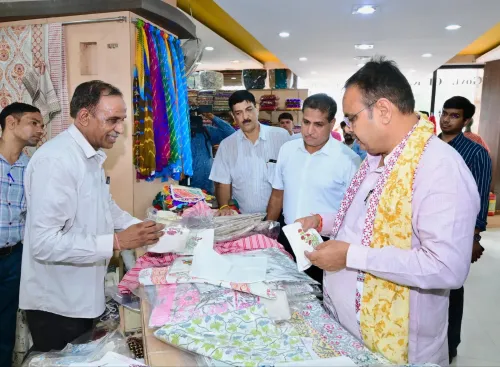
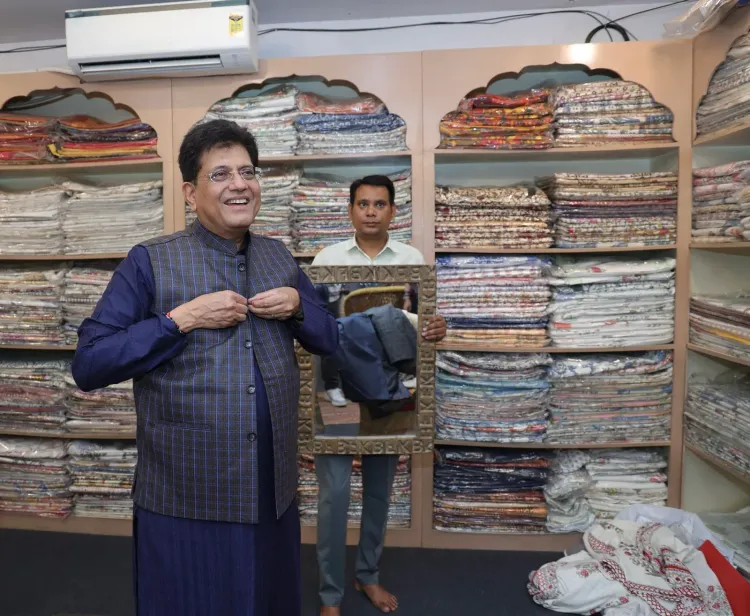
On National Handloom Day, 7 August 2026, Union Commerce and Industry Minister Piyush Goyal walked into a khadi store during his Jaipur visit and put his money where the message is — purchasing a khadi-silk jacket in a deliberate act of solidarity with India's handloom weavers.
Goyal framed the purchase as a direct response to Prime Minister Narendra Modi's appeal on National Handloom Day, in which the Prime Minister called on all citizens to adopt khadi and buy products made from it. 'This is not merely a garment,' Goyal wrote in Hindi, 'but a small effort to connect with the toil of our weavers, Atmanirbhar Bharat [self-reliant India], and the resolve of swadeshi.'
Why 7 August carries weight for handloom India
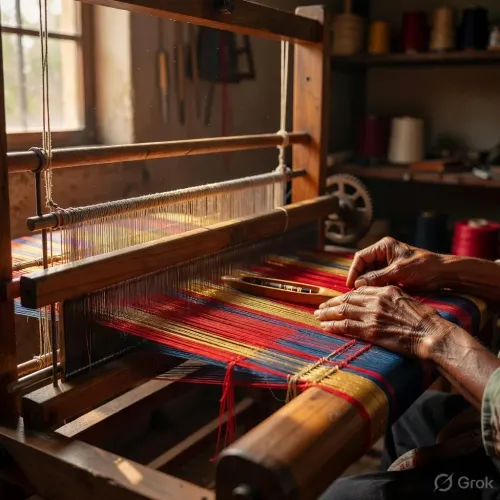
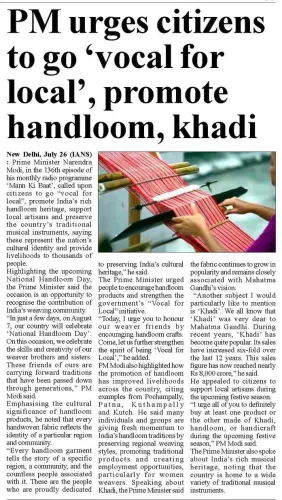
National Handloom Day was instituted on 7 August 2015 — a date chosen to commemorate the launch of the Swadeshi Movement on 7 August 1905, when the boycott of British goods and the embrace of indigenous textiles became a political act of resistance. A hundred and twenty years later, the symbolism still travels. The government has used the anniversary every year since 2015 to renew public calls for domestic textile consumption, linking handloom directly to rural employment and artisan livelihoods.
The Atmanirbhar Bharat campaign, launched in 2020, folded khadi and handloom explicitly into the self-reliance framework — positioning a spool of indigenous thread as both an economic and an ideological statement. Khadi promotion has been integrated into MSME and rural development schemes since 2014, with the post-2020 push adding fresh momentum through public-facing appeals by senior ministers.
A minister's purchase as a public campaign nudge
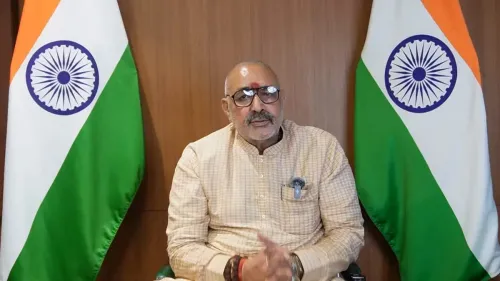
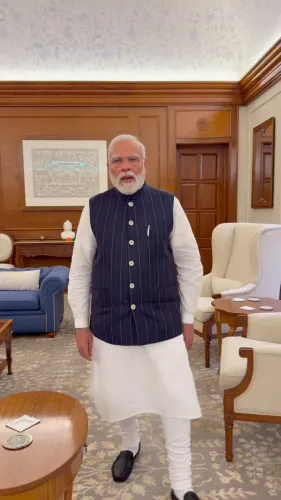
Goyal's post — accompanied by three images from his Jaipur visit — is as much a campaign tool as a personal update. By documenting the act of buying, he converts a routine shopping stop into a visible call to action, closing with a direct invite: 'Let us all become part of this campaign to empower our artisans by purchasing khadi products from our nearest khadi store.'
The appeal lands at a moment when handloom weavers and khadi artisans — concentrated in rural pockets across Rajasthan, Uttar Pradesh, West Bengal, and Odisha — remain acutely dependent on organised demand spikes. A single high-profile purchase by a senior minister, amplified on social media, can translate into measurable footfall at Khadi and Village Industries Commission (KVIC) outlets in the days that follow.
The question the sector will now watch: whether this year's National Handloom Day momentum converts into fresh budgetary allocations or scheme expansions for the handloom and MSME ecosystem in the months ahead.
Point of View
Not just an economic one. The Jaipur setting is also deliberate: Rajasthan is home to significant handloom and craft clusters, and a senior minister's visit lends political weight to the local artisan economy. Whether the optics translate into structural support — higher KVIC allocations, better market linkages for weavers — is the test the sector will apply.
NationPress
22 Sept 2026
Frequently Asked Questions
What is National Handloom Day and why is it celebrated on 7 August?
National Handloom Day is observed on 7 August every year since 2015 to honour India's handloom weavers and promote indigenous textiles. The date commemorates the launch of the Swadeshi Movement on 7 August 1905 , when Indians boycotted British goods and embraced homespun cloth as an act of resistance.
Why did Piyush Goyal buy a khadi-silk jacket in Jaipur?
Goyal said the purchase was inspired by PM Narendra Modi 's appeal on National Handloom Day for citizens to adopt khadi and buy handloom products. He described it as a personal effort to connect with the swadeshi resolve and the Atmanirbhar Bharat campaign.
What is Atmanirbhar Bharat and how does khadi fit into it?
Atmanirbhar Bharat is India's self-reliance campaign launched in 2020 . Khadi and handloom are positioned within it as symbols of indigenous production, rural employment, and reduced import dependence, with promotion integrated into MSME and rural development schemes.
How can Indians support handloom weavers on National Handloom Day?
Both PM Modi and Commerce Minister Goyal have urged citizens to visit their nearest Khadi and Village Industries Commission (KVIC) or khadi store and purchase khadi or handloom products, directly boosting income for weavers and artisans.
Which states have major handloom and khadi clusters in India?
India's handloom and khadi artisans are concentrated in states including Rajasthan, Uttar Pradesh, West Bengal, and Odisha , among others, making rural textile workers a significant stakeholder in any national handloom promotion campaign.