Goyal Chairs Ship Recycling Stakeholder Meet, Eyes Global Edge
Synopsis
Union Commerce Minister Piyush Goyal met stakeholders from ship recycling, steel, shipping, maritime, and science sectors alongside Department of Commerce and DPIIT officials on 11 August 2026, focusing on sustainability, compliance, recycled steel use, and global competitiveness of India's ship recycling industry.
Key Takeaways
Minister Piyush Goyal chaired a stakeholder meeting on 11 August 2026 covering ship recycling, steel, shipping, maritime, and science and technology sectors.
Officials from the Department of Commerce and DPIIT participated alongside industry representatives.
The government's stated priorities: sustainability, compliance, recycled steel utilisation, and value addition.
India's legal foundation includes the Recycling of Ships Act, 2019 and accession to the Hong Kong International Convention in 2019 .
The National Steel Policy, 2017 had already set targets for expanded recycled steel use — making this meeting a continuation of a long-running policy arc.
No specific outcomes, targets, or new schemes were announced from the meeting itself.
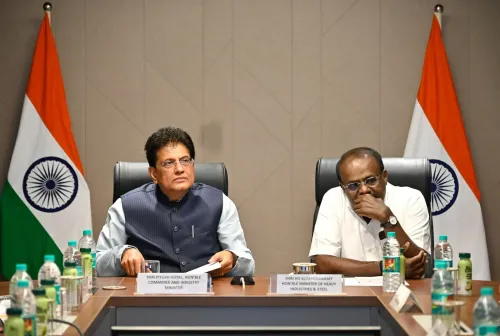
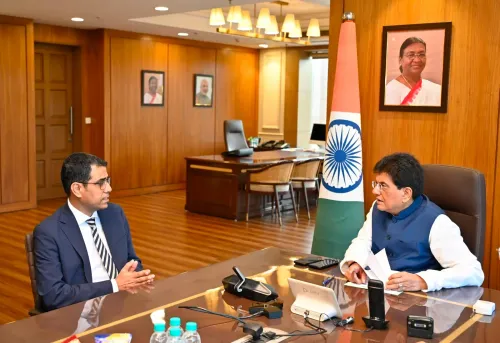
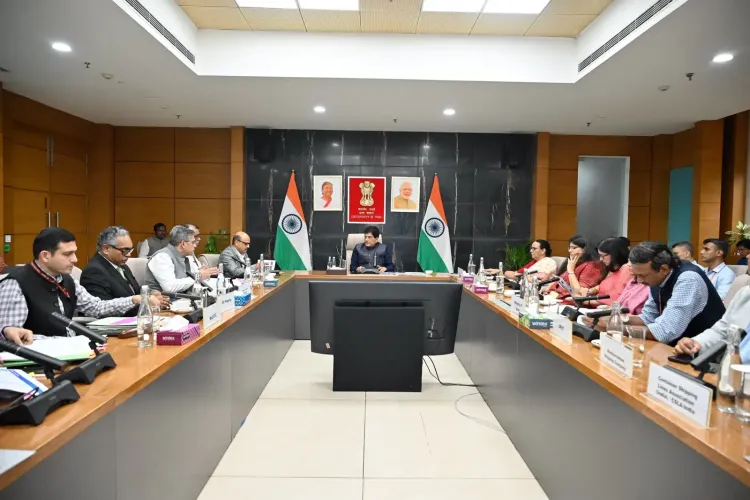
India's ship recycling sector got a direct line to the top on Tuesday, 11 August 2026, when Union Commerce and Industry Minister Piyush Goyal convened a multi-sector stakeholder meeting bringing together representatives from ship recycling, steel, shipping and maritime, and science and technology — alongside officials from the Department of Commerce and the Department for Promotion of Industry and Internal Trade (DPIIT).
What the meeting put on the table
Goyal framed the session around four clear priorities: promoting sustainability, strengthening compliance, increasing recycled steel utilisation, and driving greater value addition. The convergence of commerce, industry, and science officials in a single room signals that the government is treating ship recycling not as a niche maritime issue but as a node in India's broader industrial and circular-economy strategy.
The minister stated that the Modi government 'remains focused on promoting sustainability, strengthening compliance, increasing recycled steel utilisation and driving greater value addition to further strengthen the growth and global competitiveness of India's ship recycling sector.'
The legal scaffolding already in place
India has been building toward this moment for nearly a decade. The Recycling of Ships Act, 2019 created the country's first dedicated legal framework for safe and environmentally sound ship recycling. That same year, India acceded to the Hong Kong International Convention for the Safe and Environmentally Sound Recycling of Ships, anchoring domestic practice to global norms. The National Steel Policy, 2017, had earlier set out targets for expanded recycled steel use and downstream value addition — making the steel-maritime link an explicit policy goal, not an afterthought.
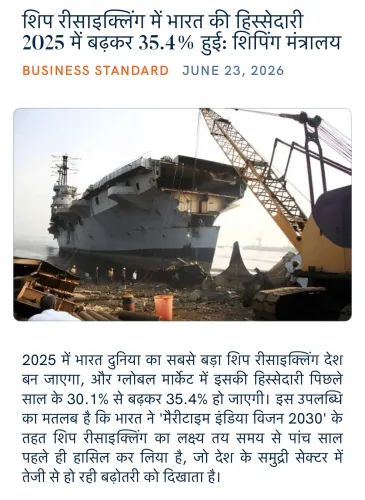
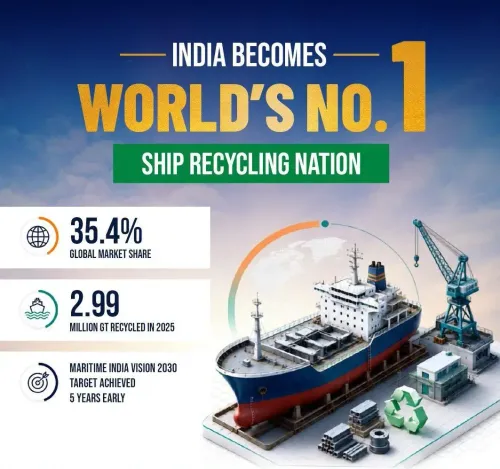
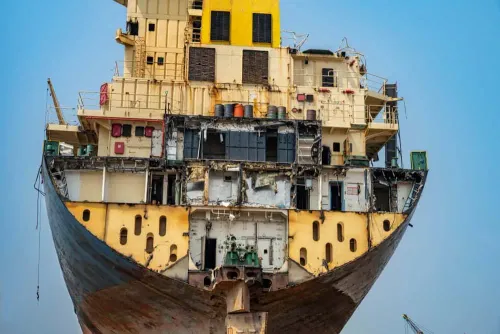
Alang in Gujarat, the world's largest ship-breaking yard by tonnage, sits at the commercial heart of this framework. India's ship recycling industry handles a significant share of global tonnage, and the government's push on compliance and value addition is directly aimed at defending and expanding that position against competitors who are rapidly upgrading their own environmental credentials.
Why DPIIT and Commerce are both in the room
The dual departmental presence is telling. DPIIT handles industrial competitiveness and manufacturing policy; the Department of Commerce manages trade and export frameworks, including India's obligations under international maritime conventions. Having both at the table with industry players suggests the government is stitching together the regulatory, trade, and production sides of the sector simultaneously — a coordination play that has historically been the weak link in Indian industrial policy.
Circular economy principles are increasingly a trade credential, not just an environmental one. Buyers in Europe and East Asia are beginning to preference recycled steel with verified environmental provenance. A ship recycling sector that can demonstrate compliance with the Hong Kong Convention and feed certified recycled steel into domestic manufacturing is a sector that can command premium positioning in global supply chains.
What to watch next
No specific targets, timelines, or new schemes were announced from the meeting. The follow-up that matters: whether the Commerce Ministry and DPIIT translate Tuesday's conversation into concrete compliance mechanisms, recycled steel utilisation targets, or incentive structures in the coming parliamentary session. The sector's global competitiveness will ultimately be measured not in meetings held, but in tonnage recycled safely and steel redirected into the domestic economy.
India has the infrastructure, the legal framework, and now the ministerial attention. The next move is in the fine print.
Point of View
Industrial policy, and maritime regulation ahead of what could be a significant push on circular economy credentials. For India, ship recycling is both an environmental compliance story and a trade competitiveness play: certified recycled steel is increasingly a market differentiator in global supply chains. The dual presence of DPIIT and the Department of Commerce suggests the government recognises that regulatory upgrades alone will not suffice — export frameworks and industrial incentives must move in tandem. Watch whether this translates into hard targets or new scheme announcements in the next parliamentary session.
NationPress
12 Aug 2026
Frequently Asked Questions
What is India's ship recycling industry and why does it matter?
India is one of the world's largest ship recycling nations, with the Alang yard in Gujarat handling a major share of global tonnage. The industry generates recycled steel and supports thousands of jobs, making it a significant contributor to India's circular economy and steel supply chain.
What is the Recycling of Ships Act, 2019?
The Recycling of Ships Act, 2019 is India's primary law for regulating the safe and environmentally sound recycling of ships. It was enacted alongside India's accession to the Hong Kong International Convention , aligning domestic practice with global safety and environmental standards.
What is the Hong Kong Convention on ship recycling?
The Hong Kong International Convention for the Safe and Environmentally Sound Recycling of Ships is an international treaty that sets standards for ship recycling facilities, worker safety, and environmental protection. India acceded to it in 2019 .
What role does DPIIT play in India's ship recycling sector?
The Department for Promotion of Industry and Internal Trade (DPIIT) handles industrial policy and manufacturing competitiveness. Its involvement in ship recycling policy links the sector to broader industrial strategy, investment promotion, and value-addition targets.
What outcomes came from Piyush Goyal's ship recycling meeting on 11 August 2026?
No specific targets, timelines, or new schemes were announced from the meeting. The government signalled focus on sustainability, compliance, recycled steel utilisation, and global competitiveness, with concrete follow-up measures expected in coming regulatory or parliamentary actions.