Goyal Holds FTA Workshop in Gandhinagar, 200+ Join
Synopsis
Union Commerce Minister Piyush Goyal chaired a 200-plus-participant FTA workshop in Gandhinagar, praising Gujarat CM Bhupendra Patel and DCM Harsh Sanghavi for driving local business participation, as India pushes to convert its signed trade pacts into real export gains.
Key Takeaways
A state-level FTA utilisation workshop was held in Gandhinagar, Gujarat on October 22, 2026 , attended by over 200 participants .
Attendees included State Government officials, Export Promotion Councils (EPCs) , and private exporters.
The event is tagged 'Chapter 2,' indicating a structured, multi-state Commerce Ministry outreach series.
Minister Goyal credited CM Bhupendra Patel and DCM Harsh Sanghavi for mobilising local businesses to participate.
India's key FTAs with the UAE and Australia (both signed in 2022 ) remain under-utilised relative to their potential, driving the awareness drive.
The initiative targets increasing Gujarat's contribution to India's total export basket through better FTA uptake.
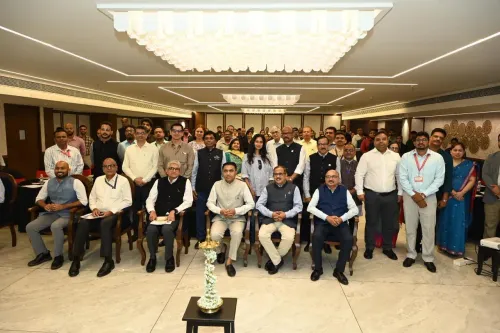
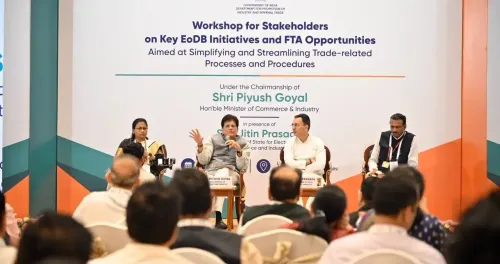
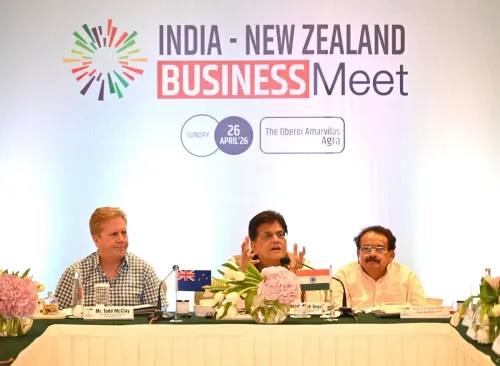
India's push to turn signed trade agreements into actual export gains moved to Gujarat on Thursday, October 22, as Union Commerce and Industry Minister Piyush Goyal flagged the conclusion of a state-level workshop on leveraging Free Trade Agreements in Gandhinagar, drawing over 200 participants from government, industry, and export bodies.
What happened at Gandhinagar — and why Gujarat first
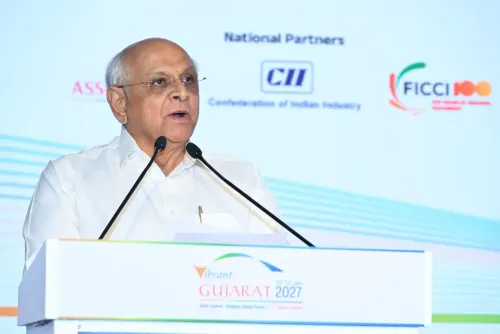
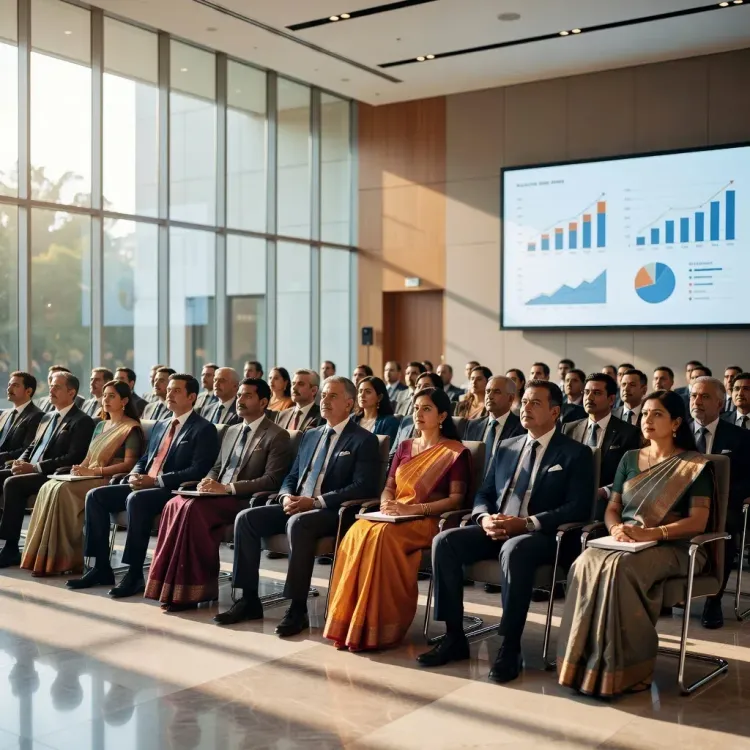
The Gandhinagar workshop, billed as 'Chapter 2' of the Commerce Ministry's FTA outreach series, brought together State Government officials, Export Promotion Councils (EPCs), and exporters under one roof to decode how businesses can actually use India's trade pacts to their advantage. Minister Goyal commended Gujarat Chief Minister Bhupendra Patel and Deputy Chief Minister Harsh Sanghavi for mobilising local businesses and exporters to attend — a detail that signals the Centre is leaning on state governments as delivery partners, not just spectators.
Gujarat is not a random choice. The state is one of India's leading export hubs, anchored by powerful port infrastructure, a deep manufacturing base in chemicals, textiles, engineering goods, and pharmaceuticals, and a dense network of MSMEs hungry for new markets. Getting Gujarat exporters to actually use FTA preferential tariffs — rather than defaulting to standard trade terms — has outsized potential for India's overall export ledger.
The gap the workshops are designed to close
India has notched significant FTA milestones in recent years — a comprehensive pact with the UAE in 2022 and another with Australia in 2022 — as part of a post-pandemic push to diversify trade relationships. But signing agreements and utilising them are two very different things. Across emerging economies, exporter utilisation rates for FTAs often lag far behind the agreements' stated potential, largely because small and mid-size businesses lack the awareness or administrative capacity to claim preferential rules of origin.
Since 2020, the Commerce Ministry has run nationwide FTA awareness campaigns to bridge that gap. The 'Chapter 2' framing of the Gandhinagar event suggests this is a structured, sequenced programme — with prior workshops already completed elsewhere and more high-export states likely in the queue.
Gujarat's share in India's export target in focus
Minister Goyal said the initiative would 'help ensure wider utilisation of FTAs and further enhance Gujarat's share in India's total exports.' The phrasing is deliberate: it frames FTA uptake not as a compliance exercise but as a competitive lever — one that can shift market-share numbers in India's favour at a time when global supply-chain realignments are opening new windows for Indian goods.
Export Promotion Councils play a pivotal role here. These sector-specific bodies — covering everything from engineering products to spices to gems and jewellery — are the last-mile connectors between policy and the shop floor. Their presence at Gandhinagar suggests the workshops are designed for decisions, not just awareness.
The broader roll-out — workshop by workshop, state by state — is quietly building a decentralised infrastructure for export competitiveness. How fast utilisation numbers move in Gujarat after Gandhinagar will be the real test of whether the model works.
Point of View
State-by-state programme that treats FTA utilisation as a last-mile delivery problem, not a negotiating one. By pulling in Chief Ministers and Deputy CMs as visible co-owners, the Centre is distributing both the credit and the accountability for export outcomes. For Gujarat, a state already punching above its weight in manufacturing, better FTA uptake could translate into measurable trade-flow data that the Ministry can use to benchmark and push other states. The real political and economic question is whether ground-level MSME behaviour actually shifts — or whether the workshops remain a well-attended ritual without a utilisation-rate payoff.
NationPress
22 Oct 2026
Frequently Asked Questions
What was the FTA workshop in Gandhinagar about?
The workshop, organised as part of the Commerce Ministry's FTA outreach series, aimed to help Gujarat exporters, state officials, and Export Promotion Councils understand how to leverage India's Free Trade Agreements — such as those with the UAE and Australia — to access preferential tariffs and grow exports.
Who attended the Gandhinagar FTA workshop?
Over 200 participants attended, including Gujarat State Government officials, representatives of Export Promotion Councils (EPCs), and local exporters. The event was encouraged by Gujarat CM Bhupendra Patel and Deputy CM Harsh Sanghavi.
What FTAs does India have that exporters can use?
India signed comprehensive Free Trade Agreements with the UAE and Australia in 2022 as part of its post-pandemic trade diversification push. These pacts offer preferential tariff rates for Indian goods, but uptake among small and mid-size exporters has historically been low.
Why is Gujarat important for India's export goals?
Gujarat is one of India's leading export states, with major strengths in chemicals, textiles, engineering goods, pharmaceuticals, and port-driven logistics. Improving FTA utilisation in Gujarat can have an outsized positive impact on India's total export figures.
What is the Commerce Ministry's FTA outreach programme?
Since 2020, the Commerce Ministry has run nationwide FTA awareness and capacity-building campaigns to raise utilisation rates. The Gandhinagar event is labelled 'Chapter 2,' indicating a structured series of state-level workshops targeting high-export states across India.