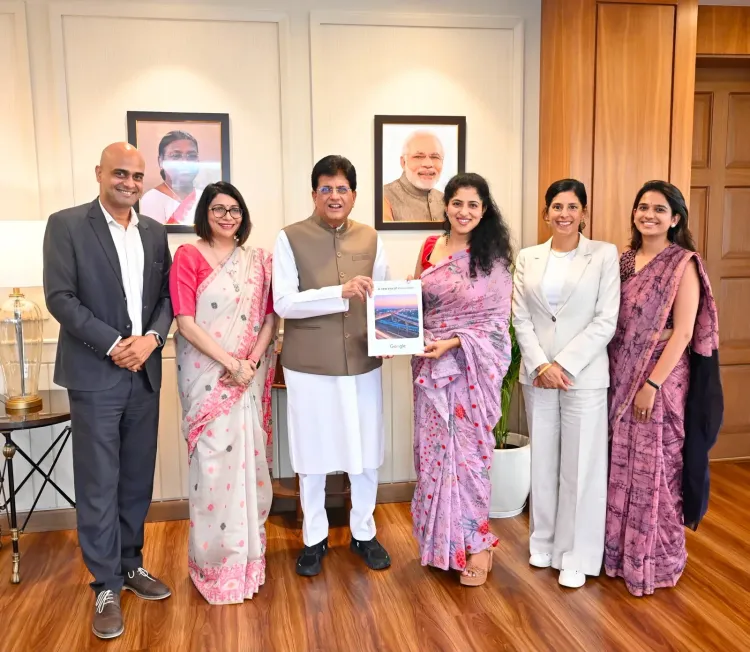
Goyal Meets Google VPs on AI, MSME Digital Growth
Synopsis
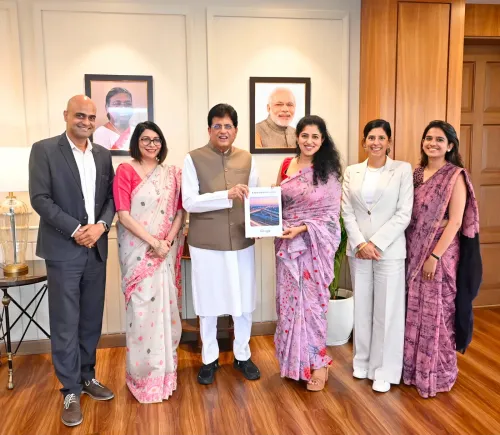
Union Commerce Minister Piyush Goyal met Google's top executives on July 6, 2026, to explore AI and digital technology collaboration for empowering Indian MSMEs, startups, exporters, and local businesses, building on the IndiaAI Mission and Digital India frameworks.
Key Takeaways
Union Commerce and Industry Minister Piyush Goyal met a Google delegation on July 6, 2026 .
The delegation was led by Vidhya Srinivasan , VP Ads and Commerce, and Preeti Lobana , VP and Country Manager, Google India .
Talks centred on AI adoption, digital skilling, market access, and innovation-led growth for MSMEs , startups, and exporters.
The meeting builds on the IndiaAI Mission (2024) , Digital India (2015) , and the National Strategy for AI (2018) .
Potential follow-up MoUs between the Commerce Ministry and Google on exporter-focused digital tools are being watched.
The engagement reflects a consistent policy preference for public-private collaboration in technology adoption for India's MSME and export ecosystem.
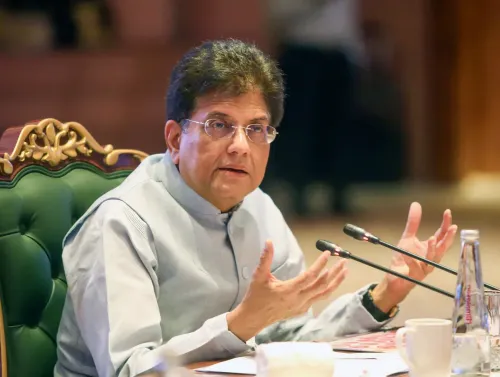
Union Commerce and Industry Minister Piyush Goyal met with a delegation from Google on Monday, July 6, 2026, holding discussions focused on harnessing artificial intelligence and digital technologies to empower MSMEs, startups, exporters, and local businesses across India. The delegation was led by Ms. Vidhya Srinivasan, Vice President, Ads and Commerce at Google, and Ms. Preeti Lobana, Vice President and Country Manager at Google India.
Context
Minister Goyal, who oversees trade, MSME policy, and digital commerce initiatives as the Union Minister of Commerce and Industry, confirmed the meeting on social media, noting that the talks 'explored opportunities to strengthen collaboration to accelerate AI adoption, advance digital skilling, enhance market access, and foster innovation-led, technology-driven growth.' The meeting signals continued high-level engagement between the Commerce Ministry and global technology majors at a time when AI integration in the MSME sector has become a central policy priority.
Vidhya Srinivasan leads Google's global advertising technology and business solutions vertical, while Preeti Lobana heads Google India's policy and business engagement operations. Their joint presence underscored the breadth of the discussion, spanning both global product capabilities and India-specific deployment strategies.
Policy Backdrop
The meeting draws on a layered policy architecture built over the past decade. The Digital India programme, launched in 2015, expanded digital infrastructure and e-commerce access for MSMEs. The National Strategy for Artificial Intelligence, released by NITI Aayog in 2018, laid out a framework for responsible AI adoption across sectors including exports. Most recently, the IndiaAI Mission, announced in 2024, has sought to accelerate AI skilling, compute infrastructure, and startup innovation at scale.
These initiatives reflect a consistent policy preference for structured public-private collaboration over standalone state-led technology deployment. Existing frameworks such as the Open Network for Digital Commerce (ONDC) and the Startup India programme have already created scaffolding that global platforms can plug into to improve market access and reduce technology adoption barriers for smaller enterprises.
Stakeholders and Impact
India's MSME sector employs hundreds of millions of workers and contributes significantly to the country's export basket. Digital skilling and AI-assisted tools — ranging from automated inventory management to AI-powered export documentation — have the potential to lower operational costs and open new markets for small businesses that have historically lacked access to enterprise-grade technology.
Startups stand to benefit from any expanded Google collaboration through improved access to cloud infrastructure, advertising platforms, and AI development tools. Local businesses and exporters, particularly those in Tier-2 and Tier-3 cities, are the stated beneficiaries of digital skilling programmes that both the government and Google have independently championed in recent years.
What's Next
Observers will watch closely for any formal follow-up, including potential Memoranda of Understanding (MoUs) between the Commerce Ministry and Google on exporter-focused digital tools or AI skilling targets. Progress on the IndiaAI Mission's skilling and compute components will also determine how quickly the ambitions discussed in Monday's meeting translate into on-ground outcomes for MSMEs and startups. The engagement fits a broader pattern of the Commerce Ministry using bilateral platform meetings to shape the terms of technology adoption in India's trade and enterprise ecosystem.
Point of View
The ministry signals it is seeking solutions that are globally scalable yet locally deployable. This fits a broader arc in which the government has progressively shifted from building digital infrastructure to negotiating terms of AI integration with platform giants. The outcome — whether a formal MoU or a working-group mandate — will indicate how quickly rhetoric around AI-powered MSMEs translates into measurable trade and skilling outcomes.
NationPress
5 Oct 2026
Frequently Asked Questions
Why did Piyush Goyal meet Google executives in July 2026?
Minister Piyush Goyal met Google's Vidhya Srinivasan and Preeti Lobana on July 6, 2026, to discuss leveraging AI and digital technologies to empower Indian MSMEs, startups, exporters, and local businesses.
Who is Vidhya Srinivasan at Google?
Vidhya Srinivasan is the Vice President for Ads and Commerce at Google, responsible for the company's global advertising technology and business solutions.
Who is Preeti Lobana at Google India?
Preeti Lobana is the Vice President and Country Manager at Google India, leading the company's policy and business engagement in the Indian market.
What is the IndiaAI Mission and how does it relate to this meeting?
The IndiaAI Mission, announced in 2024, aims to accelerate AI skilling, compute infrastructure, and startup innovation in India. The Commerce Ministry's talks with Google on AI adoption for MSMEs are directly aligned with this mission's objectives.
What could come out of the Goyal-Google meeting for Indian exporters?
Potential outcomes include formal MoUs on AI-powered exporter tools, expanded digital skilling programmes, and enhanced market access mechanisms for MSMEs and startups through Google's platforms.