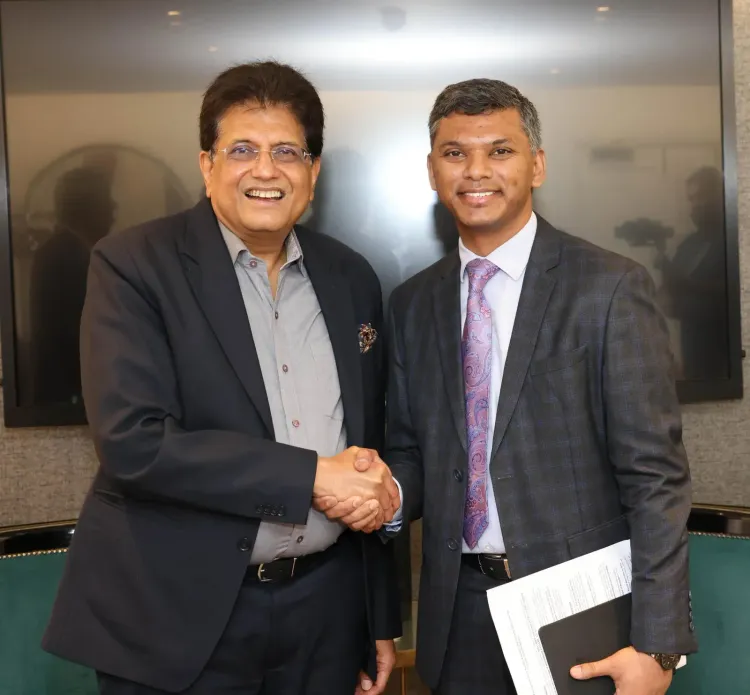
Goyal meets Warwick's Safe Autonomy head, backs India-UK R&D ties
Synopsis
Union Commerce Minister Piyush Goyal met Prof. Siddharth Khastgir, Head of Safe Autonomy at Warwick Manufacturing Group, on 27 June 2026, signalling India's push to deepen industry-academia ties with UK institutions in autonomous systems and AI under the India-UK Roadmap 2030.
Key Takeaways
Union Commerce and Industry Minister Piyush Goyal held a discussion with Prof.
Siddharth Khastgir , Head of Safe Autonomy at WMG, University of Warwick , on 27 June 2026 .
The meeting focused on deepening industry-academia collaboration and advancing research-driven innovation in frontier technologies.
Goyal stressed that a vibrant innovation ecosystem is key to 'building globally competitive industries and shaping the technologies of the future.' The engagement aligns with the India-UK Roadmap 2030 , which prioritises science, technology and innovation cooperation including autonomous systems.
Domestic policy anchors include Make in India (2014) and the National Education Policy 2020 , both of which call for stronger international R&D linkages.
Potential follow-up actions include MoUs between Indian institutions and WMG and outcomes from the next India-UK Technology Partnership review.
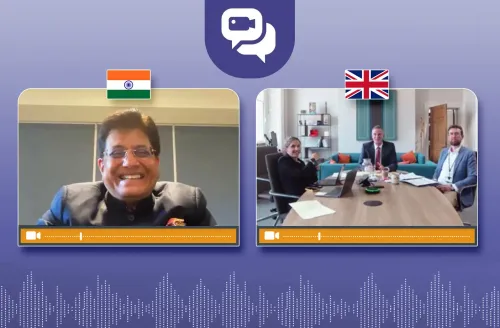
Union Commerce and Industry Minister Piyush Goyal on Saturday, 27 June 2026 held a discussion with Prof. Siddharth Khastgir, Head of Safe Autonomy at the Warwick Manufacturing Group (WMG), University of Warwick, focusing on deepening industry-academia collaboration and advancing research-driven innovation for India and the world.
Context
Goyal described the meeting as 'an insightful discussion' aimed at exploring how innovation ecosystems can nurture breakthrough ideas and build globally competitive industries. He underscored that 'a vibrant innovation ecosystem is instrumental in nurturing breakthrough ideas, building globally competitive industries, and shaping the technologies of the future for India and the world.' The exchange centred on how institutional partnerships between Indian stakeholders and leading UK research groups can accelerate capabilities in frontier technologies such as safe autonomy and artificial intelligence.
Prof. Khastgir leads the Safe Autonomy research vertical at WMG, one of the United Kingdom's foremost applied-research groups specialising in automotive engineering, connected autonomous vehicles, and industry-to-academia technology transfer. His work focuses on safety assurance frameworks for autonomous systems and AI-driven mobility platforms.
Policy Backdrop
The meeting sits at the intersection of several long-running policy commitments. India's Make in India initiative, launched in 2014, has consistently sought to attract global research-and-development partnerships and strengthen advanced manufacturing capabilities domestically. The National Education Policy 2020 explicitly called for stronger industry-academia linkages and international research collaborations as a pillar of India's knowledge economy ambitions.
At the bilateral level, the India-UK Roadmap 2030, agreed in 2021, identified science, technology and innovation cooperation — including autonomous systems — as a priority corridor. Engagement between Indian policymakers and University of Warwick researchers fits squarely within that framework, reflecting a deliberate strategy to diversify technology partnerships and reduce reliance on any single-country source for critical emerging technologies.
Stakeholders and Impact
Indian researchers, automotive-sector firms, and deep-technology startups stand to benefit most directly from closer ties with WMG, which has an established track record of translating academic research into deployable industrial solutions. For India's growing autonomous-vehicle and mobility-technology ecosystem, access to safety-assurance methodologies developed at Warwick could shorten the path from prototype to production.
The Commerce and Industry Ministry's engagement also signals that innovation diplomacy — where trade ministers actively broker research partnerships alongside conventional trade deals — is becoming a standard instrument of India's industrial policy. Startups and academic institutions in sectors such as AI, robotics, and advanced manufacturing are the constituencies most likely to see tangible downstream benefits from such high-level conversations.
What's Next
Observers will watch for any follow-up memoranda of understanding between Indian institutions and WMG, as well as outcomes from the next review meeting of the India-UK Technology Partnership. The broader pattern of India-UK academic linkages suggests that ministerial-level meetings of this kind often precede formal joint research calls or co-funded programmes. Whether this discussion translates into structured collaboration will likely become clearer at the next bilateral technology dialogue.
Point of View
' where trade and industry ministers actively broker R&D partnerships rather than leaving them solely to science ministries. The meeting reinforces a pattern visible since the India-UK Roadmap 2030: New Delhi is systematically building institutional bridges with Western research universities to accelerate domestic capability in deep-tech sectors. For a minister who oversees both trade facilitation and industrial promotion, cultivating ties with groups like WMG serves a dual purpose — it signals India's seriousness as an R&D destination while creating upstream relationships that can later support exports of Indian-made autonomous and AI-enabled products. The real test will be whether this high-level conversation generates binding research programmes or remains at the level of diplomatic goodwill.
NationPress
26 Sept 2026
Frequently Asked Questions
Who is Prof. Siddharth Khastgir and why did Piyush Goyal meet him?
Prof. Siddharth Khastgir heads Safe Autonomy research at the Warwick Manufacturing Group, University of Warwick, specialising in safety assurance for autonomous vehicles and AI systems. Commerce Minister Piyush Goyal met him on 27 June 2026 to explore deeper industry-academia collaboration and research-driven innovation between India and UK institutions.
What is the Warwick Manufacturing Group (WMG)?
WMG is a UK-based applied-research organisation at the University of Warwick that specialises in automotive engineering, connected autonomous vehicles, and translating academic research into industrial applications through industry-academia technology transfer.
How does this meeting relate to the India-UK Roadmap 2030?
The India-UK Roadmap 2030, agreed in 2021, explicitly prioritises science, technology and innovation cooperation including autonomous systems. Goyal's engagement with WMG researchers directly advances that bilateral commitment by building institutional linkages in frontier technology sectors.
What Indian policies support industry-academia collaboration with foreign universities?
Make in India (launched 2014) seeks global R&D partnerships for advanced manufacturing, while the National Education Policy 2020 calls for stronger industry-academia linkages and international research collaborations, both providing the policy foundation for meetings like this one.
What could be the next steps after Goyal's discussion with WMG?
Potential follow-up actions include memoranda of understanding between Indian institutions and WMG, joint research calls, or co-funded programmes. Outcomes from the next India-UK Technology Partnership review meeting will be a key indicator of whether the discussion leads to formal collaboration.