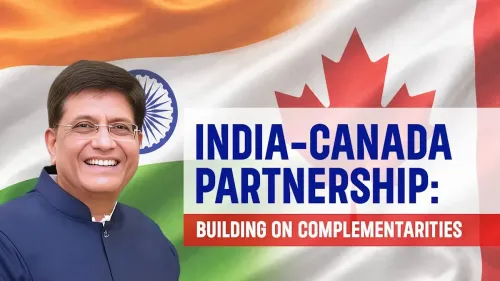
Goyal Highlights India-Canada CEPA at Toronto Diaspora Event
Synopsis
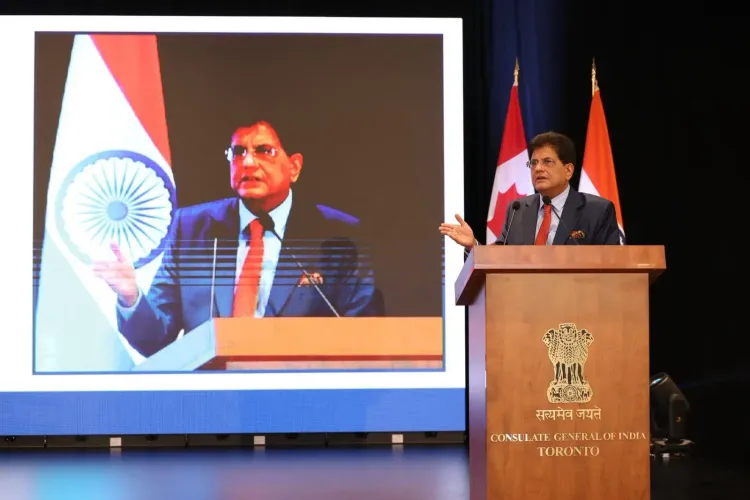
Commerce Minister Piyush Goyal addressed the Indian diaspora at a Consulate-hosted reception in Toronto on May 27, spotlighting India's economic rise under PM Modi and calling the India-Canada CEPA a gateway to expanded trade, investment and people-to-people ties.
Key Takeaways
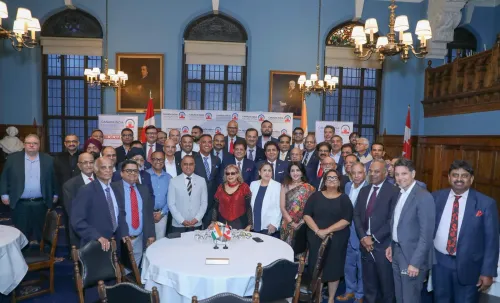
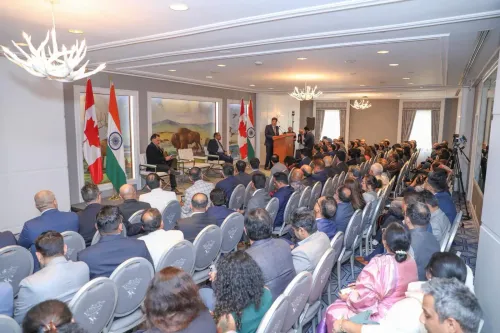
Piyush Goyal addressed a community reception hosted by the Consulate General of India in Toronto on May 27, 2026 .
He highlighted India's economic transformation under Prime Minister Narendra Modi before an Indian diaspora audience in Canada .
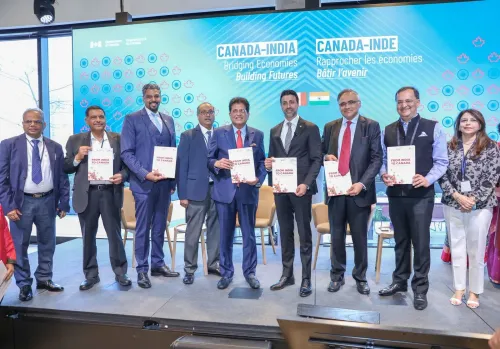
The minister emphasised opportunities in trade, investment, innovation and people-to-people ties through the proposed India-Canada CEPA .
Formal negotiations for the India-Canada CEPA were first launched in 2010 and remain a key bilateral priority.
The Indian diaspora in Canada was described as 'a living bridge' contributing to business, technology, academia and community leadership.
The visit signals continued ministerial-level engagement on the India-Canada trade and economic partnership agenda.
Union Commerce and Industry Minister Piyush Goyal addressed the Indian diaspora at a community reception hosted by the Consulate General of India in Toronto on Wednesday, May 27, 2026, underscoring India's economic transformation and the promise of deeper bilateral ties through a proposed trade agreement.
Context
Speaking at the Toronto event, Goyal described the gathering as 'always a delight,' invoking the image of Indians who 'carry the Tricolour in their hearts, thousands of miles away from home.' The reception, organised by the Consulate General of India in Toronto, brought together members of the Indian diaspora in Canada — one of the largest such communities globally — for an evening of diplomatic and community engagement.
The minister highlighted what he called India's 'remarkable economic transformation' under Prime Minister Narendra Modi, framing the diaspora event as part of a broader outreach to communities that serve as informal ambassadors of Indian commerce and culture abroad.
Policy Backdrop
At the centre of Goyal's remarks was the India-Canada Comprehensive Economic Partnership Agreement (CEPA), a bilateral trade pact with roots going back to formal negotiations launched in 2010. The agreement is designed to expand market access, investment flows, and services trade between the two countries.
India has pursued multiple CEPAs and Free Trade Agreements in recent years as part of a broader strategy to integrate its economy more deeply with partner nations. The minister emphasised 'immense opportunities emerging across trade, investment, innovation and people-to-people partnerships' that a concluded CEPA could unlock for both sides.
India-Canada bilateral ties span education, technology, energy, and agriculture. The Indian diaspora in Canada, numbering in the millions and concentrated heavily in provinces such as Ontario and British Columbia, has long been regarded as a strategic asset in advancing these ties.
Stakeholders and Impact
Goyal described the Indian diaspora as 'a living bridge between our two nations,' contributing 'meaningfully across business, technology, academia, innovation and community leadership.' This framing positions diaspora members not merely as cultural representatives but as active economic and diplomatic actors.
For Indian businesses, a concluded CEPA would potentially lower tariff barriers, ease investment norms, and create structured pathways for professional mobility — areas of direct relevance to the large number of Indian-origin professionals in Canada's technology and healthcare sectors. Canadian businesses, in turn, stand to gain enhanced access to India's expanding consumer and industrial markets.
People-to-people ties — including student mobility, skilled migration, and cultural exchange — were also highlighted as a dimension that a comprehensive agreement could formalise and strengthen.
What's Next
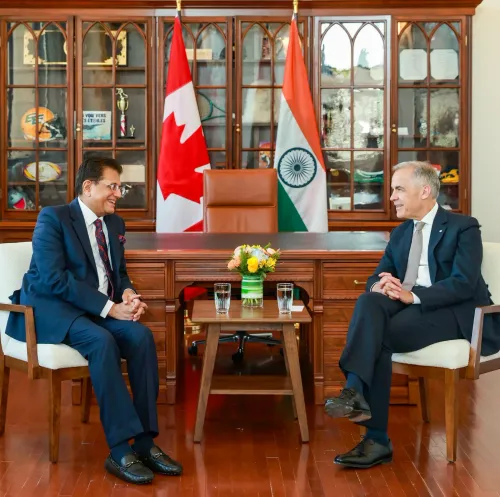
The minister's visit to Toronto and his public emphasis on the CEPA signal continued ministerial-level engagement on the trade front. Observers will watch for any announcement of fresh negotiation rounds or a timeline for concluding the long-pending agreement.
With India deepening its economic diplomacy across multiple geographies, the India-Canada CEPA remains a key marker of how effectively the two nations can translate diaspora goodwill and political intent into a durable, rules-based economic framework.
Point of View
Building public and political momentum for the long-stalled India-Canada CEPA. The ministerial visit, coming amid India's active pursuit of trade agreements globally, signals that New Delhi is keen to revive bilateral economic engagement with Ottawa. The framing of the diaspora as a 'living bridge' is deliberate, casting millions of Indian-Canadians as stakeholders in the CEPA's success and, implicitly, as a lobbying constituency. Whether the visit translates into a concrete negotiating breakthrough will be the real test of this diplomatic investment.
NationPress
10 Oct 2026
Frequently Asked Questions
What is the India-Canada CEPA?
The India-Canada Comprehensive Economic Partnership Agreement (CEPA) is a proposed bilateral trade pact aimed at expanding market access, investment flows and services trade between India and Canada. Formal negotiations were launched in 2010.
Why did Piyush Goyal visit Toronto in May 2026?
Piyush Goyal attended a community reception hosted by the Consulate General of India in Toronto, where he engaged with the Indian diaspora and highlighted India's economic growth and the opportunities offered by the India-Canada CEPA.
What role does the Indian diaspora play in India-Canada relations?
The Indian diaspora in Canada, one of the largest in the world, is seen as a strategic bridge between the two nations, contributing to business, technology, academia and community leadership while fostering people-to-people ties.
Has the India-Canada CEPA been signed?
As of the available information, the India-Canada CEPA has not been concluded. Negotiations have been ongoing since 2010 with periodic advances and pauses depending on bilateral conditions.
What did Piyush Goyal say about PM Modi at the Toronto event?
Goyal highlighted India's 'remarkable economic transformation' under the leadership of Prime Minister Narendra Modi, presenting it as the foundation for the expanding opportunities the India-Canada CEPA could unlock.