Ahmedabad Police warn 951 drug offenders, threaten action against cops who ignore narcotics trade
Synopsis
Ahmedabad's anti-drug drive went further than a routine warning session — it turned the lens on the police force itself. With 951 offenders summoned and station in-charges now assessed on drug seizures and rehab outcomes, Gujarat's enforcement model is shifting from reactive raids to systemic accountability.
Key Takeaways
Ahmedabad City Police summoned 951 individuals — peddlers, prior NDPS arrestees, and suspected users — on 18 November 2026 .
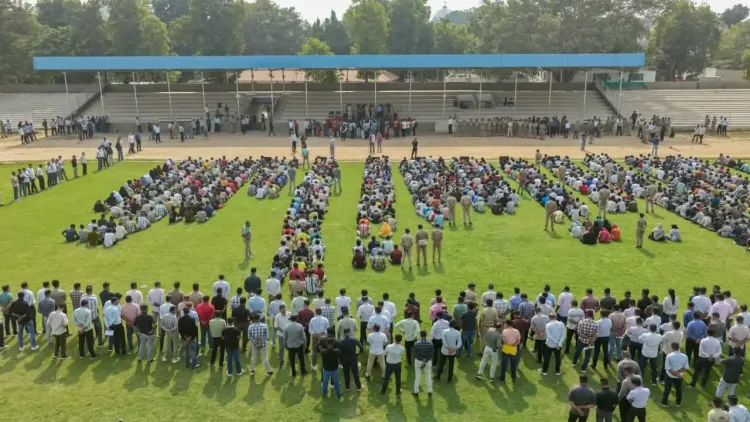
Around 300 active drug addicts were among those warned at J D Nagarwala Stadium , Shahibaug.
Joint Commissioner Sharad Singhal warned that local police officers who ignore drug intelligence and allow outside agencies to act will face disciplinary proceedings.
Performance of police station in-charges will now be assessed on drug seizures, addict rehabilitation, and dismantling of supply networks.
Properties allegedly acquired through drug money — including those held by family members — can be attached or frozen under applicable law.
Around 100 grams of ganja was recovered in Isanpur ; a cough syrup case was registered in Sarkhej during the two-day drive.
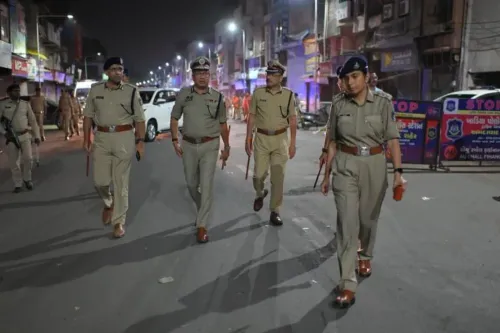
Ahmedabad City Police on Wednesday, 18 November 2026, summoned approximately 951 individuals — including those previously arrested under the Narcotic Drugs and Psychotropic Substances (NDPS) Act, active drug peddlers, and suspected users — to J D Nagarwala Stadium at the Shahibaug Police Headquarters, issuing stern warnings of stringent legal action if any narcotics-related activity continued. The city-wide crackdown signals an escalation in Gujarat's anti-drug enforcement drive and, notably, extends accountability to police personnel themselves.
Scale of the Operation
The special drive was a coordinated effort involving the Crime Branch, the Special Operations Group (SOG), Zone-level Local Crime Branch teams, the Anti-Narcotics Cell, and the Anti-Narcotics Wing. Of the 951 individuals summoned, around 300 were identified as active drug addicts who had continued consuming narcotics despite prior warnings. Joint Commissioner of Police (Crime Branch) Sharad Singhal confirmed all 300 were called and issued strict warnings on the day.
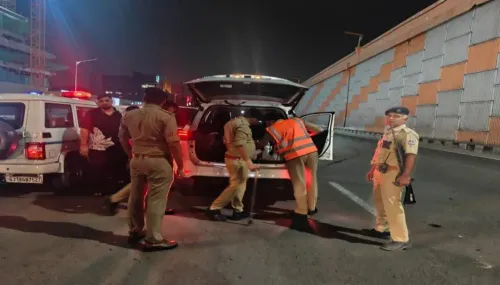
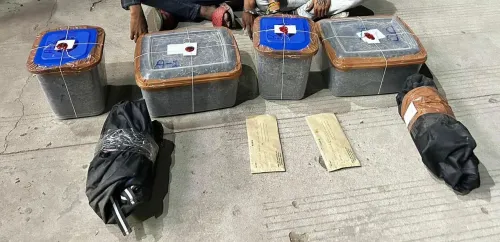
Separately, around 100 grams of ganja was recovered during a search of a house in Isanpur on Wednesday. A cough syrup case was also registered in Sarkhej during the campaign on Tuesday, with residence searches of suspected individuals continuing across both days.
Police Personnel Put on Notice
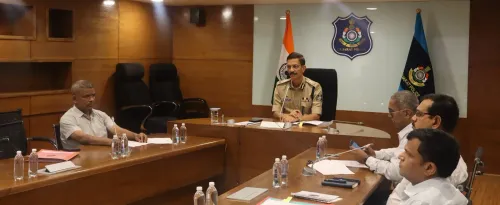
In a sharp escalation of internal accountability, Singhal warned that police officers who ignored drug-related intelligence in their jurisdictions would themselves face disciplinary action. 'The DGP and Deputy Chief Minister have issued strict instructions that if the local police have information about drug-related activities but do not act on it, and an outside agency takes action while the local police conduct a nil panchnama or ignore the matter, action will also be taken against the local police inspector,' Singhal said.
He further stated that any police officer or employee found directly or indirectly involved in the drug trade would face case registration and stringent action — a signal that the crackdown is designed to close enforcement gaps from within the force itself.
Performance Metrics Linked to Drug Enforcement
Going beyond one-time warnings, Singhal announced that the performance assessments of police station in-charges would henceforth be evaluated on three specific parameters: drug seizures within their jurisdiction, the number of addicts assisted toward rehabilitation, and progress in dismantling drug supply networks. This marks a structural shift in how Gujarat Police measures station-level accountability, tying career outcomes directly to narcotics outcomes.
Legal Consequences Explained to Offenders
During the drive, officials explained the full spectrum of legal and social consequences awaiting repeat offenders — from the health impact of addiction to financial ruin, loss of social standing, and the blighted futures of young people drawn into the trade. Police specifically warned that properties allegedly purchased with drug money, even those held in the names of family members, could be attached or frozen under applicable provisions. Preventive detention under the Prevention of Illicit Traffic in Narcotic Drugs and Psychotropic Substances (PIT-NDPS) Act was also cited as a tool that authorities are prepared to invoke.
Stated Objective
'The objective is to curb the narcotics trade, prevent drug addiction among young people and encourage those affected by addiction to seek rehabilitation,' officials stated. This comes amid broader concerns across Gujarat about the accessibility of narcotics in urban areas, particularly among younger demographics. With accountability now extending to both offenders and enforcement personnel, the Ahmedabad drive could serve as a template for similar operations in other cities.
Point of View
At least rhetorically, acknowledges that complicit or negligent local policing is part of the problem. Whether performance-linked assessments for station in-charges translate into genuine structural change, or become box-ticking exercises, will determine the drive's real impact. Gujarat has seen periodic anti-drug campaigns before; what this sweep adds is a formal loop of internal accountability that, if enforced, could change incentive structures at the constabulary level.
NationPress
18 Nov 2026
Frequently Asked Questions
What happened at the Ahmedabad drug crackdown on 18 November 2026?
Ahmedabad City Police summoned around 951 individuals — including prior NDPS arrestees, drug peddlers, and suspected users — to J D Nagarwala Stadium at the Shahibaug Police Headquarters and warned them of stringent legal action if they continued any narcotics-related activity. The drive was coordinated across the Crime Branch, SOG, Anti-Narcotics Cell, and Anti-Narcotics Wing.
What action will be taken against police officers who ignore drug activity?
Joint Commissioner of Police Sharad Singhal stated that if a local police officer possesses information about drug activity but fails to act, and an outside agency subsequently detects the offence, the local officer will face action. The DGP and Deputy Chief Minister have issued instructions to this effect, and any officer found involved in the drug trade in any capacity will face case registration.
How will police station in-charges be assessed under the new framework?
Their performance will be evaluated on three parameters: the volume of drug seizures in their jurisdiction, the number of addicts they help into rehabilitation, and the extent to which they dismantle local drug supply networks. This links career outcomes directly to narcotics enforcement outcomes.
Can drug offenders' family property be seized?
Yes. Police warned that properties allegedly acquired through illegal drug proceeds — including those held in the names of family members — can be attached or frozen under applicable legal provisions. Preventive action under the PIT-NDPS Act may also be invoked against repeat or high-risk offenders.
What is the NDPS Act and what penalties does it carry?
The Narcotic Drugs and Psychotropic Substances (NDPS) Act, 1985 is India's primary law governing the manufacture, sale, transport, and consumption of narcotic and psychotropic substances. Penalties range from six months' imprisonment for small-quantity possession to rigorous imprisonment of 10 to 20 years — and in some cases the death penalty — for large-quantity trafficking offences.