Gujarat CM Bhupendra Patel Marks Sardar Sarovar Dam at Full Level
Synopsis
Gujarat Chief Minister Bhupendra Patel marked the Sardar Sarovar Dam reaching its full capacity of 138.68 metres for the seventh time, performing Vedic prayers at the dam site and calling water conservation a collective responsibility for the state's 4 crore-plus beneficiaries.
Key Takeaways
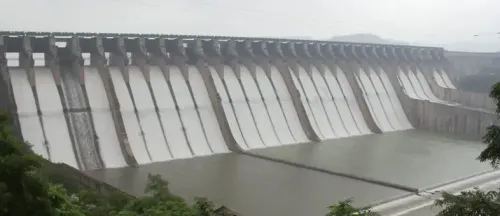
The Sardar Sarovar Dam reservoir reached its full level of 138.68 metres (455 feet) for the seventh time on 30 September 2026.
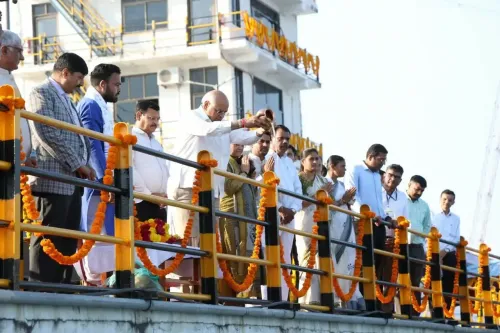
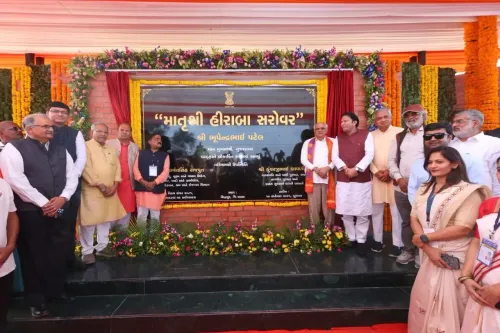
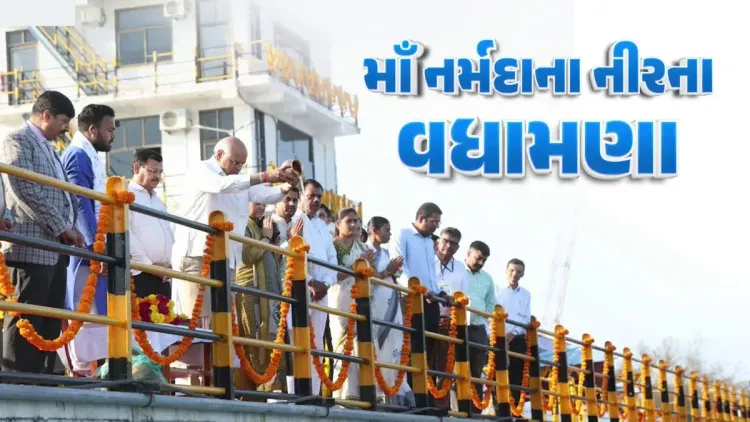
CM Bhupendra Patel conducted a Vedic worship ceremony of the Narmada river at the dam site to mark the occasion.
The reservoir has a total storage capacity of 9,460 million cubic metres , one of the largest in Asia.
Since PM Narendra Modi dedicated the dam to the nation in 2017 , it has supplied drinking water to 10,453 villages, 191 towns, and 7 municipal corporations .
The project serves an estimated 4 crore-plus people across Gujarat.
CM Patel called for frugal, planned, and wise use of every drop of the stored water as a collective civic duty.
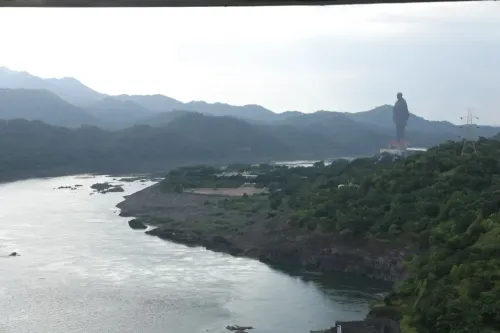
For the seventh time since it was dedicated to the nation, the Sardar Sarovar Dam's reservoir has filled to its maximum capacity of 138.68 metres (455 feet) — and Gujarat Chief Minister Bhupendra Patel was at the dam site on Wednesday, 30 September 2026 to mark the moment with Vedic prayers and a ceremonial worship of the Narmada river.
A Sacred Milestone at the Dam Wall
Standing at the Sardar Sarovar Dam site, CM Patel performed puja (ritual worship) of Narmada Maiya — the river venerated as a goddess across central and western India — with Vedic chants as the reservoir touched full capacity. The Chief Minister's Office described the occasion as an aitihasik ghadi, a 'historic moment', framing the dam's full fill as both a technical achievement and a cultural event.
The reservoir holds a total water storage capacity of 9,460 million cubic metres, making it one of the largest in Asia. Reaching full level for the seventh time underscores the dam's consistent ability to capture monsoon inflows and convert them into year-round utility for the state.
What 138.68 Metres Means for Gujarat's 4 Crore People
Since Prime Minister Narendra Modi dedicated the Sardar Sarovar Dam to the nation in 2017, the project has supplied drinking water to 10,453 villages, 191 towns, and 7 municipal corporations across Gujarat — reaching an estimated 4 crore-plus residents. The Narmada Project, an inter-state river valley scheme decades in the making, is the backbone of Gujarat's water security, channelling flows through a vast canal network to both farms and households.
The dam's full fill is not merely symbolic. Water stored at peak capacity translates directly into irrigation availability through the dry months ahead, drinking water continuity for urban centres, and a buffer against the erratic rainfall patterns that have historically stressed Gujarat's arid and semi-arid zones.
CM Patel's Call for Every Drop to Count
Addressing the occasion, Chief Minister Patel stressed that the responsible use of this water is a collective duty. 'Using this precious water frugally, wisely, and in a planned manner — making the maximum use of every single drop — is the collective responsibility of all of us,' he said. The statement signals that state messaging will now pivot from celebration to conservation, urging citizens and farmers alike to treat the reservoir's full level as a mandate for efficiency, not abundance.
Gujarat's water department is expected to roll out canal operation and drinking water supply schedules for the coming season in the days ahead — the operational translation of today's milestone into ground-level delivery.
Point of View
Reinforcing the BJP's long-standing claim that the Narmada project — championed by Narendra Modi when he was Chief Minister — is the defining achievement of Gujarat's development model. CM Patel's on-site presence and the Vedic ceremony blend governance optics with cultural symbolism, a formula the state has used consistently to keep the dam central to its political identity. The pivot from celebration to conservation messaging is also telling: with climate variability increasing, the government is pre-emptively framing demand management as patriotic duty rather than scarcity. Watching how the state translates this reservoir milestone into equitable canal distribution — especially for rain-shadow districts — will be the real test of the project's seventh full cycle.
NationPress
30 Sept 2026
Frequently Asked Questions
What is the full water level capacity of Sardar Sarovar Dam?
The Sardar Sarovar Dam's full reservoir level is 138.68 metres (455 feet), with a total water storage capacity of 9,460 million cubic metres.
How many times has Sardar Sarovar Dam reached full capacity?
As of 30 September 2026, the Sardar Sarovar Dam reservoir has reached its full capacity level for the seventh time since the dam was dedicated to the nation in 2017.
Who dedicated Sardar Sarovar Dam to the nation and when?
Prime Minister Narendra Modi dedicated the Sardar Sarovar Dam to the nation in 2017, enabling its full operational use for drinking water and irrigation across Gujarat.
How many people benefit from the Sardar Sarovar Narmada Project?
The project supplies drinking water to over 4 crore people across 10,453 villages, 191 towns, and 7 municipal corporations in Gujarat.
What did Gujarat CM Bhupendra Patel do at Sardar Sarovar Dam on 30 September 2026?
CM Bhupendra Patel visited the Sardar Sarovar Dam site and performed a Vedic worship ceremony of the Narmada river to mark the reservoir reaching its full capacity of 138.68 metres for the seventh time.