Nadda addresses World Congress of Gastroenterology 2026 in Delhi
Synopsis
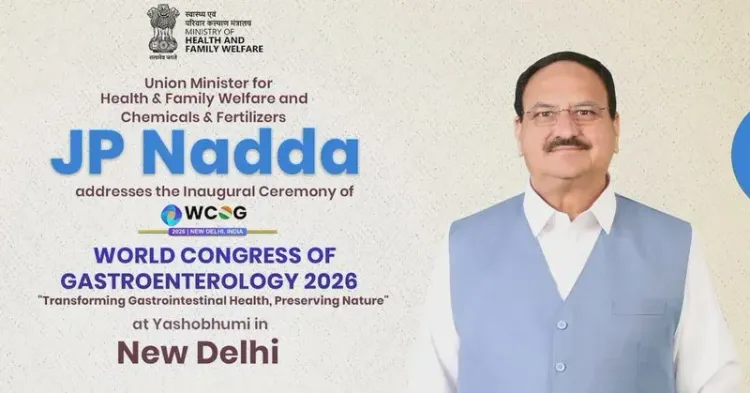
Union Health Minister J. P. Nadda addressed the inaugural ceremony of the World Congress of Gastroenterology 2026 in New Delhi on 30 September 2026, underscoring India's growing role as a host for elite international medical gatherings and the government's engagement with global digestive-health research.
Key Takeaways
Union Health Minister J.
Nadda addressed the inaugural ceremony of the World Congress of Gastroenterology 2026 in New Delhi on 30 September 2026 .
The congress is one of the most prestigious international gatherings in gastroenterology and hepatology, bringing together specialists and researchers from across the world.
India's hosting of the event signals its growing stature as a destination for elite international scientific exchange.
Nadda serves as both Union Minister of Health and Family Welfare and BJP national president , giving his presence at the event both policy and political significance.
Any joint research collaborations or institutional statements emerging from the multi-day congress will be closely watched by the global medical community.
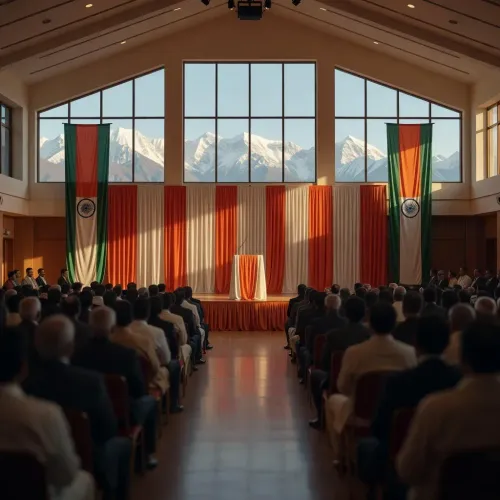
New Delhi became the nerve centre of global digestive-health science on Wednesday, 30 September 2026, as Union Health Minister J. P. Nadda took the stage at the inaugural ceremony of the World Congress of Gastroenterology 2026 — one of the most prestigious international gatherings in the field of gastroenterology and hepatology.
A global medical spotlight lands in New Delhi
The World Congress of Gastroenterology is a landmark event in the international medical calendar, bringing together specialists, researchers, and clinicians from across the world to share advances in the diagnosis, treatment, and prevention of digestive diseases. Hosting its inaugural ceremony in New Delhi signals India's growing stature as a destination for elite scientific exchange — a recognition that the country's medical infrastructure and research community can anchor a congress of this magnitude.
Nadda's presence at the inauguration was significant in its own right. As the Union Minister of Health and Family Welfare, he carries direct policy authority over India's public-health architecture, making his address to an international body of gastroenterologists more than ceremonial — it is a statement of governmental engagement with the global medical community.
Why gastroenterology matters to India's health agenda
India carries a substantial burden of gastrointestinal diseases — from infections and inflammatory bowel conditions to liver disorders and gastrointestinal cancers — making the discipline a genuine public-health priority rather than a niche specialty. A congress of this scale, held on Indian soil, creates a direct channel between global research frontiers and the clinicians and policymakers who shape care for over a billion people.
India has periodically hosted major international medical conferences precisely to accelerate this knowledge transfer. The 2026 congress in New Delhi fits that pattern, with the added weight of a sitting Health Minister lending it institutional gravity. Any joint research frameworks or collaborative statements that emerge from the multi-day event will be closely watched by the medical community.
Nadda's dual role: health policy and party leadership
Nadda simultaneously holds the position of BJP national president, making him one of the most consequential figures in both India's government and its ruling party. His appearance at an international health congress underscores how the government has sought to project health diplomacy — using high-profile multilateral medical forums as platforms to demonstrate India's ambitions as a global healthcare leader.
The congress is a multi-day affair, and the full scope of its proceedings — panel discussions, research presentations, and any institutional announcements — will unfold over the coming days.
When a Health Minister opens a world congress in the capital, the message to the global medical community is unmistakable: India is not just a participant in the conversation about digestive health — it intends to help lead it.
Point of View
The choice of New Delhi as the congress venue carries both symbolic and practical weight. For a Health Minister who simultaneously runs the ruling party, appearing on an international scientific stage also reinforces the government's narrative of institutional competence in healthcare. The real measure of this moment, however, will be whether the congress produces tangible research collaborations or policy commitments that translate global expertise into domestic health outcomes.
NationPress
30 Sept 2026
Frequently Asked Questions
What is the World Congress of Gastroenterology 2026?
The World Congress of Gastroenterology 2026 is a major international medical conference bringing together gastroenterology specialists, researchers, and clinicians from around the world. Its inaugural ceremony was held in New Delhi on 30 September 2026.
Why did JP Nadda attend the World Congress of Gastroenterology?
As Union Minister of Health and Family Welfare, J. P. Nadda addressed the inaugural ceremony of the congress, reflecting the Indian government's engagement with the global medical community and India's role as host of the 2026 event.
Where is the World Congress of Gastroenterology 2026 being held?
The World Congress of Gastroenterology 2026 is being held in New Delhi, the capital city of India.
What is the significance of India hosting the gastroenterology world congress?
Hosting a congress of this stature in New Delhi signals India's growing credibility as a venue for elite international scientific exchange and creates a direct link between global research advances and India's domestic healthcare policymakers.
What is JP Nadda's role in the Indian government?
J. P. Nadda serves as the Union Minister of Health and Family Welfare and Minister of Chemicals and Fertilizers. He also holds the position of BJP national president.