Gujarat CM Bhupendra Patel Visits Model Farm, Backs Natural Farming
Synopsis
Chief Minister Bhupendra Patel of Gujarat visited progressive farmer Shantilalbhai Patel's model farm at Shivpura Kampa on 18 July 2026, engaging farming communities on the dangers of chemical agriculture and encouraging a shift toward natural farming practices.
Key Takeaways
Chief Minister Bhupendra Patel visited the model farm of Shantilalbhai Patel at Shivpura Kampa on 18 July 2026 .
The CM held a direct dialogue with progressive farmers on the serious consequences of chemical farming.
He encouraged farmers to adopt natural farming and highlighted its benefits over chemical-based agriculture.
Gujarat's natural farming push aligns with the national Paramparagat Krishi Vikas Yojana , launched in 2015 .
The visit signals continued state-level political backing for sustainable agriculture and soil health initiatives.
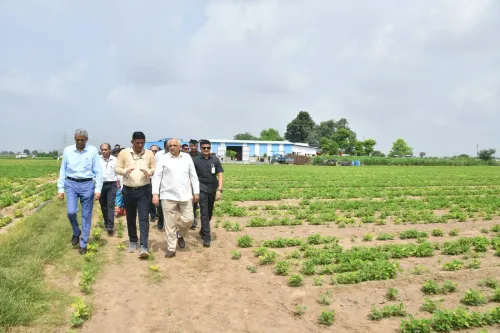
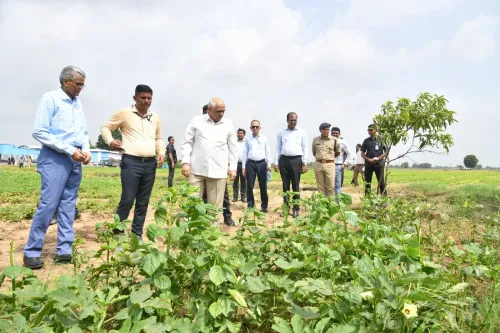
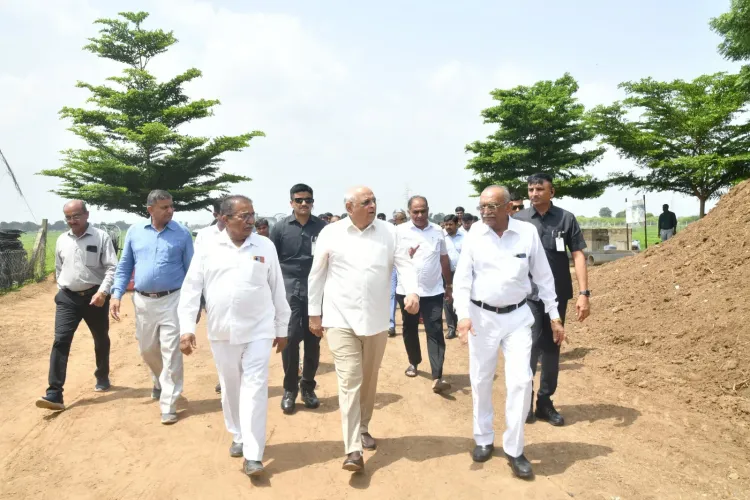
The Chief Minister's Office of Gujarat shared on Saturday, 18 July 2026 that Chief Minister Bhupendra Patel visited the model farm of progressive farmer Shantilalbhai Patel at Shivpura Kampa, engaging directly with farming communities on the hazards of chemical agriculture and the benefits of natural farming.
Context
The CMO Gujarat post, written in Gujarati, states that the Chief Minister 'pragatisheel khedutoo sathe rasayanik khetina gambhir parinamo ane prakrutik khetina faydaao vishe samvaad kari teemne protsahit karya hata' — meaning he 'held a dialogue with progressive farmers on the serious consequences of chemical farming and the benefits of natural farming, and encouraged them.' The visit to Shantilalbhai Patel's farm at Shivpura Kampa was presented as a working field interaction, not a ceremonial event.
Chief Minister Bhupendra Patel, who has led Gujarat since September 2021, has made farmer outreach a recurring feature of his administration. Visits to individual model farms allow the state to publicly endorse grassroots agricultural innovation and signal policy direction to the wider farming community.
Policy Backdrop
Gujarat's push toward natural farming fits within a broader national framework. The Government of India's Paramparagat Krishi Vikas Yojana (PKVY), launched in 2015, promotes organic and natural farming clusters across states, with Gujarat among the active participants. The scheme incentivises farmer groups to collectively shift away from synthetic inputs.
At the state level, Gujarat has invested in reducing chemical fertiliser dependence through farmer training programmes and model farm demonstrations aimed at improving long-term soil health. A Chief Minister's personal visit to a working farm amplifies that message and provides a high-visibility endorsement that training workshops alone cannot replicate.
Stakeholders and Impact
The primary beneficiaries of this policy direction are Gujarat's progressive farming communities — those already experimenting with reduced-chemical or zero-chemical cultivation methods. Farmers like Shantilalbhai Patel, whose operations serve as demonstration units, gain state recognition that can attract peer interest and institutional support.
The broader farming population stands to benefit if the dialogue translates into expanded training modules, subsidised inputs for natural farming, or dedicated budget allocations in subsequent agricultural seasons. Chemical input suppliers and fertiliser distributors represent the stakeholder segment most likely to be affected by any large-scale shift in farmer behaviour.
What's Next
The immediate signal from this visit is one of sustained political will behind natural farming adoption in Gujarat. Observers will watch whether the state follows up with concrete measures — such as increased budget allocations for natural farming clusters, expanded demonstration farm networks, or district-level training programmes — in the coming agricultural season.
India's broader sustainable agriculture agenda, aligned with soil health and rural economy goals, means Gujarat's approach will likely be tracked by other state governments as a scalable model for farmer-level transition away from chemical dependence.
Point of View
The Gujarat government is communicating that natural farming is a lived reality, not merely a scheme on paper. This mirrors a pattern seen across Indian states where leaders seek to 'ground-truth' central government sustainability mandates through high-visibility field interactions. The key test will be whether this visit is followed by measurable budget and programme commitments, or remains an endorsement without institutional follow-through.
NationPress
18 Jul 2026
Frequently Asked Questions
Why did Gujarat CM Bhupendra Patel visit a farm in Shivpura Kampa?
CM Bhupendra Patel visited the model farm of progressive farmer Shantilalbhai Patel at Shivpura Kampa on 18 July 2026 to engage directly with farming communities on the benefits of natural farming and the risks of chemical agriculture.
What is natural farming and why is Gujarat promoting it?
Natural farming eliminates synthetic chemical inputs in favour of traditional and ecological methods. Gujarat promotes it to improve long-term soil health, reduce input costs for farmers, and align with India's national Paramparagat Krishi Vikas Yojana framework.
What is Paramparagat Krishi Vikas Yojana?
The Paramparagat Krishi Vikas Yojana (PKVY) is a Government of India scheme launched in 2015 that promotes organic and natural farming clusters across states, including Gujarat, by incentivising farmer groups to collectively shift away from synthetic inputs.
Who is Shantilalbhai Patel?
Shantilalbhai Patel is a progressive farmer in Gujarat recognised for operating a model farm that demonstrates alternative, natural agricultural practices, and whose farm was visited by Chief Minister Bhupendra Patel in July 2026.
What are the dangers of chemical farming highlighted by the Gujarat government?
The Gujarat government has flagged serious long-term consequences of chemical farming, including soil degradation and health risks, as part of its campaign to encourage farmers to transition to natural farming methods.