Gujarat CM launches ₹43.72 cr Madhavpur temple phase 2
Synopsis
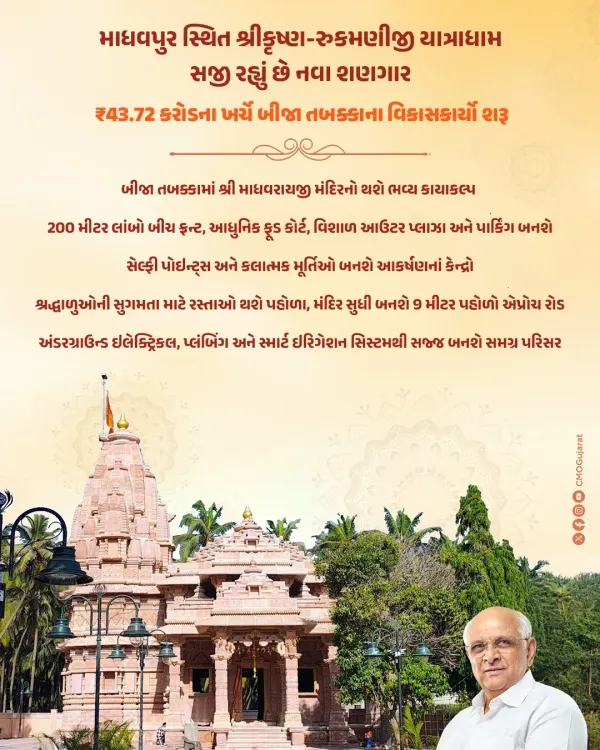
Gujarat's Chief Minister's Office announced the launch of second-phase development works worth ₹43.72 crore at the Shri Krishna-Rukmini Ji pilgrimage complex in Madhavpur, Porbandar district, under CM Bhupendra Patel, invoking PM Modi's 'Vikas Bhi, Virasat Bhi' vision for heritage-linked growth.
Key Takeaways
The Gujarat government has launched the second phase of development at the Shri Madhavrayji temple complex in Madhavpur, Porbandar district .
The project carries an outlay of ₹43.72 crore , according to the official CMO announcement.
The works are framed under PM Narendra Modi 's 'Vikas Bhi, Virasat Bhi' policy of combining development with heritage preservation.
The initiative is being executed under the direction of Chief Minister Bhupendra Patel .
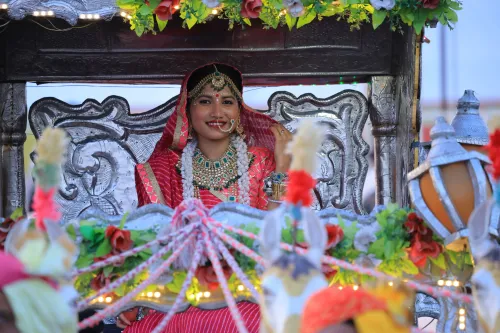
Madhavpur is traditionally associated with the marriage of Lord Krishna and Rukmini and hosts the annual Madhavpur Mela .
The project is part of Gujarat's broader multi-year, phased investment pattern in pilgrimage-site infrastructure.
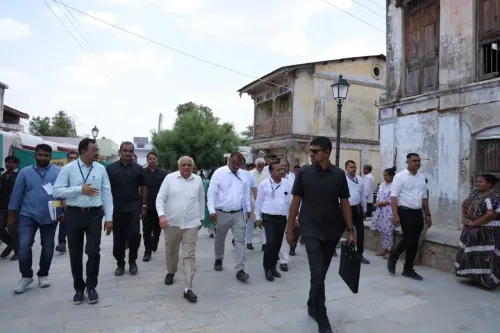
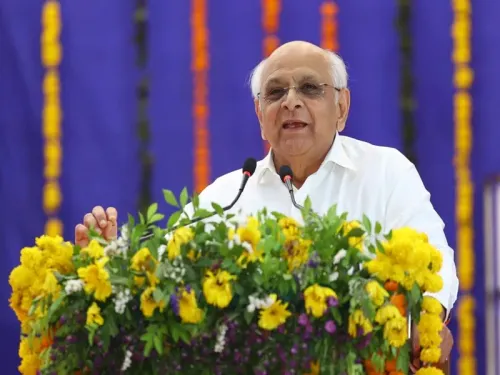
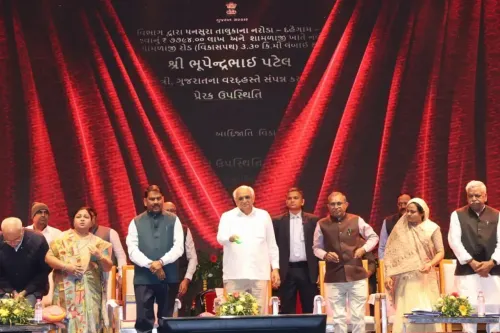
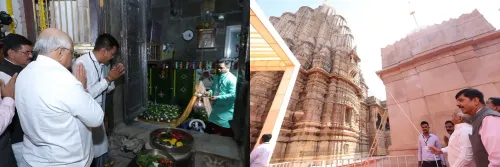
The Chief Minister's Office of Gujarat announced on Tuesday, 7 July 2026, that the state government has launched the second phase of development works at the ancient Shri Krishna-Rukmini Ji pilgrimage complex in Madhavpur, Porbandar district, at an outlay of ₹43.72 crore, marking what it described as a golden era of sacred-site development under Chief Minister Bhupendra Patel.
The post, shared in Gujarati on the official CMO handle, declared Gujarat's commitment to the integrated development of holy pilgrimage sites, invoking Prime Minister Narendra Modi's guiding motto 'Vikas Bhi, Virasat Bhi' ('Development as well as Heritage'). It described the inauguration of the second phase at the Shri Madhavrayji temple as a moment when 'the flag of faith, spirituality, history and modernity will fly high.'
Context
Madhavpur is a coastal village in Porbandar district on Gujarat's Saurashtra coast, traditionally venerated as the site of the divine marriage of Lord Krishna and Rukmini. The Shri Madhavrayji temple at the centre of the complex draws pilgrims from across Gujarat and neighbouring states, particularly during the annual Madhavpur Mela, which celebrates the mythological wedding. The site holds layered significance — religious, cultural, and increasingly, as a heritage tourism destination.
Policy Backdrop
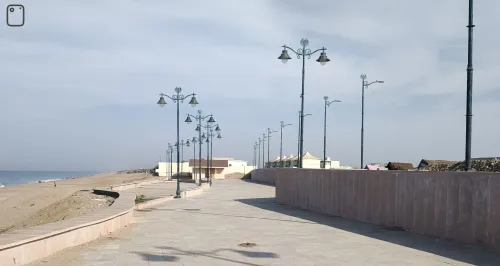
The investment fits squarely within the framework of the central government's PRASHAD scheme (Pilgrimage Rejuvenation and Spiritual, Heritage and Augmentation Drive), launched in 2014-15 by the Ministry of Tourism to fund infrastructure and beautification upgrades at pilgrimage centres across India. Gujarat has pursued a phased, multi-year investment model at religious sites, combining modern visitor amenities — improved approach roads, sanitation, lighting, and landscaped precincts — with the preservation of traditional temple architecture and sanctity. The second phase at Madhavpur follows an earlier tranche of works at the same complex, illustrating the state's long-term commitment rather than a one-off announcement.
CM Bhupendra Patel has positioned these upgrades as a direct expression of PM Modi's 'Vikas Bhi, Virasat Bhi' philosophy, which explicitly links economic development with the conservation and enhancement of India's cultural and spiritual inheritance. Gujarat has applied this template across multiple Krishna-associated sites and other tirthasthan in recent years.
Stakeholders and Impact
The primary beneficiaries are the hundreds of thousands of pilgrims and religious tourists who visit Madhavpur annually. Upgraded facilities — better access, cleaner precincts, improved amenities — are expected to reduce friction for visitors and increase the site's capacity to host larger gatherings, including the Madhavpur Mela. Local communities in Porbandar district stand to gain from increased footfall driving demand for accommodation, food, and transport services.
The ₹43.72 crore second-phase outlay also signals continued state capital expenditure in Saurashtra's heritage economy, a region where religious tourism is a meaningful driver of local livelihoods. Artisans, priests, and small traders clustered around the temple precinct are among those expected to see indirect economic benefit as visitor numbers grow.
What's Next
Attention will now focus on the completion timeline for the Madhavpur second-phase works and the quality of execution on the ground. Visitor-arrival data and local economic indicators after the new facilities become operational will serve as a practical measure of the project's impact. More broadly, the state's pipeline of comparable upgrades at other listed pilgrimage sites will be watched as a gauge of how consistently the 'Vikas Bhi, Virasat Bhi' model is being rolled out across Gujarat's religious geography.
Point of View
Virasat Bhi' formulation, the state government is consciously positioning itself as the most faithful executor of the Centre's cultural-development doctrine. The phased investment model — returning to the same site with successive tranches — signals institutional continuity and helps insulate these projects from electoral disruption. For the BJP's Gujarat unit, visible upgrades at pilgrimage sites serve a dual purpose: genuine infrastructure delivery and durable political signalling to a deeply religious electorate.
NationPress
7 Jul 2026
Frequently Asked Questions
What is the Madhavpur temple development project in Gujarat?
The Gujarat government has launched the second phase of development at the Shri Krishna-Rukmini Ji pilgrimage complex in Madhavpur, Porbandar district, at a cost of ₹43.72 crore, aimed at upgrading facilities for pilgrims while preserving the site's heritage character.
What is 'Vikas Bhi, Virasat Bhi' and how does it apply here?
'Vikas Bhi, Virasat Bhi' — meaning 'Development as well as Heritage' — is Prime Minister Narendra Modi's guiding policy philosophy that links modern infrastructure growth with the conservation of India's cultural and spiritual heritage. Gujarat is applying it to pilgrimage-site upgrades like the Madhavpur project.
Where is Madhavpur and why is it significant?
Madhavpur is a coastal village in Porbandar district on Gujarat's Saurashtra coast. It is traditionally revered as the site of the divine marriage of Lord Krishna and Rukmini, and the Shri Madhavrayji temple there draws large numbers of pilgrims, especially during the annual Madhavpur Mela.
What is the PRASHAD scheme and is it linked to the Madhavpur project?
The PRASHAD scheme — Pilgrimage Rejuvenation and Spiritual, Heritage and Augmentation Drive — was launched by the Ministry of Tourism in 2014-15 to fund infrastructure and beautification at pilgrimage centres nationwide. Gujarat's phased investments at sites like Madhavpur align with the objectives of this scheme.
Who is overseeing the Madhavpur temple development in Gujarat?
Chief Minister Bhupendra Patel is directing the state-level execution of the Madhavpur pilgrimage complex upgrade, as announced by the official Chief Minister's Office of Gujarat on 7 July 2026.