Sabarmati Riverfront to stretch 40 km after Phase 2 and 3 completion, Gujarat CM inspects works
Synopsis
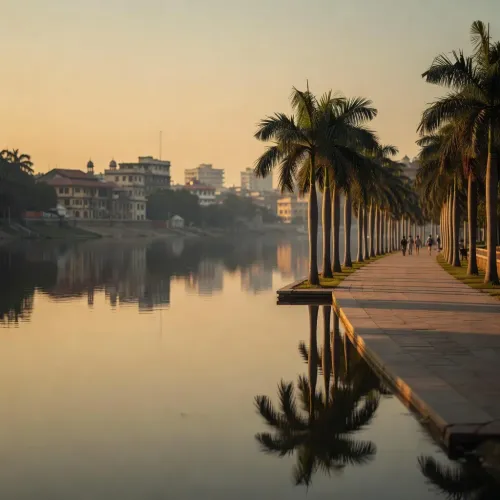
Gujarat's Sabarmati Riverfront is on course to become a 40-km continuous urban corridor — one of the longest riverfront developments in India. Chief Minister Bhupendra Patel's on-ground inspection of Phase 2 and Phase 3 works, including a first-of-its-kind air-filled rubber barrage in Gujarat, signals serious political momentum behind a project that could redefine Ahmedabad's urban identity.
Key Takeaways
Gujarat CM Bhupendra Patel inspected Sabarmati Riverfront expansion works in Ahmedabad on 16 November 2026 .
Phases 2 and 3 will extend the riverfront to a total of 40 km across both banks.
Phase 2 covers 11 km (Dafnala to Indira Bridge); Phase 3 adds 10 km (Indira Bridge to Narmada Main Canal).
A six-lane barrage-cum-bridge with a 3.5-metre air-filled rubber barrage — described as the 'first of its kind' in Gujarat — will retain water towards Gandhinagar.
Planned amenities include green spaces, multi-level tree plantations, food plazas, children's play areas, and art and cultural facilities.
CM Patel directed officials to ensure timely completion of all ongoing works.
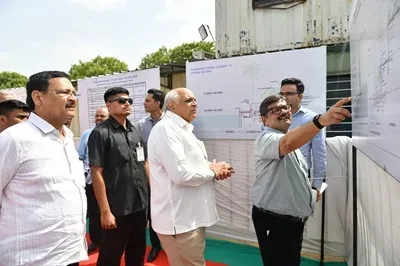
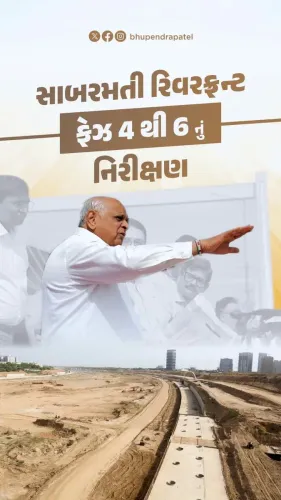
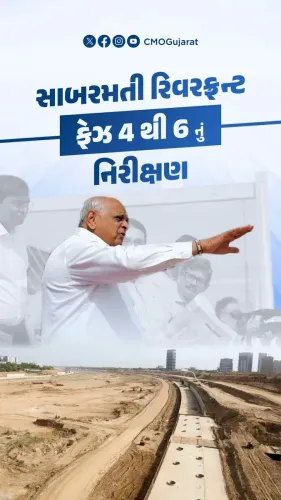
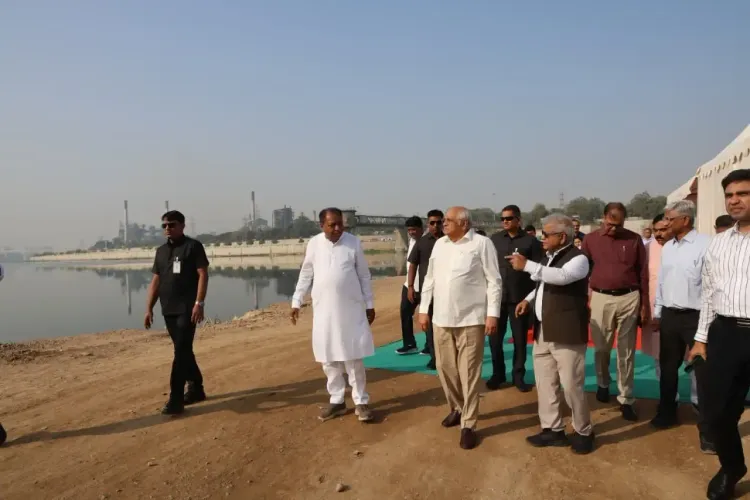
Gujarat Chief Minister Bhupendra Patel on Monday, 16 November 2026, conducted a detailed inspection of ongoing development works along the Sabarmati Riverfront in Ahmedabad, as the ambitious expansion project moves closer to creating a continuous 40-km greenbelt across both banks of the river. The expansion, spanning Phase 2 and Phase 3, is set to significantly extend one of India's most prominent urban riverfront projects beyond its current footprint.
Phases 2 and 3: What the Expansion Covers
Under Phase 2, the riverfront will be developed along a 5.5-km stretch on each bank, running from Dafnala to Indira Bridge — totalling 11 km. Phase 3 will extend the corridor from Indira Bridge to the Narmada Main Canal, adding 5 km per bank and contributing another 10 km to the overall length.
Together with the existing completed stretch, these phases will bring the total developed riverfront to 40 km across both banks. Chief Minister Patel reviewed the progress at several key sites, including the six-lane barrage-cum-bridge connecting Acher and Camp Sadar Bazar, the canopy structure at Sardar Patel Enclave, construction behind Koteshwar Mahadev Temple, works beneath Indira Bridge, and development sites near Kotarpur and Karai.
First-of-Its-Kind Barrage in Gujarat
A centrepiece of the expansion is the six-lane barrage-cum-bridge, which will operate via an automatic control system. The structure features a specialised air-filled rubber barrage measuring 3.5 metres in height, designed to retain water in the riverfront towards Gandhinagar.
Authorities have described this as the 'first of its kind' in Gujarat, distinguishing it from conventional barrage designs used elsewhere in the state. The dual-purpose structure is expected to improve both water management and urban connectivity along this corridor.
Planned Amenities and Public Spaces
The proposed development blueprint goes well beyond infrastructure. Both banks will feature green spaces, multi-level tree plantations, children's play areas, food plazas, art and cultural facilities, health and wellness amenities, and public seating areas at different levels — positioning the extended riverfront as a year-round civic and recreational hub.
This comes amid a broader national push to revitalise urban waterfronts, with Ahmedabad's Sabarmati project frequently cited as a template for other Indian cities. Notably, the original Phase 1 of the Sabarmati Riverfront Development had already drawn significant domestic and international attention for its transformation of a formerly neglected riverbed.
Officials Present and Directions Issued
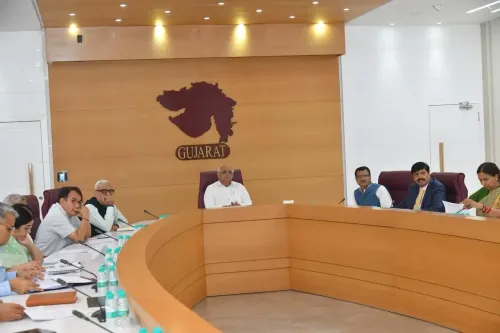
The inspection was attended by Ahmedabad Mayor Hitesh Barot, Standing Committee Chairman Kamlesh Patel, Sabarmati Riverfront Development Authority Chairman I.P. Gautam, Municipal Corporation Commissioner Banchhanidhi Pani, Gandhinagar Municipal Commissioner J.S. Prajapati, and other senior Ahmedabad Municipal Corporation (AMC) officials.
During the walkthrough, Chief Minister Patel directed all officials to ensure the timely completion of ongoing works and reviewed construction milestones against project schedules.
CM's Other Engagements on Monday
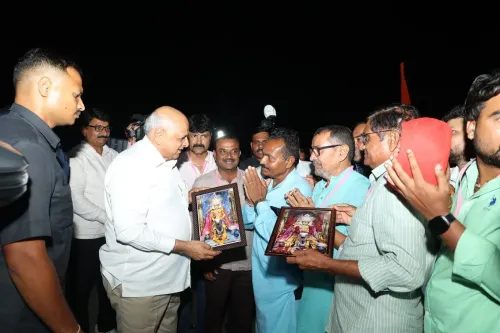
Earlier the same day, Chief Minister Patel attended the celebrations marking the 227th birth anniversary of Pujya Shri Jalaram Bapa at Vivekanand Chowk in the Gurukul area near Gunatit Nagar in the Memnagar locality of Ahmedabad. The event, organised by the Seva Senior Citizens Group, Memnagar, included a procession attended by devotees and residents from multiple communities. The Chief Minister offered prayers, performed puja, and commended the group for its social, religious, and service-oriented work.
With both phases progressing under official scrutiny, the full 40-km Sabarmati Riverfront is expected to reshape Ahmedabad's urban landscape and potentially set a new benchmark for riverfront planning in India.
Point of View
But it also attracted criticism over displacement of riverside communities and commercial privatisation of public space. As Phases 2 and 3 push further north toward Gandhinagar, those questions will resurface — especially with amenities like food plazas and 'health and wellness' zones that tend to favour organised commerce over open access. The first-of-its-kind rubber barrage is a genuine technical milestone, but the project's long-term legacy will hinge on whether this 40-km stretch is genuinely inclusive public infrastructure or a premium urban corridor that prices out ordinary Ahmedabadis.
NationPress
16 Nov 2026
Frequently Asked Questions
What is the Sabarmati Riverfront expansion plan?
The Sabarmati Riverfront is being expanded through Phase 2 and Phase 3, which together will extend the developed stretch to 40 km across both banks of the river in Ahmedabad. Phase 2 runs from Dafnala to Indira Bridge (11 km total), while Phase 3 extends from Indira Bridge to the Narmada Main Canal (10 km total).
What is the six-lane barrage-cum-bridge on the Sabarmati?
It is a dual-purpose structure connecting Acher and Camp Sadar Bazar, designed to serve both road traffic and water retention. It features an air-filled rubber barrage measuring 3.5 metres in height, described by authorities as the first of its kind in Gujarat, and will be operated via an automatic control system.
Why did Gujarat CM Bhupendra Patel inspect the Sabarmati Riverfront?
Chief Minister Bhupendra Patel inspected ongoing Phase 2 and Phase 3 construction sites on 16 November 2026 to review progress and direct officials to ensure timely project completion. Senior AMC and Gandhinagar Municipal officials accompanied him during the site visits.
What amenities will the expanded Sabarmati Riverfront include?
The expanded riverfront will feature green spaces, multi-level tree plantations, children's play areas, food plazas, art and cultural facilities, health and wellness amenities, and public seating areas at multiple levels along both banks.
How does the Sabarmati Riverfront expansion affect Gandhinagar?
The rubber barrage component of the Phase 2 infrastructure is designed to retain water in the riverfront stretch towards Gandhinagar, potentially enhancing the waterfront environment in the state capital as well as Ahmedabad.