Valsad floods: Gujarat Dy CM Sanghavi reviews relief ops after record 1,064 mm rainfall
Synopsis
Umargam in Gujarat's Valsad district received 1,064 mm of rain in a single day — the highest ever recorded there — forcing the evacuation of 12,376 people. Deputy CM Harsh Sanghavi flew in overnight to oversee relief, and the administration is claiming a zero-casualty rescue. The real test now is the post-flood health and sanitation response.
Key Takeaways
Umargam recorded 1,064 mm (42.56 inches) of rainfall in a single day on Thursday — an all-time high for the location.
Kaprada taluka logged the season's highest cumulative rainfall at 2,566 mm (102.64 inches) .
The district administration evacuated 12,376 people in a single day with zero reported casualties .
Deputy CM Harsh Sanghavi arrived in Valsad overnight under directions from CM Bhupendra Patel to review relief operations.
17 senior state government officers have been deployed in Valsad to support restoration efforts.
Officials ordered immediate distribution of cash doles and ration kits , health camps, and coordination with insurers for trader claim settlements.
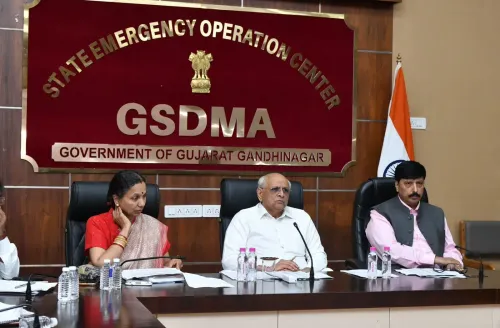
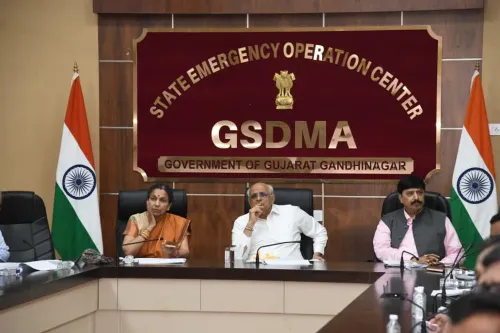
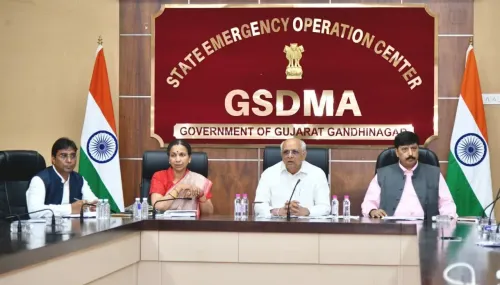
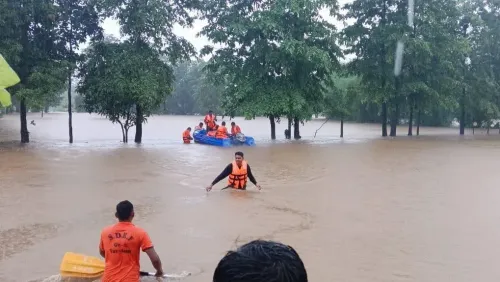
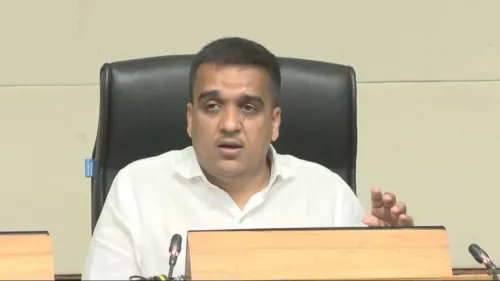
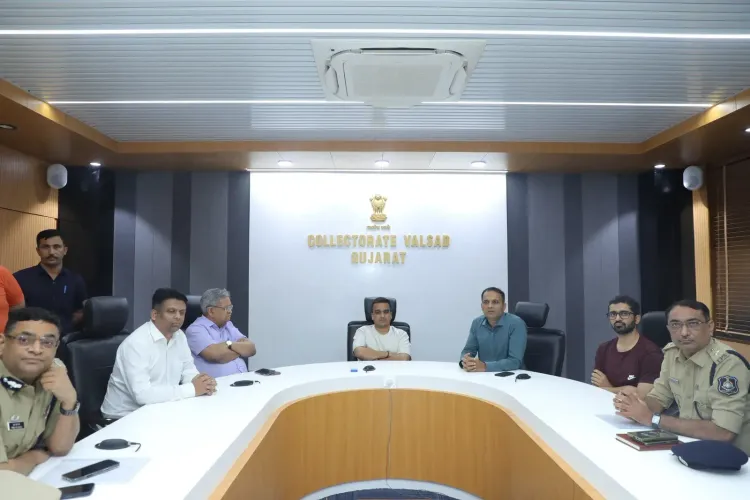
Gujarat Deputy Chief Minister Harsh Sanghavi on Friday, 25 July conducted a comprehensive review of flood relief and rescue operations in Valsad district following unprecedented rainfall that inundated large parts of the region, directing officials to fast-track sanitation drives, set up health camps, and ensure immediate distribution of relief to all affected residents as floodwaters begin to recede.
Record Rainfall and Scale of Flooding
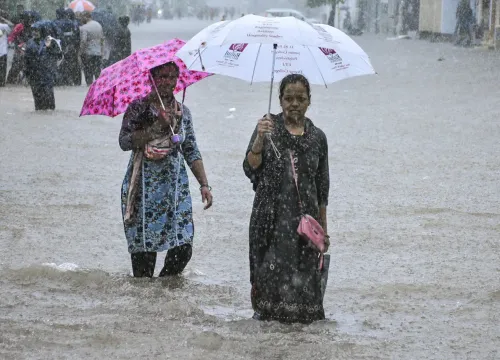
Umargam recorded a staggering 1,064 mm (42.56 inches) of rainfall in a single day on Thursday — the highest ever logged there in a single day, according to District Collector Nitin Sangwan. Kaprada taluka registered the season's highest cumulative rainfall at 2,566 mm (102.64 inches).
Heavy rainfall, compounded by the release of water from the Madhuban Dam, caused rivers to overflow and triggered widespread inundation across low-lying areas of the district. The district administration evacuated 12,376 people to safer locations in a single day — a logistical feat that Sanghavi publicly commended.
What the Government Said
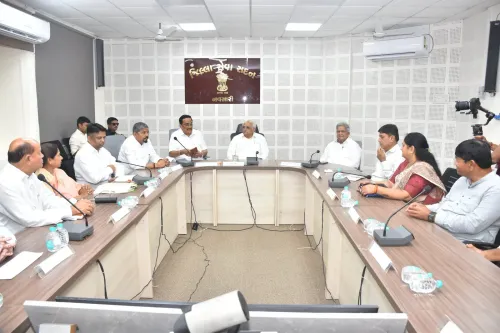
Sanghavi arrived in Valsad late Thursday night under the directions of Chief Minister Bhupendra Patel and chaired a review meeting at the District Collector's Office. State Finance, Urban Development and Urban Housing Minister Kanu Desai also attended.
'Team Valsad has successfully carried out the challenging task of rescuing and safely evacuating all affected people without any major mishap or even a single death,' Sanghavi said, congratulating the district administration on the zero-casualty operation.
He directed officials to deploy adequate manpower, JCB machines, trucks and other equipment on a war footing to restore normalcy. Municipal authorities were instructed to appoint additional temporary sanitation workers, remove accumulated mud and waste, intensify cleaning in Umargam, and ensure door-to-door garbage collection.
Health and Relief Measures Ordered
Sanghavi directed the administration to organise health check-up camps in the worst-affected areas and dispose of damaged household goods and spoiled foodgrains scientifically to prevent disease outbreaks. He also ordered immediate distribution of cash doles and ration kits to flood-affected families, stressing that no resident — including those in remote villages — should be left without assistance.
He noted that 17 senior state government officers had been deployed in Valsad to support restoration efforts, expressing confidence that the district would recover swiftly. Officials were also asked to coordinate with insurance companies to expedite claim settlements for traders and shopkeepers who suffered business losses.
Ground Assessment and Stranded Passengers
During his visit, Sanghavi met passengers stranded at Valsad railway station after train services were disrupted by the heavy rain. He spoke with the Station Master, who confirmed that the railway line towards Mumbai had resumed operations. Valsad MP Dhaval Patel informed him that food packets had been distributed to stranded passengers.
Sanghavi also visited Chhipwad and the bridge over the Auranga River to personally inspect water flow levels and assess the flood situation on the ground.
With floodwaters receding, the administration's focus now shifts to a sustained post-flood recovery — a phase that historically determines how quickly affected communities can rebuild their livelihoods.
Point of View
If verified independently, reflects a genuine improvement in Gujarat's disaster-response machinery. However, the harder accountability test comes in the days ahead: post-flood disease outbreaks, delays in cash dole disbursement, and insurance claim settlements for small traders are where relief narratives most often unravel. The deployment of 17 senior officers signals political seriousness, but ground-level sanitation and health camp coverage in remote villages will be the real measure of whether this response was as effective as the government claims.
NationPress
24 Jul 2026
Frequently Asked Questions
How much rainfall did Valsad district receive that caused the flooding?
Umargam in Valsad district received 1,064 mm (42.56 inches) of rainfall in a single day on Thursday — the highest ever recorded there in one day. Kaprada taluka also recorded the season's highest cumulative rainfall of 2,566 mm (102.64 inches).
How many people were evacuated in Valsad during the floods?
The Valsad district administration evacuated 12,376 people to safer locations in a single day. Deputy CM Harsh Sanghavi stated that the operation was completed without any major accident or loss of life.
What relief measures has the Gujarat government announced for Valsad flood victims?
The government has ordered immediate distribution of cash doles and ration kits to flood-affected families, health check-up camps in severely affected areas, and scientific disposal of damaged goods and spoiled foodgrains to prevent disease outbreaks. Officials have also been directed to coordinate with insurance companies for early settlement of traders' claims.
Why did the Valsad flooding worsen beyond just the rainfall?
In addition to record rainfall, the release of water from the Madhuban Dam caused rivers to overflow, significantly worsening inundation in low-lying areas across Valsad district.
Were train services affected in Valsad due to the floods?
Yes, train services were disrupted at Valsad railway station, leaving passengers stranded. However, the Station Master informed Deputy CM Sanghavi during his visit that the railway line towards Mumbai had since resumed operations. Food packets were distributed to stranded passengers by local authorities.